Sustainable Cities and Communities

Universitas Islam Indonesia (UII) acts as an active catalyst for sustainable urbanism, cultural heritage stewardship, and low-carbon community development across the Special Region of Yogyakarta. Recognizing that universities are micro-cities, UII harmonizes cutting-edge bioclimatic architecture with the rigorous in-situ preservation of 9th-century cultural heritage, extensive permeable green public parks, continuous covered pedestrian networks, and direct integration into regional public transit networks, strictly fulfilling the United Nations SDG 11 benchmarks.
Heritage Stewardship, Public Green Spaces & Sustainable Living Highlights
Key cultural preservation, open public infrastructure, and sustainable mobility metrics at Universitas Islam Indonesia
UII’s Support for Arts and Heritage
Public Access to Heritage Sites
UII safeguards and provides free public access to the Candi Kimpulan Archaeological Site—an authentic 9th–10th century Hindu temple complex from the Ancient Mataram Kingdom discovered on campus grounds during library excavation in December 2009. Prioritizing historical integrity over commercial utility, UII redesigned the Mohammad Hatta Central Library to preserve the sacred stone temple in situ on the ground floor.

Maintained in active technical collaboration with the Ministry of Culture’s Regional Cultural Heritage Office (BPK Wilayah X), the archaeological site is open to the public six days a week (Monday to Saturday, 08:30–16:00 WIB) with 100% free admission. Guided historical tours are provided by trained docents free of charge, welcoming over 14,000 public tourists, school groups, and international scholars annually.

Library Access
The Mohammad Hatta Central Library functions as a regional intellectual sanctuary open to the wider public. External scholars, school pupils, and independent community researchers have free on-site access to the university’s vast physical collections—encompassing over 280,000 print volumes, rare Islamic manuscripts, and subscribed international scientific periodicals.

External visitors can obtain day-pass access or subsidized community memberships enabling access to specialized reference desks, open reading atriums, and academic study facilities, fostering democratic knowledge dissemination across the Special Region of Yogyakarta.


Museums and Exhibition Spaces
UII curates and maintains Museum UII, located within the Mohammad Hatta Central Library complex. The museum preserves national historical memorabilia chronicling the Indonesian independence struggle, personal artifacts of founding fathers (including Dr. Mohammad Hatta and Prof. K.H. Abdul Kahar Mudzakkir), and Islamic cultural development in the archipelago.
The museum is accessible to the public completely free of charge, offering curated educational displays and rotating visual art exhibitions. Through partnerships with regional museum associations, Museum UII hosts regular public cultural exhibitions and historical workshops that promote national civic heritage.
Public Green Spaces
UII opens its extensive landscaped green areas to the general public as accessible urban recreational green spaces. The 35-hectare Integrated Campus preserves over 50% of its spatial footprint as permeable botanical landscapes, featuring the central campus boulevard, shaded botanical groves, and the scenic recreational zones flanking the campus retention lakes.
Equipped with public jogging circuits, outdoor stone seating, and bicycle parking, local residents from surrounding villages freely utilize the university grounds for morning exercises, family recreation, and community social gatherings, providing an essential ecological lung for northern Sleman.
Promotion of Local Arts
UII actively champions the preservation and vitality of traditional Javanese performing arts and contemporary regional culture. Through student cultural troupes and the Directorate of Student Affairs, the university hosts public performing arts events, including the renowned ‘UIINyastraSore’ literary forums, classical shadow puppet plays (Wayang Kulit), and traditional Javanese theatre (Ketoprak).
Staged at the campus open-air amphitheatres and auditorium complexes, these cultural spectacles are open to the wider community without admission fees, providing local folk artists and student performers with prominent public platforms while celebrating indigenous cultural heritage.
Preservation of Intangible Cultural Heritage
To safeguard fragile intangible cultural heritage, UII engages in systematic archival digitization, ethnographic documentation, and academic curriculum integration. The Central Library maintains a specialized preservation lab that digitizes deteriorating historic Islamic manuscripts (naskah kuno) and traditional Javanese literature, making high-resolution scans publicly accessible online.
In education, foundational university curricula integrate modules examining indigenous customary law (Hukum Adat), local ecological wisdom, and classical Javanese architectural ethics, ensuring that regional intellectual traditions are transmitted dynamically to successive student generations.
UII’s Sustainable Practices
Sustainable Commuting Targets
Under the Sustainable Campus Commuting Roadmap, UII has established legally codified institutional targets to curtail private motor vehicle usage and shift commuter modal splits toward low-carbon transit. The university targets a measured 25% reduction in private single-occupancy vehicle trips by 2030 against the 2022 baseline.
Progress is benchmarked through annual commuter travel surveys tracking the transportation modes of students, faculty, and administrative staff, informing parking management policies, transit subsidies, and campus infrastructure design.
Sustainable Commuting Promotion
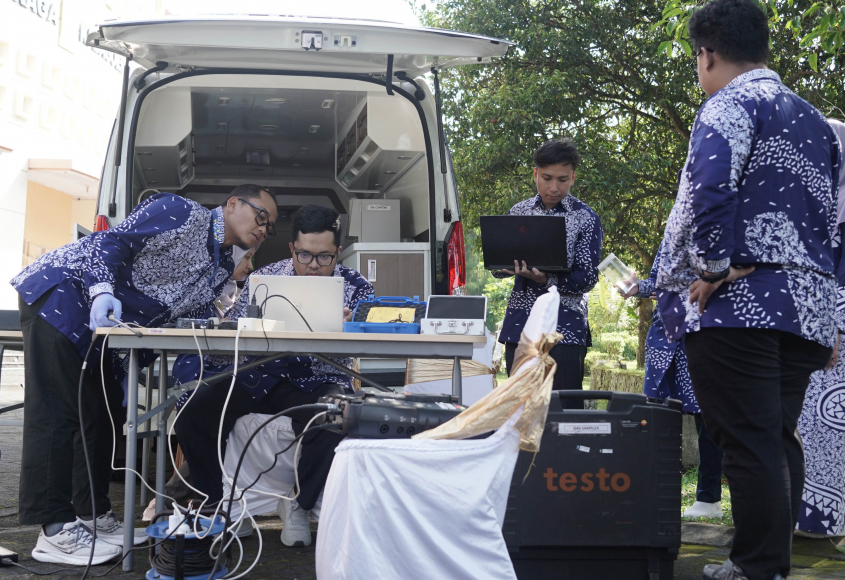
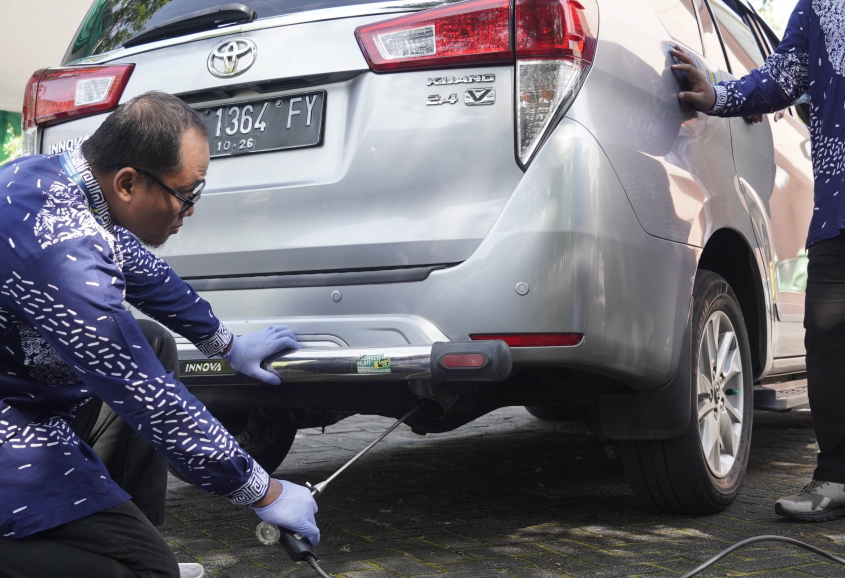
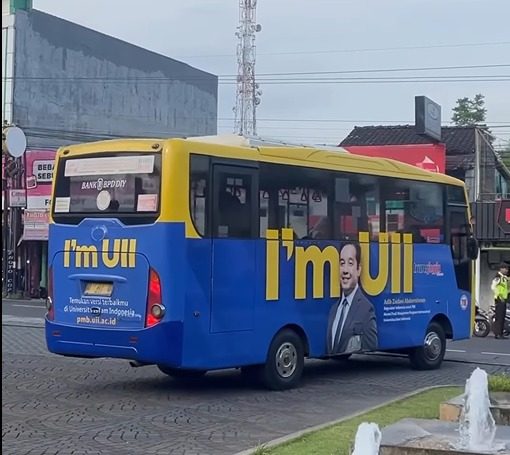
The catalyst for Universitas Islam Indonesia’s (UII) mobility initiatives was a data-driven diagnosis. After discovering that 30% of community vehicles failed emission tests, we recognized the critical need to provide robust alternatives.
To that end, UII established a strategic sponsorship partnership with public transport providers. This partnership supports the city’s low-emission bus fleet, making sustainable mass transit an accessible and affordable choice for our students and staff, directly reducing reliance on private vehicles.
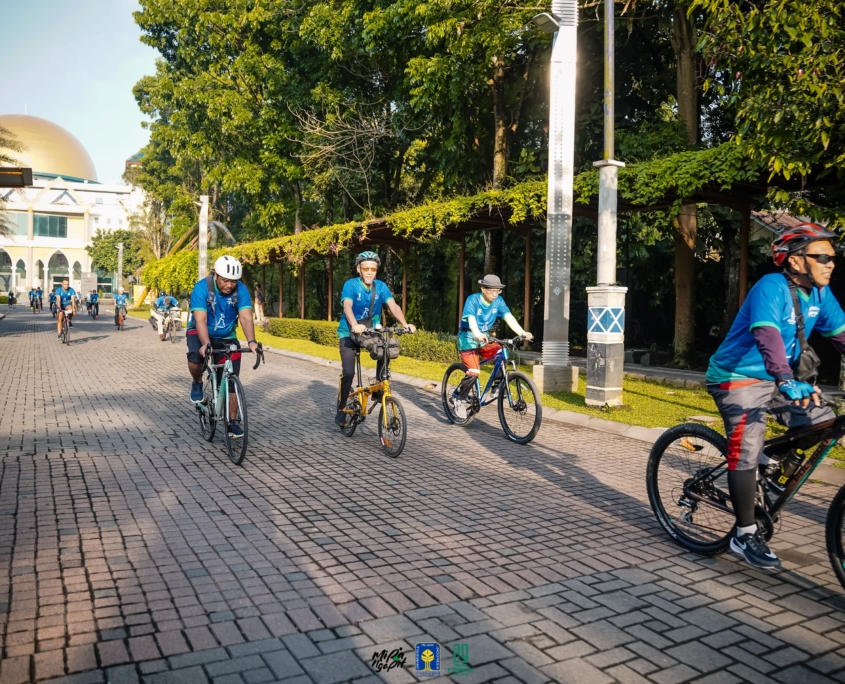
Complementing this mass transit solution, UII has invested in fostering a vibrant cycling culture. We provide dedicated bicycle parking, secure storage facilities, and integrated bike paths across campus. These initiatives are more than just infrastructure; they are an integral part of our strategy to encourage the use of bicycles as a healthy, eco-friendly transportation option, directly supporting our goal to reduce our carbon footprint.
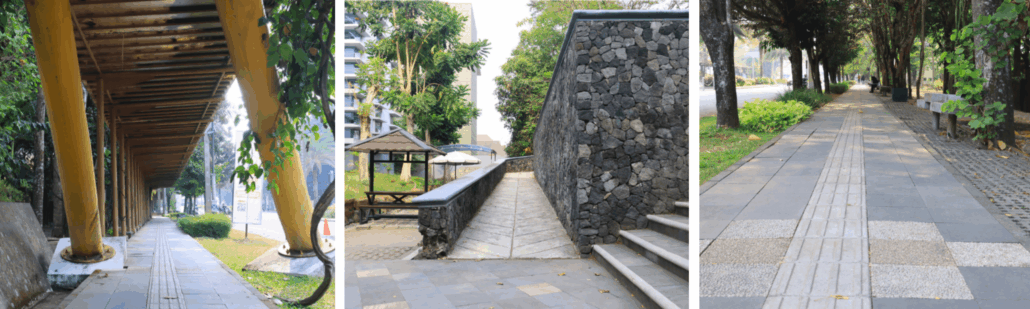
To complete our sustainable mobility ecosystem, UII has developed a campus-wide pedestrian plan. This ensures that walking is a safe, convenient, and prioritized option for navigating the campus. In synergy with managed parking zones that de-incentivize private vehicle use in core campus areas, this plan reinforces our commitment to non-motorized and shared transportation methods, reducing traffic congestion and promoting environmental sustainability.
Through this holistic approach, UII makes it easier for its community to adopt sustainable commuting practices. The tangible result of these concerted efforts is a 29.23% shift towards green transportation among participants, aligning with our broader commitment to fostering a greener, more sustainable campus environment.
Telecommuting and Remote Working
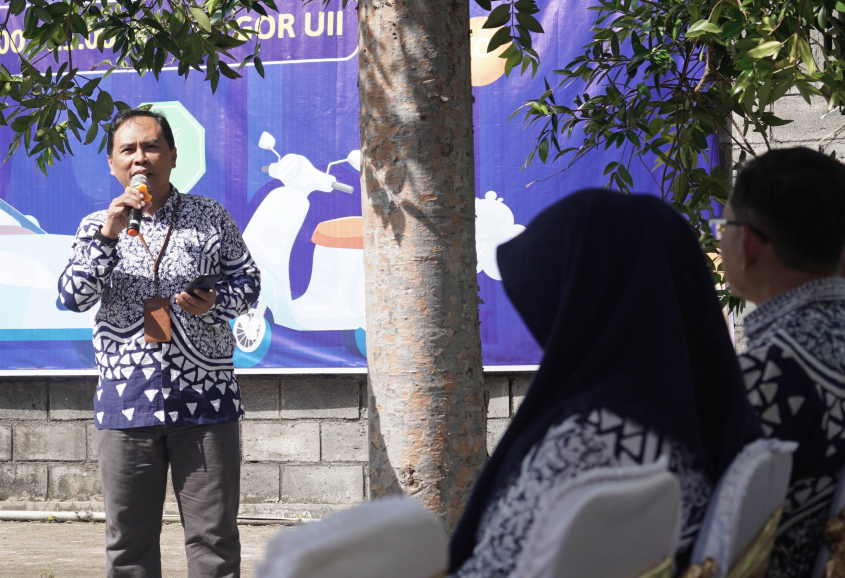
To mitigate peak-hour vehicular emissions and optimize operational agility, UII institutionalizes a comprehensive Remote Working and Telecommuting Framework for administrative staff and academic personnel under official Rector’s Directives on Flexible Workplace Arrangements.
Leveraging secure single-sign-on cloud platforms (Gateway UII and Google Workspace for Education), eligible non-frontline personnel can fulfill designated administrative tasks remotely up to two days weekly. Academic faculty utilize blended learning systems for non-laboratory coursework, directly eliminating thousands of vehicle kilometers traveled weekly.
Affordable Employee Housing
UII supports workforce residential stability through subsidized employee housing programs coordinated by the University Employee Cooperative (KOPEL UII) and the Waqf Board Foundation. The cooperative facilitates access to affordable, master-planned residential housing developments located within close commuting proximity to the university.
Eligible junior staff and low-income educational support personnel receive subsidized mortgage financing, interest-free down-payment assistance loans, and favorable repayment terms, enabling permanent employees to secure dignified, stable homeownership near their workplace.
Affordable Student Housing
UII guarantees safe, hygienic, and affordable on-campus residential accommodations for its diverse student community through its modern Student Dormitories (Rusunawa Asrama Mahasiswa) and the Pondok Pesantren UII complex. The facilities provide fully furnished living quarters equipped with high-speed wifi, 24-hour security, communal study lounges, and prayer halls.
Room rental rates are strictly capped below market commercial averages. Crucially, 100% free residential accommodations are permanently reserved for underprivileged students admitted through affirmative scholarship tracks, ensuring that no student is excluded due to accommodation poverty.
Prioritization of Pedestrian Access
Pedestrian comfort, safety, and priority access form the core of the UII Integrated Campus master plan. The university has constructed over 1.8 kilometers of continuous covered pedestrian canopy walkways interconnecting faculty complexes, central lecture halls, dining courts, and the central library.
Engineered to shield pedestrians from tropical downpours and intense solar radiation, the network features non-slip permeable paving, tactile guiding blocks, and zero-step ramped thresholds. Vehicular traffic is restricted to outer perimeter access roads, creating a pedestrianized, tranquil central academic core.
Collaboration on Local Development
UII actively partners with municipal and regional planning authorities to support sustainable community development across northern Yogyakarta. Through the Faculty of Engineering Design Innovation (FTDI) and DPPM, university urban planners and civil engineers collaborate directly with the Regional Development Planning Agency (Bappeda Sleman).
Collaborative projects include disaster-resilient land-use zoning on the Mount Merapi volcanic corridor, participatory rural spatial planning for agrarian villages, and sustainable village water supply masterplans, aligning academic research with municipal sustainable urban development needs.
Sustainable Building Standards
Campus architectural expansion at UII strictly enforces green building standards designed to maximize resource efficiency and durability. Designed by faculty experts in the Department of Architecture (FTSP UII), institutional facilities utilize Building Information Modeling (BIM) to optimize building envelopes, natural illumination, and energy consumption before construction.
The Faculty of Islamic Studies (FIAI) and Faculty of Law (FH) buildings incorporate high-performance low-emissivity glass, natural stack-ventilation courtyards, rainwater harvesting systems, and recycled non-toxic construction materials, setting a benchmark for sustainable academic infrastructure in Indonesia.
Use of Brownfield Sites
To curb urban sprawl and safeguard pristine agricultural soils, UII adheres to a strict brownfield redevelopment policy across its integrated campus master plan. Whenever academic facilities expand, priority is given to intensifying, repurposing, or replacing existing obsolete building footprints and impervious paved parking lots.
This compact urban design principle prevents the encroachment of construction into valuable agricultural lands or designated ecological green conservation zones, ensuring that the university expands sustainably while conserving natural absorption soils.
Cultural Heritage Preservation, Public Spaces & Sustainable Living Matrix
| Initiative / Policy Area | Strategic Focus & Scope | Operational Evidence & Key Outcomes | Status |
|---|---|---|---|
|
Kimpulan Archaeological Temple Preservation
|
In-Situ Cultural Heritage Conservation
|
Careful conservation of the 9th-century Hindu-Buddhist temple excavated on campus, maintained within an open-air central library atrium with free public access.
|
Permanent Heritage |
|
University Heritage Museum & Public Galleries
|
Archaeological Education & Public Engagement
|
Open-access museum exhibiting excavated stone sculptures, epigraphic inscriptions, and regional historical artifacts with free guided tours.
|
Public Facility |
|
Open Green Botanical Spaces & Public Commons
|
Community Recreational & Ecological Lands
|
More than 50% of the 35-hectare campus dedicated to green parklands, botanical arboretums, and jogging trails open freely to local citizens.
|
Campus Infrastructure |
|
Affordable On-Campus Student Residential Halls
|
Subsidized Student Living Infrastructure
|
Modern multi-story residential dormitories providing affordable student housing, directly curbing vehicular commuting trips and emissions.
|
Residential Facility |
|
Pedestrianized Walkable Campus Infrastructure
|
Non-Motorized Urban Design Standards
|
Network of shaded pedestrian walkways, traffic-calmed courtyards, and dedicated bicycle parking bays connecting all faculties seamlessly.
|
Urban Design Standard |
|
Sustainable Campus Commuting & Transit Links
|
Low-Emission Mobility Options
|
Integration with municipal public bus networks, electric vehicle charging facilities, and campus-wide carpooling incentives.
|
Transport Program |