Partnerships for the Goals

Universitas Islam Indonesia (UII) advances the 2030 Agenda for Sustainable Development through strategic multi-stakeholder collaboration, institutional transparency, and evidence-based governance. Recognising that complex global challenges cannot be resolved in isolation, the university fosters enduring partnerships with government agencies, international academic institutions, non-governmental organisations, industry partners, and grassroots communities. These institutional alliances support policy engagement, cross-sectoral dialogue, collaborative research, knowledge exchange, and comprehensive sustainability education.
UII maintains institutional partnership registers documenting the legal scope, duration, and participating academic units of its formal collaborations. Crucially, recognising that formal agreements alone do not demonstrate measurable contributions to the SDGs, the university explicitly distinguishes institutional agreements (MoUs and MoAs) from implemented collaborative activities and their verified societal outcomes.
This portal presents institutional evidence of UII’s contributions to SDG 17 in strict accordance with the Times Higher Education (THE) Sustainability Impact Ratings 2026 methodology. The documented evidence is structured across five core operational areas:
- Direct Engagement in SDG Policy Development: Statutory policy drafting, regulatory advisory roles, and public consultations conducted in partnership with national and regional government bodies.
- Cross-Sectoral SDG Dialogues: Convening high-level international conferences and national multi-stakeholder symposia to bridge academia, government, civil society, and industrial practitioners.
- International Collaboration on SDG Data & Best Practices: Joint participation in multilateral research consortia—notably the European Commission’s Erasmus+ CBHE programmes—to gather comparative sustainability data and disseminate global best practices.
- Collaboration with Non-Governmental Organisations: Structured partnerships with registered NGOs, humanitarian bodies, and civil society alliances across student volunteering, joint community research, and educational resource co-development.
- Education & Public Reporting on Sustainable Development: Whole-of-university curriculum integration, non-degree sustainability literacy outreach, and an unbroken multi-year track record of publicly accessible sustainability reporting.
To provide evaluators and international partners with an immediate, verified overview of institutional impact prior to reviewing the granular data registers below, the Strategic Impact Snapshot consolidates UII’s empirical footprint across each evaluated metric.
Partnerships for the Goals: Strategic Impact Snapshot
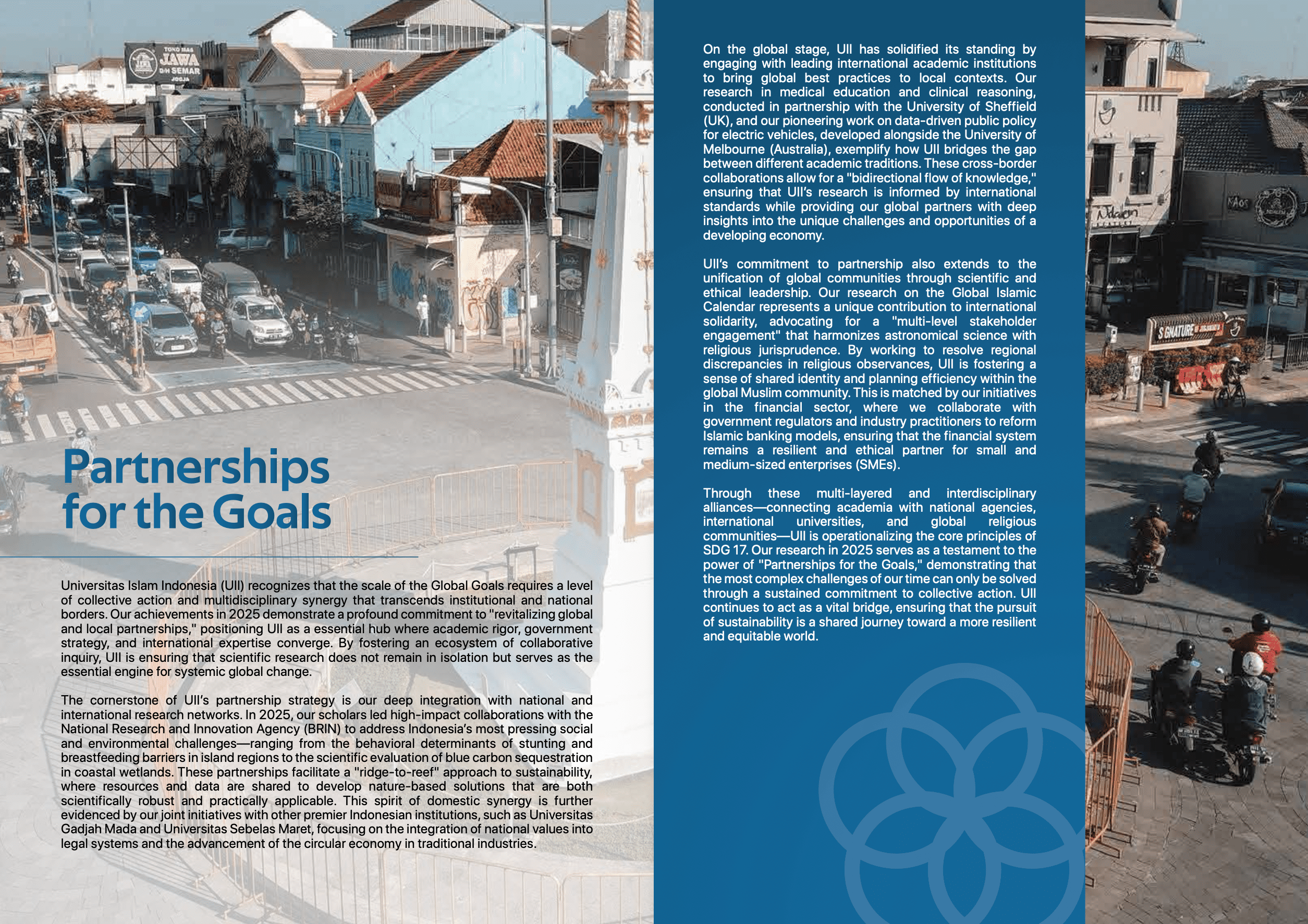
SDG 17 Report – 2026
UII’s Contributions to SDG Policy Development and Reporting
Direct Involvement in SDG Policy Development
Universitas Islam Indonesia (UII) actively exercises its academic and statutory mandate by collaborating directly with government authorities to formulate, evaluate, and implement public policies that advance the Sustainable Development Goals. Rather than restricting research to theoretical analysis, the university institutionalises policy engagement through legally binding Memoranda of Understanding (MoUs), Memoranda of Agreement (MoAs), and Implementation Agreements (IAs). These legal frameworks formalise direct advisory roles, legislative drafting assistance, scientific regulatory evaluations, and long-term development planning across national and municipal jurisdictions.
At the national level, UII’s academic faculty and research specialists are routinely commissioned by sovereign bodies, including Commission X of the Indonesian House of Representatives (DPR RI) for the national educational development roadmap, Bank Indonesia for macroprudential financial inclusion policies, and the national health quarantine authorities for disease surveillance protocols. Regionally, the university serves as a strategic technical partner to provincial and regency governments, co-authoring regional spatial masterplans, environmental protection guidelines, and municipal social resilience frameworks.
The register below documents 80 active government and public authority policy partnerships currently maintained by Universitas Islam Indonesia, highlighting the legal instrument, policy jurisdiction, implementing academic faculty, and targeted SDGs.
| No. | Partner Institution | Jurisdiction | Policy Scope & Collaborative Initiatives | Implementing Unit (UII) | Active Period | Targeted SDGs |
|---|---|---|---|---|---|---|
| 1 | Bank Indonesia (Central Bank of the Republic of Indonesia) ↗ | National | MoU: Macroprudential Policy Research, Financial Inclusion, Islamic Economics, and Central Banking Education | Universitas Islam Indonesia (Institutional Level) | 24/10/2022 – 24/10/2027 | SDG 17 SDG 8 SDG 10 |
| 2 | Class I Health Quarantine Agency of Semarang ↗ | National | MoA: Public Health Disease Surveillance, Border Quarantine Regulation, and Medical Training Collaboration | Faculty of Medicine | 04/02/2026 – 04/02/2029 | SDG 17 SDG 3 |
| 3 | Class II Health Quarantine Agency of Yogyakarta ↗ | National | MoA: Field Epidemiology Protocols, Port & Border Health Security, Public Health Policy, and Medical Training | Faculty of Medicine | 04/04/2023 – 04/04/2028 | SDG 17 SDG 3 |
| 4 | Class IIA Narcotics Correctional Facility of Yogyakarta ↗ | National | MoA: Correctional Rehabilitation Protocols, Psychological Counseling, and Reintegration Policy | Faculty of Islamic Studies | 08/03/2024 – 08/03/2027 | SDG 17 SDG 3 SDG 16 |
| 5 | Class IIB Youth Correctional Institution of Plantungan | National | IA: Youth Inmate Vocational Rehabilitation, Psychological Wellbeing, and Correctional Education Policy | S1 - Hukum Keluarga (Ahwal Syakhshiyah) | 12/06/2026 – 12/06/2026 | SDG 17 SDG 4 SDG 16 |
| 6 | Directorate General of Intellectual Property, Ministry of Law and Human Rights RI ↗ | National | MoU: National IP Rights Policy, Patent Commercialization, and Technological Innovation Protection | Universitas Islam Indonesia (Institutional Level) | 20/12/2023 – 20/12/2028 | SDG 17 SDG 9 SDG 16 |
| 7 | Directorate General of Religious Courts, Supreme Court of the Republic of Indonesia ↗ | National | MoU: Judicial Administration Reform, Islamic Family Law Jurisprudence, and Court Digitization Policy | Universitas Islam Indonesia (Institutional Level) | 15/08/2025 – 15/08/2030 | SDG 17 SDG 16 |
| 8 | Dr. Arif Zainudin Regional Mental Health Hospital, Surakarta ↗ | National | MoA: Mental Health Clinical Clerkship, Psychosocial Rehabilitation Protocols, and Healthcare Policy Research | Faculty of Psychology and Socio-Cultural Sciences | 31/10/2025 – 31/10/2028 | SDG 17 SDG 3 |
| 9 | Embassy of the State of Palestine in Jakarta | National | MoU: Diplomatic & Higher Education Cooperation, International Scholarship Programs, and Cultural Dialogue | Universitas Islam Indonesia (Institutional Level) | 19/05/2025 – 19/05/2030 | SDG 17 SDG 4 SDG 16 |
| 10 | General Elections Commission of the Republic of Indonesia (KPU RI) ↗ | National | MoU: Electoral Integrity Research, Democratic Governance Strengthening, Civic Voter Education, and Legal Advisory | Universitas Islam Indonesia (Institutional Level) | 19/08/2022 – 19/08/2027 | SDG 17 SDG 16 |
| 11 | General Secretariat of the Judicial Commission of the Republic of Indonesia (KY RI) ↗ | National | MoA: Judicial Ethics Oversight, Courtroom Integrity Monitoring, and Public Legal Education Campaign | Faculty of Law | 11/06/2025 – 11/06/2030 | SDG 17 SDG 16 |
| 12 | General Secretariat of the People's Consultative Assembly of the Republic of Indonesia (MPR RI) ↗ | National | MoU: Constitutional Law Studies, Civic State Ideology Harmonization, and National Constitutional Policy Seminars | Universitas Islam Indonesia (Institutional Level) | 14/04/2026 – 14/04/2031 | SDG 17 SDG 16 |
| 13 | Human Resources Research & Development Agency, Ministry of Communication and Informatics (Kominfo RI) ↗ | National | MoU: National Digital Talent Literacy, ICT Governance Capacity Building, and Digital Public Policy | Universitas Islam Indonesia (Institutional Level) | 31/05/2024 – 31/05/2029 | SDG 17 SDG 4 SDG 9 |
| 14 | KEPALA BADAN STRATEGI KEBIJAKAN DAN PENDIDIKAN DAN PELATIHAN HUKUM DAN PERADILAN MAHKAMAH AGUNG REPUBLIK INDONESIA ↗ | National | MoA: PERJANJIAN KERJA SAMA ANTARA KEPALA BADAN STRATEGI KEBIJAKAN DAN PENDIDIKAN DAN PELATIHAN HUKUM DAN PERADILAN MAHKAMAH AGUNG | Faculty of Law | 07/05/2025 – 07/05/2030 | SDG 17 |
| 15 | Kauman Historical Heritage Village Administration, Yogyakarta ↗ | National | MoA: Urban Cultural Heritage Conservation, Architectural Revitalization, and Community Empowerment | Faculty of Civil Engineering and Planning | 22/03/2024 – 22/03/2029 | SDG 17 SDG 11 |
| 16 | Ministry of Creative Economy / Creative Economy Agency of the Republic of Indonesia (Ekraf RI) ↗ | National | MoU: National Creative Economy Policy Formulation, Sustainable Creative Industries, and Innovation Incubation | Universitas Islam Indonesia (Institutional Level) | 03/12/2025 – 03/12/2029 | SDG 17 SDG 8 SDG 9 |
| 17 | Ministry of Social Affairs of the Republic of Indonesia (Kemensos RI) ↗ | National | MoU: National Social Protection Policy, Poverty Eradication Programs, Social Assistance Monitoring, and Disaster Resilience | Universitas Islam Indonesia (Institutional Level) | 17/07/2025 – 17/07/2030 | SDG 17 SDG 1 SDG 10 |
| 18 | Nahdlatul Ulama Higher Education Council (LPTNU) ↗ | National | MoA: Consortium for Academic Quality Improvement, Interfaith Dialogue, and Inclusive Community Empowerment | Faculty of Mathematics and Natural Sciences | 10/02/2025 – 10/02/2030 | SDG 17 SDG 4 SDG 16 |
| 19 | National Collective Management Organization (LMKN) ↗ | National | MoA: Copyright Royalty Distribution Governance, Creators' Economic Rights Protection, and IP Regulatory Studies | Faculty of Law | 24/06/2026 – 24/06/2028 | SDG 17 SDG 8 SDG 16 |
| 20 | National Commission on Human Rights of the Republic of Indonesia (Komnas HAM RI) ↗ | National | MoU: National Human Rights Policy Advocacy, Vulnerable Groups Protection, Human Rights Education, and Legal Assistance | Universitas Islam Indonesia (Institutional Level) | 26/04/2024 – 26/04/2027 | SDG 17 SDG 16 SDG 10 |
| 21 | National Committee for Islamic Economy and Finance (KNEKS) ↗ | National | MoU: Masterplan for National Halal Value Chain Development, Islamic Social Finance Policy, and Sustainable Banking | Universitas Islam Indonesia (Institutional Level) | 30/05/2024 – 30/05/2029 | SDG 17 SDG 8 SDG 12 |
| 22 | National Police of the Republic of Indonesia (POLRI) ↗ | National | MoU: Community Policing Studies, Cybercrime Prevention Policy, Forensic Science Research, and Rule of Law Advocacy | Universitas Islam Indonesia (Institutional Level) | 11/07/2023 – 11/07/2028 | SDG 17 SDG 16 |
| 23 | National Research and Innovation Agency (BRIN) ↗ | National | MoU: Strategic National Partnership on Multidisciplinary Research, Technological Innovation, and Sustainable Science Policy | Universitas Islam Indonesia (Institutional Level) | 03/04/2023 – 03/04/2028 | SDG 17 SDG 9 SDG 12 |
| 24 | National Standardization Agency of Indonesia (BSN) ↗ | National | MoU: National Standards Development (SNI), Quality Infrastructure Alignment, and Sustainable Products Certification | Universitas Islam Indonesia (Institutional Level) | 21/06/2022 – 21/06/2027 | SDG 17 SDG 9 SDG 12 |
| 25 | Ombudsman of the Republic of Indonesia ↗ | National | MoU: Public Service Delivery Oversight, Maladministration Prevention, Bureaucratic Reform Policy, and Citizen Complaint Mechanisms | Universitas Islam Indonesia (Institutional Level) | 04/07/2024 – 04/07/2029 | SDG 17 SDG 16 |
| 26 | PT Garuda Indonesia (Persero) Tbk (State-Owned Enterprise) ↗ | National | MoA: Sustainable Aviation Transport Studies, Green Supply Chain, and Professional Aviation Engineering Apprenticeships | Universitas Islam Indonesia (Institutional Level) | 01/01/2025 – 31/12/2026 | SDG 17 SDG 9 SDG 12 |
| 27 | Parliamentary Expertise Body, House of Representatives of the Republic of Indonesia (DPR RI) ↗ | National | MoU: National Legislative Drafting, Parliamentary Research, Regulatory Impact Assessment, and Public Policy Analysis | Universitas Islam Indonesia (Institutional Level) | 08/04/2022 – 08/04/2027 | SDG 17 SDG 16 |
| 28 | Prof. Dr. Margono Soekarjo Regional General Hospital, Purwokerto ↗ | National | MoA: Advanced Clinical Healthcare Residency, Regional Referral System Efficiency, and Medical Research Collaboration | Faculty of Mathematics and Natural Sciences | 24/02/2025 – 24/02/2028 | SDG 17 SDG 3 |
| 29 | Research Center for Applied Microbiology, Biological & Environmental Research Organization, BRIN ↗ | National | MoA: Microbial Bioremediation for Industrial Waste, Biofertilizer Innovations, and Environmental Biotechnology | Faculty of Mathematics and Natural Sciences | 11/02/2025 – 11/02/2028 | SDG 17 SDG 12 SDG 15 |
| 30 | Research Center for Food Process and Technology, BRIN ↗ | National | MoA: National Food Security R&D, Post-Harvest Processing Technologies, and Functional Food Standards | Faculty of Mathematics and Natural Sciences | 12/12/2023 – 12/12/2026 | SDG 17 SDG 2 SDG 12 |
| 31 | Research Center for Intelligent Mechatronics, BRIN ↗ | National | MoA: Smart Robotics for Agriculture & Healthcare, Mechatronic Automation Standards, and AI for Social Good | Faculty of Medicine | 15/12/2025 – 15/12/2028 | SDG 17 SDG 9 |
| 32 | Research Center for Public Health and Nutrition, Health Research Organization, BRIN ↗ | National | MoA: National Epidemiological Research, Stunting Alleviation Interventions, and Health Systems Policy Advisory | Faculty of Psychology and Socio-Cultural Sciences | 16/07/2024 – 16/07/2027 | SDG 17 SDG 3 SDG 2 |
| 33 | Rumah BUMN Yogyakarta ↗ | National | MoA: Perjanjian Kerja Sama antara Program Studi Bisnis Digital Sarjana Terapan FBE UII dengan Rumah BUMN Yogyakarta | Applied Bachelor in Digital Business, FBE | 01/12/2023 – 01/12/2026 | SDG 17 |
| 34 | Social Security Agency for Employment (BPJS Ketenagakerjaan) Yogyakarta Branch ↗ | National | MoA: Collaborative Research, Certified Apprenticeship, and Social Security System Development | Faculty of Medicine | 01/07/2025 – 01/07/2028 | SDG 17 SDG 8 SDG 1 |
| 35 | State Administrative Court of Semarang (PTUN Semarang) ↗ | National | MoA: Administrative Justice Integrity, Environmental Administrative Law Studies, and Judicial Internship Programs | Faculty of Law | 23/04/2026 – 23/04/2031 | SDG 17 SDG 16 |
| 36 | BPS-Statistics Indonesia (Special Region of Yogyakarta Province) ↗ | Regional / Local | MoA: Statistical Literacy Capacity Building, Regional Data Governance, and Evidence-Based Policy Support | Faculty of Mathematics and Natural Sciences | 21/05/2024 – 21/05/2029 | SDG 17 SDG 4 SDG 11 |
| 37 | City Government of Banda Aceh, Aceh Province ↗ | Regional / Local | MoU: Disaster Risk Resilient Urban Planning, Islamic Municipal Finance Governance, and Heritage Preservation | Universitas Islam Indonesia (Institutional Level) | 07/08/2025 – 07/08/2030 | SDG 17 SDG 11 SDG 16 |
| 38 | City Government of Yogyakarta, Special Region of Yogyakarta ↗ | Regional / Local | MoA: Smart Heritage City Transformation, Integrated Urban Solid Waste Management, and Inclusive Pedestrian Infrastructure | S1 - Ilmu Komunikasi | 25/09/2025 – 25/09/2027 | SDG 17 SDG 11 SDG 12 |
| 39 | Class IIA State Detention Center of Yogyakarta, Ministry of Immigration and Corrections RI ↗ | Regional / Local | MoA: Inmate Human Rights Protection, Legal Aid Access for Detainees, and Medical Health Screening | Faculty of Law | 19/01/2026 – 19/01/2028 | SDG 17 SDG 16 SDG 3 |
| 40 | District Health Office of Sleman Regency ↗ | Regional / Local | MoA: Regional Public Health System Strengthening, Community Health Center (Puskesmas) Partnerships, and Epidemic Control | S2 - Psikologi | 20/11/2023 – 20/11/2026 | SDG 17 SDG 3 |
| 41 | District Health Office of Sragen Regency ↗ | Regional / Local | MoA: Regional Healthcare Management, Medical Staff Capacity Building, and Primary Care Development | Faculty of Medicine | 14/02/2025 – 14/02/2028 | SDG 17 SDG 3 |
| 42 | Dr. Adjidarmo Regional General Hospital, Lebak Regency ↗ | Regional / Local | MoA: Under-Resourced Regional Healthcare Delivery, Maternal Mortality Reduction, and Rural Clinical Rotation | Faculty of Mathematics and Natural Sciences | 01/05/2023 – 01/04/2027 | SDG 17 SDG 3 |
| 43 | Dr. Radjiman Wediodiningrat Mental Health Hospital, Malang Regency ↗ | Regional / Local | MoA: Community Mental Health Systems, Psychiatric Clinical Training, and Stigma Reduction Public Policy | S1 - Psikologi | 11/11/2025 – 10/11/2030 | SDG 17 SDG 3 |
| 44 | Kantor Kementerian Agama Kabupaten Bantul Daerah Istimewa Yogyakarta ↗ | Regional / Local | MoA: Perjanjian Kerja Sama antara Fakultas Kedokteran Universitas Islam Indonesia dengan Kantor Kementerian Agama Kabupaten Bantul Daerah Istimewa Yogyakarta tentang Pelaksanaan Catur Dharma Pendidikan | Faculty of Medicine | 29/12/2021 – 29/12/2026 | SDG 17 |
| 45 | Ministry of Religious Affairs Office of Sleman Regency ↗ | Regional / Local | MoA: Interfaith Harmony Promotion, Islamic Education Accreditation, and Social Welfare Services | Faculty of Medicine | 29/12/2021 – 19/12/2026 | SDG 17 SDG 16 |
| 46 | Mlangi Historic Hamlet Administration, Nogotirto, Sleman Regency ↗ | Regional / Local | MoA: Islamic Heritage Tourism Revitalization, Community Waste Management, and Local Economic Development | Faculty of Civil Engineering and Planning | 22/03/2024 – 22/03/2029 | SDG 17 SDG 11 |
| 47 | National Narcotics Board of the Special Region of Yogyakarta (BNN DIY) ↗ | Regional / Local | MoA: Collaborative Drug Abuse Prevention, Public Health Advocacy, and Student Experiential Internship | Faculty of Psychology and Socio-Cultural Sciences | 12/02/2024 – 12/02/2029 | SDG 17 SDG 3 SDG 16 |
| 48 | National Population and Family Planning Board (BKKBN) Representative Office of DIY ↗ | Regional / Local | MoU: Regional Stunting Reduction Strategy, Family Welfare Policy, Reproductive Health, and Demographic Research | Universitas Islam Indonesia (Institutional Level) | 26/02/2025 – 26/02/2030 | SDG 17 SDG 2 SDG 3 |
| 49 | National Zakat Agency (BAZNAS) of Yogyakarta City ↗ | Regional / Local | MoA: Collaborative Poverty Alleviation Programs, Islamic Social Finance Distribution, and Community Health Support | Faculty of Medicine | 22/08/2025 – 22/08/2028 | SDG 17 SDG 1 SDG 3 |
| 50 | Ngepring Hamlet Administration, Purwobinangun, Pakem, Sleman Regency ↗ | Regional / Local | MoA: Agro-Tourism Village Planning, Rural Environmental Conservation, and Disaster Preparedness | Faculty of Civil Engineering and Planning | 22/03/2024 – 22/03/2029 | SDG 17 SDG 11 SDG 13 |
| 51 | Panembahan Senopati Regional Public Hospital, Bantul Regency ↗ | Regional / Local | MoU: Hospital Accreditation Strengthening, Teaching Hospital Clinical Training, and Maternal-Child Health Protocols | Universitas Islam Indonesia (Institutional Level) | 11/12/2025 – 11/12/2030 | SDG 17 SDG 3 |
| 52 | Provincial Government of Central Sulawesi ↗ | Regional / Local | MoU: Post-Disaster Resilient Infrastructure Reconstruction, Disaster Mitigation Policy, and Regional Economic Recovery | Universitas Islam Indonesia (Institutional Level) | 03/03/2026 – 03/03/2031 | SDG 17 SDG 11 SDG 13 |
| 53 | Provincial Government of Riau ↗ | Regional / Local | MoU: Peatland Conservation Policy, Forest Fire Prevention Strategies, and Sustainable Natural Resource Governance | Universitas Islam Indonesia (Institutional Level) | 29/05/2023 – 29/05/2028 | SDG 17 SDG 13 SDG 15 |
| 54 | Public Works, Housing, and Settlement Areas Office of Yogyakarta City ↗ | Regional / Local | MoA: Urban Settlement Planning, Sustainable Infrastructure Assessment, Public Housing Policy, and Spatial Design | Faculty of Civil Engineering and Planning | 17/02/2025 – 17/02/2030 | SDG 17 SDG 11 |
| 55 | Purbayan Urban Village Administration, Kotagede Heritage District, Yogyakarta ↗ | Regional / Local | MoA: Kotagede Historic Urban Landscape Revitalization, Micro-Enterprise Empowerment, and Community Resilience | Faculty of Civil Engineering and Planning | 22/03/2024 – 22/03/2029 | SDG 17 SDG 11 |
| 56 | Regency Government of Anambas Islands, Riau Islands Province ↗ | Regional / Local | MoA: Archipelagic Marine Resources Governance, Frontier Island Healthcare Capacity, and Education Access | Faculty of Medicine | 14/08/2024 – 14/08/2030 | SDG 17 SDG 14 SDG 3 |
| 57 | Regency Government of Bantul, Special Region of Yogyakarta ↗ | Regional / Local | MoU: Regional Creative City Masterplan, Disaster Risk Reduction, Waste Management Policy, and Smart Regency Initiatives | Universitas Islam Indonesia (Institutional Level) | 31/01/2022 – 31/01/2027 | SDG 17 SDG 11 SDG 12 |
| 58 | Regency Government of Boyolali, Central Java Province ↗ | Regional / Local | MoU: Agricultural Value Chain Modernization, Rural Sanitation Infrastructure, and Public Service Optimization | Universitas Islam Indonesia (Institutional Level) | 03/01/2025 – 03/01/2030 | SDG 17 SDG 2 SDG 6 |
| 59 | Regency Government of Gunungkidul, Special Region of Yogyakarta ↗ | Regional / Local | MoU: Karst Water Resource Infrastructure, Rural Poverty Reduction, and Sustainable Geopark Ecotourism Planning | Universitas Islam Indonesia (Institutional Level) | 24/02/2023 – 24/02/2028 | SDG 17 SDG 6 SDG 11 |
| 60 | Regency Government of Jember, East Java Province ↗ | Regional / Local | MoU: Regional Economic Development, Public Health Partnership, and Agro-Industrial Innovation Policy | Universitas Islam Indonesia (Institutional Level) | 02/12/2025 – 02/12/2030 | SDG 17 SDG 8 SDG 3 |
| 61 | Regency Government of Jepara, Central Java Province ↗ | Regional / Local | MoU: Woodcraft Furniture Eco-Design Certification, Coastal Community Development, and Micro-Industry Support | Universitas Islam Indonesia (Institutional Level) | 13/06/2025 – 13/06/2030 | SDG 17 SDG 8 SDG 12 |
| 62 | Regency Government of Kebumen, Central Java Province ↗ | Regional / Local | MoU: Comprehensive Regional Poverty Alleviation, Geopark Conservation Governance, and Spatial Planning Advisory | Universitas Islam Indonesia (Institutional Level) | 19/07/2024 – 19/07/2029 | SDG 17 SDG 1 SDG 15 |
| 63 | Regency Government of Kepulauan Meranti, Riau Province ↗ | Regional / Local | MoU: Peatland Ecosystem Sustainable Agriculture (Sago Industry), Rural Health Infrastructure, and Poverty Reduction | Universitas Islam Indonesia (Institutional Level) | 10/02/2022 – 10/02/2027 | SDG 17 SDG 15 SDG 2 |
| 64 | Regency Government of Kulon Progo, Special Region of Yogyakarta ↗ | Regional / Local | MoU: Aerotropolis Spatial Strategy, Food Security Programs, Health Transformation, and Rural Community Empowerment | Universitas Islam Indonesia (Institutional Level) | 22/11/2022 – 22/11/2027 | SDG 17 SDG 11 SDG 2 |
| 65 | Regency Government of Kutai Kartanegara, East Kalimantan Province ↗ | Regional / Local | MoU: Post-Mining Land Reclamation Planning, Sustainable Energy Transition, and Regional Capacity Development | Universitas Islam Indonesia (Institutional Level) | 30/12/2024 – 30/12/2029 | SDG 17 SDG 7 SDG 15 |
| 66 | Regency Government of Sleman, Special Region of Yogyakarta ↗ | Regional / Local | MoA: Disaster Preparedness (Merapi Volcano Hazard Zone), Circular Waste Management, and Regional Smart City Masterplan | Universitas Islam Indonesia (Institutional Level) | 11/06/2026 – 11/06/2030 | SDG 17 SDG 11 SDG 13 |
| 67 | Regency Government of Sukoharjo, Central Java Province ↗ | Regional / Local | MoU: Regional Herbal Medicine (Jamu) Standardization, Small-Medium Enterprise Digitization, and Industrial Zoning | Universitas Islam Indonesia (Institutional Level) | 25/11/2024 – 25/11/2029 | SDG 17 SDG 3 SDG 8 |
| 68 | Regency Government of Temanggung, Central Java Province ↗ | Regional / Local | MoU: Agroforestry Conservation, Highland Watershed Protection, and Sustainable Coffee Farming Development | Universitas Islam Indonesia (Institutional Level) | 08/07/2026 – 08/07/2030 | SDG 17 SDG 15 SDG 12 |
| 69 | Regency Government of Tulang Bawang, Lampung Province ↗ | Regional / Local | MoU: Rural Agricultural Logistics Optimization, Public Governance Capacity, and Health Service Delivery | Universitas Islam Indonesia (Institutional Level) | 25/07/2025 – 25/07/2030 | SDG 17 SDG 2 SDG 3 |
| 70 | Regency Government of West Sumbawa, West Nusa Tenggara Province ↗ | Regional / Local | MoU: Regional Human Capital Development, Mining Corporate Social Responsibility (CSR) Synergy, and Environmental Monitoring | Universitas Islam Indonesia (Institutional Level) | 25/09/2024 – 25/09/2027 | SDG 17 SDG 8 SDG 12 |
| 71 | Regency Government of Wonogiri, Central Java Province ↗ | Regional / Local | MoU: Drought Mitigation Spatial Planning, Community Nutrition Improvement, and Rural Economic Revitalization | Universitas Islam Indonesia (Institutional Level) | 08/04/2025 – 08/04/2030 | SDG 17 SDG 6 SDG 2 |
| 72 | Regional Broadcasting Commission of Yogyakarta (KPID DIY) ↗ | Regional / Local | MoU: Public Broadcasting Ethics, Fair Media Policy, Children-Safe Broadcasting Standards, and Media Literacy | Universitas Islam Indonesia (Institutional Level) | 01/11/2024 – 01/11/2027 | SDG 17 SDG 16 |
| 73 | Regional Directorate General of Taxes (DJP) of Yogyakarta Province ↗ | Regional / Local | MoU: Tax Policy Literacy, Public Tax Compliance Research, Tax Center Operations, and Fiscal Governance | Universitas Islam Indonesia (Institutional Level) | 09/01/2024 – 09/01/2029 | SDG 17 SDG 8 SDG 16 |
| 74 | Regional Government of Paser Regency, East Kalimantan Province ↗ | Regional / Local | MoU: Regional Masterplan Consultation, Sustainable Land Use, and IKN Support Corridor Development | Universitas Islam Indonesia (Institutional Level) | 04/02/2025 – 04/02/2030 | SDG 17 SDG 11 |
| 75 | Regional Government of the Special Region of Yogyakarta (Pemda DIY) ↗ | Regional / Local | MoA: Regional Spatial Planning, Poverty Eradication Strategy, Renewable Energy Transition, and Cultural Heritage Preservation | Faculty of Industrial Technology | 08/09/2023 – 08/09/2028 | SDG 17 SDG 1 SDG 11 |
| 76 | Regional Information Commission of Yogyakarta (KID DIY) ↗ | Regional / Local | MoU: Public Information Transparency Standards, Open Government Data Advocacy, and Civic Freedom of Information | Universitas Islam Indonesia (Institutional Level) | 30/04/2024 – 30/04/2027 | SDG 17 SDG 16 |
| 77 | Regional Office of the Ministry of Religious Affairs (Kanwil Kemenag) of DIY Province ↗ | Regional / Local | MoA: Regional Religious Policy Development, Islamic Education Development, and Social Harmony Programs | S1 - Psikologi | 12/02/2024 – 12/02/2029 | SDG 17 SDG 16 |
| 78 | Sidoharjo Village Administration, Tepus, Gunungkidul Regency | Regional / Local | MoA: Rural Sustainable Development, Community-Based Water Resource Management, and Ecotourism Planning | Faculty of Business and Economics | 23/04/2026 – 23/04/2029 | SDG 17 SDG 6 SDG 11 |
| 79 | Social Security Agency for Employment (BPJS Ketenagakerjaan) DIY Branch ↗ | Regional / Local | MoU: Public Policy Cooperation on Workers' Social Welfare, Labor Rights Protection, and Universal Coverage | Universitas Islam Indonesia (Institutional Level) | 06/12/2023 – 06/12/2028 | SDG 17 SDG 8 SDG 1 |
| 80 | Tangerang Regency Regional General Hospital ↗ | Regional / Local | MoA: Clinical Medical Education, Public Hospital Quality Management, and Comprehensive Patient Safety Systems | Faculty of Mathematics and Natural Sciences | 11/02/2025 – 11/02/2028 | SDG 17 SDG 3 |
Facilitating Cross-Sectoral SDG Dialogues
Cross-sectoral dialogue is an essential institutional mechanism for breaking disciplinary silos and aligning academic research with statutory policy and civic action. Universitas Islam Indonesia acts as a neutral convener and strategic facilitator, organizing regular high-level international conferences and national symposia that assemble diverse stakeholders to confront urgent sustainability challenges.
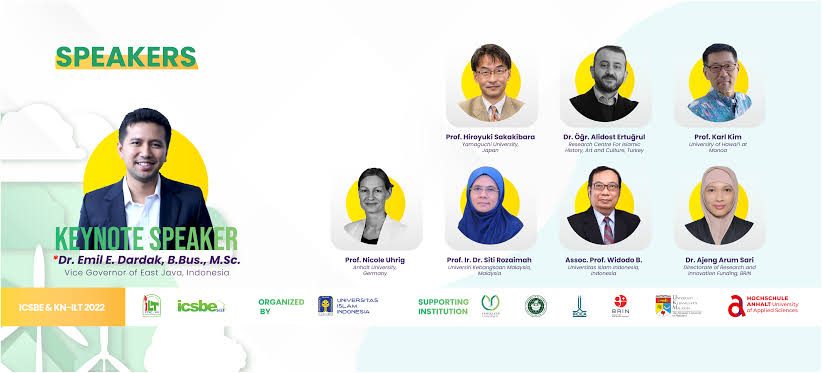
These structured forums bridge government ministries, municipal regulatory agencies, international research institutions, industrial leaders, professional associations, and grassroots community organizations. As visually documented in the conference proceedings below, flagship summits such as the International Conference on Pharmacy and Research Practice (ICPRP) convene ministerial health regulators, clinical directors, and global scientists to shape universal healthcare access and pharmaceutical quality standards.
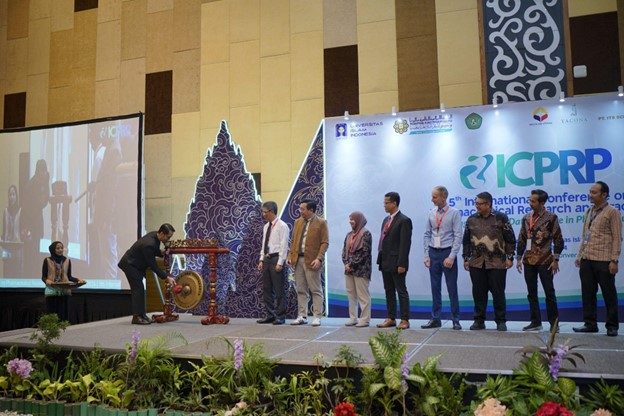
5th ICPRP
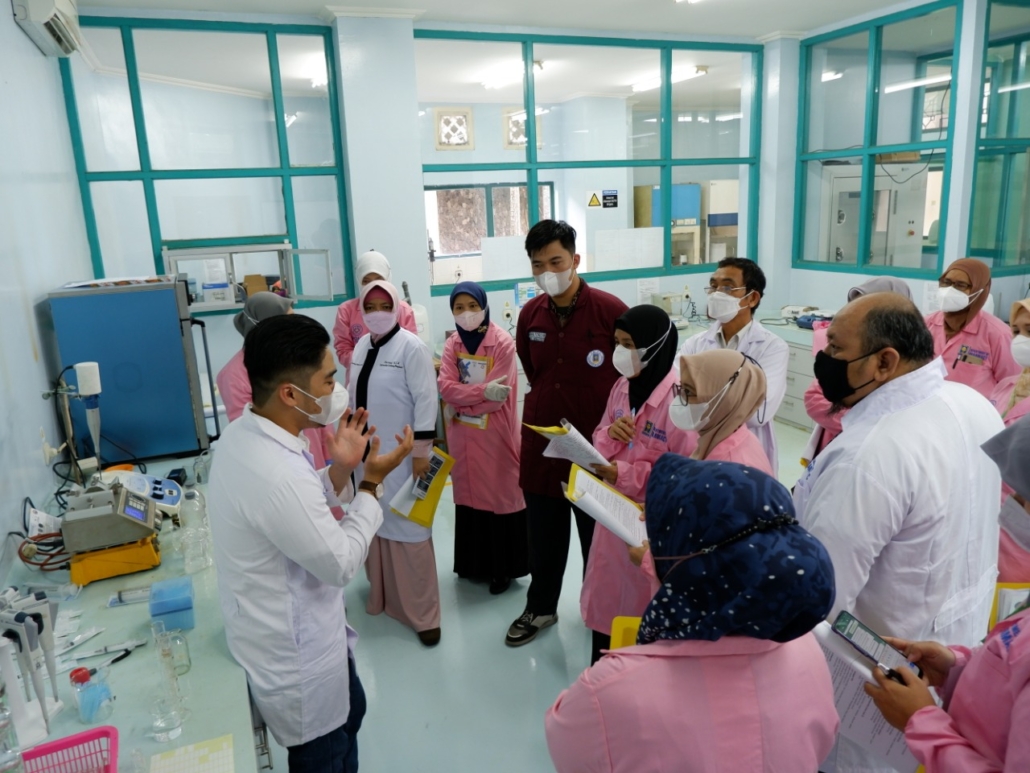
To ensure continuous, institutionalized engagement rather than one-off events, UII maintains eight recurring conference series across key sustainability disciplines. The table below details these major dialogue platforms, their thematic agendas, cross-sectoral participants, targeted SDGs, and indexed proceedings.
| No. | Conference & Organizing Unit | Thematic SDG Dialogue Agenda | Cross-Sectoral Stakeholders Engaged | Targeted SDGs | Evidence & Proceedings |
|---|---|---|---|---|---|
| 1 |
SEMNAS PPM UII
National Seminar on Research & Community Service Outcomes
Annual National Forum
Directorate of Research & Community Service (DPPM UII)
|
“Food, Water, and Energy: Strengthening Resource Resilience Amid Global Crises” Facilitating multi-stakeholder dialogue on renewable energy innovations, sustainable agriculture & food sovereignty, water resource governance, and community disaster resilience. |
• Government: Regional Planning Agencies (Bappeda), Ministry of Agriculture, Ministry of Environment.
• Community & Civil Society: Farmer & fisher cooperatives, rural village heads, NGOs.
• Industry & Academia: Renewable energy startups, agribusiness enterprises, and inter-university researchers.
|
SDG 2
SDG 6 SDG 7 SDG 13 SDG 17 |
Conference Portal ↗ Proceedings Vol. 6 ↗ |
| 2 |
ICSBE
International Conference in Sustainable Built Environment
Biennial International
Faculty of Civil Engineering & Planning (FTSP UII)
|
Sustainable Built Environments & Climate-Resilient Cities Global dialogues addressing carbon-neutral urbanization, green building materials, smart municipal transit, and climate adaptation in hazard-prone archipelagic regions. |
• Government: Ministry of Public Works & Public Housing (PUPR), municipal urban planning boards.
• International Academia: Partner universities from Europe, Australia, and ASEAN.
• Industry & Professional Bodies: Green Building Council Indonesia, Ikatan Arsitek Indonesia (IAI), construction contractors.
|
SDG 9
SDG 11 SDG 13 SDG 17 |
Conference Portal ↗ UII Proceedings ↗ |
| 3 |
KN-ILT
Konferensi Nasional Inovasi Lingkungan Terbangun
Annual National
FTSP UII (Civil, Architecture & Environmental Eng.)
|
“Preserving Sustainable Civilization through Innovation, Green Environment & Resilient Infrastructure” National multi-sector discussions on sustainable regional zoning, environmental impact mitigation, and community-based spatial planning. |
• Government: Regional Environmental Agencies (DLH), Disaster Management Agency (BPBD).
• Industry: Infrastructure developers, eco-housing enterprises, civil consultants.
• Civil Society: Disaster preparedness volunteer networks and community associations.
|
SDG 9
SDG 11 SDG 13 SDG 17 |
Conference Portal ↗ Proceedings Vol. 7 ↗ |
| 4 |
SNTL
Seminar Nasional Teknik Lingkungan
Annual National
Department of Environmental Engineering UII
|
Environmental Quality Management & Green Technology Cross-sector dialogue tackling industrial wastewater treatment, hazardous waste (B3) containment, atmospheric air monitoring, circular waste economy, and Occupational Health & Safety (K3L). |
• Government: Ministry of Environment & Forestry (KLHK), Regional Water Utilities (PDAM).
• Industry: Manufacturing waste managers, environmental auditing firms, industrial estate operators.
• NGOs & Practitioners: River restoration communities, environmental health advocates.
|
SDG 6
SDG 12 SDG 13 SDG 17 |
Conference Portal ↗ Proceedings Vol. 1 ↗ |
| 5 |
UAICIET
Intl. Conference on Islam, Environment and Technologies
International
Faculty of Islamic Studies UII
|
Ecological Justice, Environmental Ethics & AI Governance Interdisciplinary forum connecting religious ecological ethics with modern environmental policy and ethical technology to advance ecological and social justice. |
• Religious & Civil Leaders: Islamic social organizations (Muhammadiyah, Nahdlatul Ulama), eco-pesantren networks.
• Policymakers: Ministry of Religious Affairs, ethical AI oversight boards.
• Scholars & Activists: Environmental philosophers, human rights jurists, and interfaith green alliances.
|
SDG 10
SDG 13 SDG 16 SDG 17 |
Conference Portal ↗ UII Proceedings ↗ |
| 6 |
ICCID
Intl. Conference on Chronic & Infectious Diseases
International
Faculty of Medicine UII
|
Resilient Healthcare Systems & Environmental Health Cross-sector dialogue on strengthening public health resilience against pandemic outbreaks, climate-sensitive infectious diseases, and healthcare access disparities. |
• Public Sector: Ministry of Health (Kemenkes RI), Regional Health Offices (Dinkes), public hospitals.
• Global Health Bodies: International epidemiological researchers, WHO technical advisors.
• Community & Private Sector: Pharmaceutical industries, community health workers (Puskesmas/Kader Posyandu).
|
SDG 3
SDG 10 SDG 17 |
Conference Portal ↗ UII Proceedings ↗ |
| 7 |
ICOLISAT
Intl. Conference on Life Science & Advanced Technology
Biennial International
Faculty of Mathematics & Natural Sciences (FMIPA UII)
|
Green Chemistry, Bioeconomy & Clean Technologies Collaborative sessions exploring sustainable materials synthesis, essential oil bio-refineries, circular chemical processes, and ecological biotechnology. |
• Industry: Chemical manufacturers, agro-biotechnology corporations, natural cosmetics labs.
• Research Agencies: National Research and Innovation Agency (BRIN), standard testing labs.
• Academia: International researchers in green chemical engineering and natural product science.
|
SDG 9
SDG 12 SDG 15 SDG 17 |
Conference Portal ↗ UII Proceedings ↗ |
| 8 |
CeReform
Civil Engineering Research Forum
Annual Forum
Department of Civil Engineering UII
|
Resilient Infrastructure, Water Resources & Disaster Mitigation Dialogue focused on earthquake engineering, low-carbon geotechnics, eco-friendly concrete, flood control modeling, and community evacuation infrastructures. |
• Government: River Basin Authorities (BBWS), Ministry of Transportation, National Disaster Agency (BNPB).
• Industry: State-owned construction firms (BUMN Karya), structural engineering consultancies.
• Academia: Structural and hydraulic researchers from national engineering faculties.
|
SDG 9
SDG 11 SDG 13 SDG 17 |
Conference Portal ↗ Proceedings Vol. 6 ↗ |
The recurring conference architecture highlighted above demonstrates UII’s multifaceted convening power across four strategic dialogue pillars:
- Resource Resilience & Food Sovereignty: Forums like SEMNAS PPM and SNTL convene environmental ministries (KLHK), water utilities (PDAM), and rural agricultural cooperatives to address sustainable water management, renewable energy adoption, and circular industrial waste containment (SDG 2, 6, 12, 13).
- Climate-Proof Infrastructure & Urban Planning: Biennial gatherings including ICSBE, KN-ILT, and CeReform bring together the Ministry of Public Works and Public Housing (PUPR), disaster management boards (BPBD/BNPB), and professional bodies (IAI, Green Building Council Indonesia) to establish green construction codes, flood mitigation modeling, and carbon-neutral transit systems (SDG 9, 11, 13).
- Equitable Healthcare Systems: International summits such as ICCID and ICPRP partner with the Ministry of Health (Kemenkes RI), provincial health offices, and WHO technical experts to tackle pandemic resilience, infectious disease containment, and affordable pharmaceutical distribution for marginalized communities (SDG 3, 10).
- Ethical Technology & Ecological Justice: Interdisciplinary forums like UAICIET bridge Islamic social organizations (Muhammadiyah, Nahdlatul Ulama), religious leaders, and legal philosophers to examine ecological ethics, environmental justice, and ethical artificial intelligence governance (SDG 10, 13, 16).
All conferences publish peer-reviewed, open-access proceedings and generate structured policy briefs, ensuring that multi-stakeholder consensus directly informs statutory regulations and community action.
International Conference on Pharmaceutical Research and Practice (ICPRP)
International Conference in Sustainable Built Environment (ICSBE)
International SDG Data Collaboration
Global sustainability targets require cross-border knowledge exchange, collaborative data collection, and international benchmarking. Universitas Islam Indonesia actively collaborates with prominent overseas universities, multilateral agencies, and scientific consortia to co-produce comparative datasets, track sustainability metrics, and foster global academic mobility.
Central to UII’s international cooperation strategy is its engagement in prestigious multilateral capacity-building initiatives, such as the European Commission’s Erasmus+ Programme (including the Erasmus+ BUiLD Disaster Resilience consortium and CBHE Key Action 1 mobility frameworks). These agreements facilitate structured bi-directional exchanges of researchers, postgraduate scholars, and academic staff, enabling joint research on sustainable urbanism, climate change vulnerability, cross-cultural mental health, and green entrepreneurship.
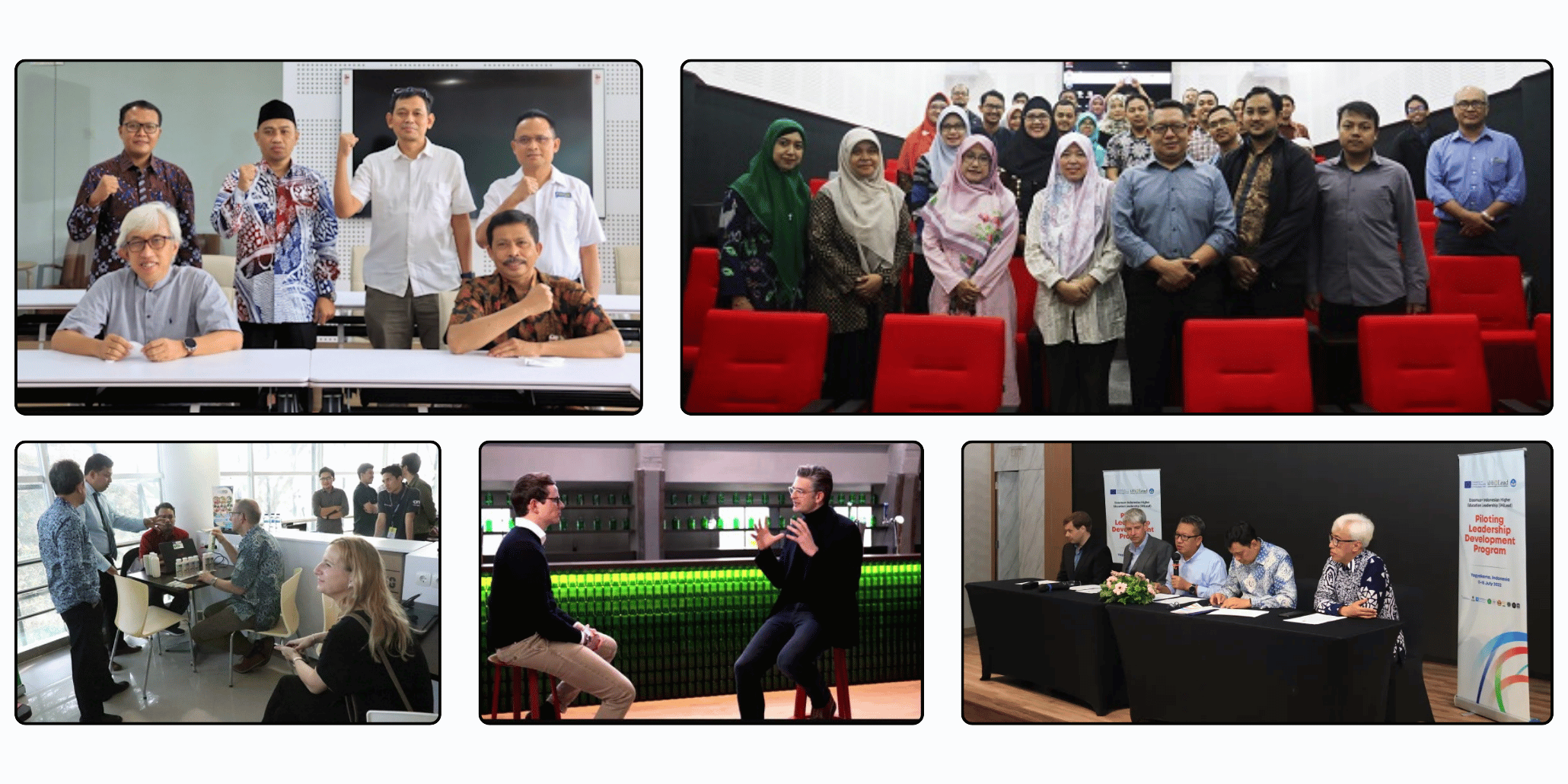
The table below outlines 21 active international collaboration frameworks maintained by Universitas Islam Indonesia across partner institutions in the European Union and globally, detailing the mobility scope, institutional implementing faculty, and targeted SDGs.
| No. | Programme / Partner Institution | Country | Mobility & Collaboration Framework | Implementing Unit (UII) | Active Period | Targeted SDGs |
|---|---|---|---|---|---|---|
| 1 | Erasmus+ Programme (European Commission) ↗ | Poland (EU) | MoA: Erasmus+ Key Action 1 (KA171) Learning Mobility for Higher Education Students and Staff | Universitas Islam Indonesia (Institutional Level) | 22/01/2026 – 22/01/2029 | SDG 17 SDG 4 |
| 2 | Erasmus+ Programme (European Commission) ↗ | Poland (EU) | MoA: Erasmus+ Key Action 1 (KA171) Learning Mobility for Higher Education Students and Staff | Universitas Islam Indonesia (Institutional Level) | 19/12/2025 – 31/07/2027 | SDG 17 SDG 4 |
| 3 | Association of Chartered Certified Accountants ↗ | United Kingdom | MoU: Academic Cooperation, Student Exchange & Joint Research (MoU) | Universitas Islam Indonesia (Institutional Level) | 07/09/2023 – 07/09/2028 | SDG 17 SDG 4 |
| 4 | BSP Business and Law School ↗ | Germany | MoU: Academic Cooperation, Student Exchange & Joint Research (MoU) | Universitas Islam Indonesia (Institutional Level) | 04/08/2026 – 04/08/2031 | SDG 17 SDG 4 |
| 5 | Bauhaus-Universität Weimar ↗ | Germany | MoU: Academic Cooperation and Exchange in Sustainable Urbanism, Architecture & Civil Engineering | Faculty of Civil Engineering and Planning (Postgraduate) | 22/04/2026 – 22/04/2031 | SDG 17 SDG 11 SDG 4 |
| 6 | Brunswick European Law School (BELS), Ostfalia University ↗ | Germany | MoU: Letter of Intent on European & Comparative Environmental/Commercial Law Studies | Faculty of Law | 20/11/2024 – 20/11/2029 | SDG 17 SDG 16 |
| 7 | Eurasia Net ↗ | France | MoU: Academic Cooperation, Student Exchange & Joint Research (MoU) | Universitas Islam Indonesia (Institutional Level) | 17/12/2024 – 17/12/2029 | SDG 17 SDG 4 |
| 8 | Fachhochschule des Mittelstands (FHM) ↗ | Germany | MoU: Applied Sciences Academic Exchange, Dual Studies Architecture, and SME Entrepreneurship | Universitas Islam Indonesia (Institutional Level) | 13/05/2022 – 13/05/2027 | SDG 17 SDG 8 SDG 4 |
| 9 | Heilbronn University of Applied Sciences ↗ | Germany | MoA: Student and Staff Exchange Agreement in Engineering, Business, and Information Technology | Universitas Islam Indonesia (Institutional Level) | 12/06/2026 – 12/06/2031 | SDG 17 SDG 9 SDG 4 |
| 10 | International Biocentric Research Academy (IBRA) ↗ | Germany | MoA: International Collaborative Research in Ecological Ethics, Human Development, and Biocentric Psychology | Department of Psychology, FPSB | 27/05/2025 – 27/05/2030 | SDG 17 SDG 15 SDG 3 |
| 11 | Krakow University of Economics ↗ | Poland | MoU: Bilateral Cooperation Agreement on Student Mobility, Faculty Exchange & Joint Research | UII Waqf Foundation | 01/10/2026 – 01/10/2031 | SDG 17 SDG 4 |
| 12 | NL Knowledge House (Neso / Embassy of the Netherlands) ↗ | Netherlands | MoU: Strategic Academic Partnership on Water Management, Renewable Energy, and Sustainable Agriculture | Universitas Islam Indonesia (Institutional Level) | 09/10/2025 – 09/10/2028 | SDG 17 SDG 6 SDG 7 |
| 13 | Raoul Wallenberg Institute of Human Rights and Humanitarian Law (RWI) ↗ | Sweden | MoA: Human Rights Capacity Building, Fair Trial Research Internship, and Climate Justice Advisory | Faculty of Law | 18/09/2024 – 18/09/2029 | SDG 17 SDG 16 SDG 13 |
| 14 | Rennes School of Business ↗ | France | MoA: International Student Mobility, Dual Degree Cooperation, and Global Sustainable Business Exchange | S1 - Manajemen | 15/01/2025 – 15/01/2030 | SDG 17 SDG 8 SDG 4 |
| 15 | Saxion University of Applied Science ↗ | Netherlands | MoA: Academic Cooperation, Student Exchange & Joint Research (MoA) | Faculty of Business and Economics | 01/10/2026 – 01/10/2030 | SDG 17 SDG 4 |
| 16 | Saxion University of Applied Sciences ↗ | Netherlands | MoA: Academic Cooperation Agreement Non-EU (ACA): Semester Exchange & Sustainable Tech Internship | Faculty of Business and Economics | 22/11/2024 – 22/11/2029 | SDG 17 SDG 4 SDG 9 |
| 17 | Universite De Toulouse ↗ | France | MoU: Academic Cooperation, Student Exchange & Joint Research (MoU) | Universitas Islam Indonesia (Institutional Level) | 28/08/2026 – 28/08/2031 | SDG 17 SDG 4 |
| 18 | University of Debrecen ↗ | Hungary | MoU: Agreement of Academic Friendship, Cross-Border Medical Research, and Student Mobility | Universitas Islam Indonesia (Institutional Level) | 07/03/2024 – 07/03/2029 | SDG 17 SDG 3 SDG 4 |
| 19 | University of Limoges ↗ | France | MoU: Framework Agreement for Academic Cooperation, International Research, and Scientific Exchange | Universitas Islam Indonesia (Institutional Level) | 18/09/2024 – 18/09/2029 | SDG 17 SDG 4 SDG 9 |
| 20 | University of Siena ↗ | Italy | MoU: Bilateral Agreement on Sustainable Development Studies, Environmental Law, and Staff Mobility | Universitas Islam Indonesia (Institutional Level) | 05/11/2025 – 05/11/2030 | SDG 17 SDG 17 SDG 4 |
| 21 | Vytautas Magnus University ↗ | Lithuania | MoU: Academic Cooperation & Student Exchange in Political Science, International Relations, and Culture | Universitas Islam Indonesia (Institutional Level) | 13/03/2024 – 13/03/2029 | SDG 17 SDG 16 SDG 4 |
Key dimensions of UII’s international collaboration network include:
- Geographic Reach and Institutional Excellence: UII maintains 21 high-impact international agreements spanning key European academic centers, including Germany (6 agreements, notably Bauhaus-Universität Weimar in sustainable urbanism), France (4 agreements), the Netherlands (3 agreements), Poland (European Commission Erasmus+ KA171 mobility frameworks), Lithuania (Vytautas Magnus University), and the United Kingdom.
- Data Gathering & Educational Mobility: The vast majority of agreements (17 initiatives) directly advance SDG 4 (Quality Education) and SDG 17 (Partnerships for the Goals), combining credit-transfer student mobility with standardized research data exchange in engineering, social sciences, and environmental governance.
- Targeted Technical Consortia: Specialized collaborations directly support SDG 9 (Industry, Innovation, and Infrastructure) and SDG 16 (Peace, Justice, and Strong Institutions), establishing joint research laboratories, comparative legal studies, and resilience assessment methodologies applicable to developing island and tropical economies.
Developing Best Practices for SDGs Through Global Research
Translating international academic partnerships into enduring institutional capabilities requires structured, multi-year collaborative research. Universitas Islam Indonesia actively participates in prestigious international research consortia funded by competitive global grants—most notably the European Commission’s Erasmus+ Capacity Building in Higher Education (CBHE) programme—to develop, test, and disseminate global best practices for the SDGs.
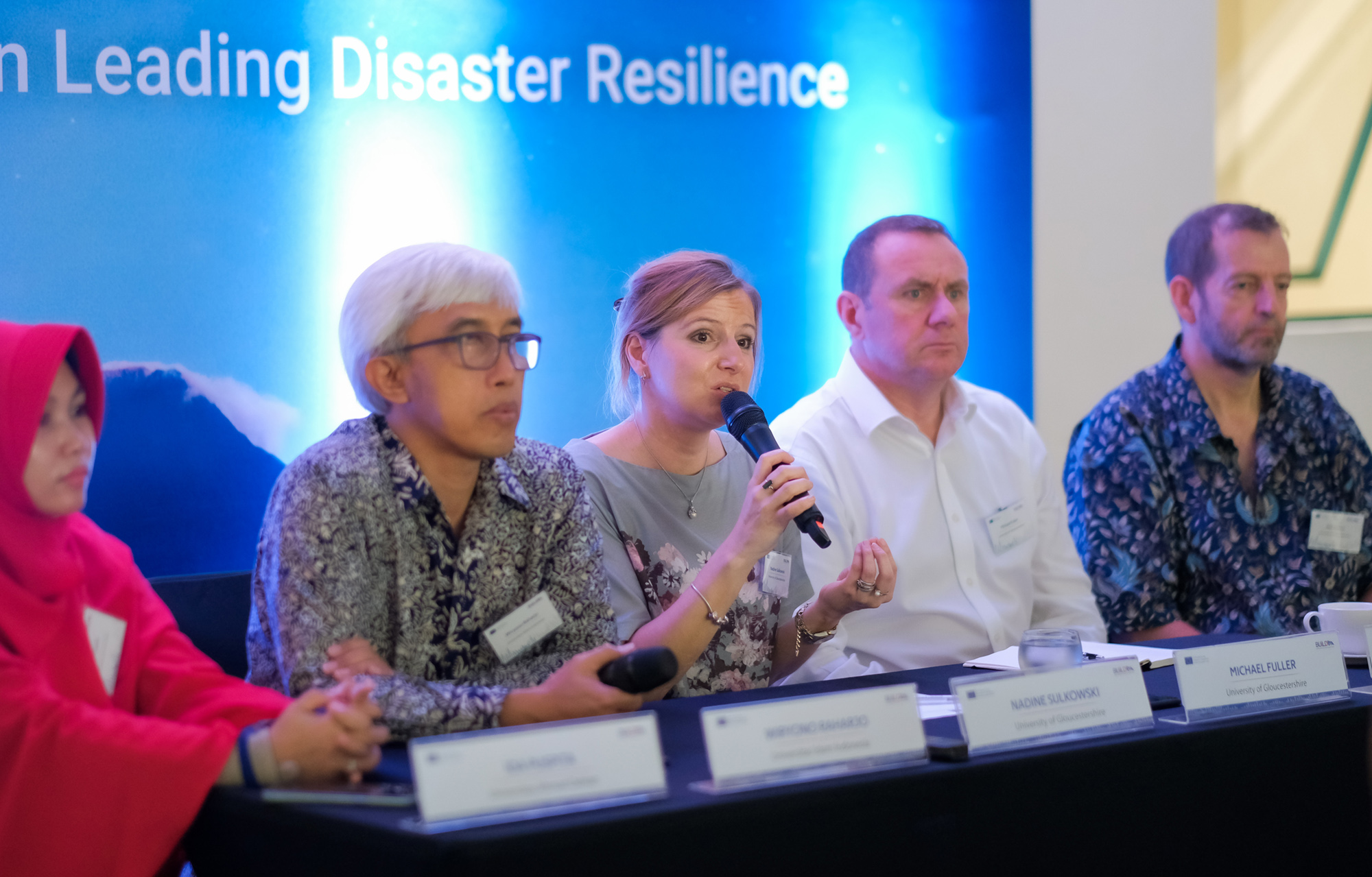
Rather than serving merely as an external partner, UII frequently exercises leadership within these multilateral frameworks, including acting as the National Lead Coordinator for nationwide consortia. Through rigorous cross-border research, UII scholars co-develop standardized operational guidelines, curriculum toolkits, and social impact assessment instruments that are subsequently adopted by higher education networks, government ministries, and municipal agencies.

The table below details five flagship Erasmus+ CBHE consortia led and implemented by UII, highlighting partner institutions across Europe and ASEAN, thematic research areas, concrete institutional best practices established, and targeted SDGs.
| No. | Consortium & Grant | International Partners & Scope | Thematic Research Focus | Institutional Best Practice & Frameworks Developed | Targeted SDGs | Evidence Link |
|---|---|---|---|---|---|---|
| 1 |
BUiLD
Building Universities in Leading Disaster Resilience
EU Erasmus+ CBHE
2019 – 2022
|
Lead: Univ. of Gloucestershire (UK)
EU: Austria, Portugal, Denmark
Indonesia: UII (Lead), Unand, ULM, Ubaya, UAD, PresUniv, Unismuh Palu
|
Disaster Resilience & Climate Adaptation Campus risk reduction, disaster response protocols, and emergency shelter systems. |
• DiRReC: Disaster Risk Reduction Center established at UII as operational research hub.
• SPMKB Standard: Campus disaster safety, multi-hazard evacuation & continuity guidelines.
• Emergency Shelter: Campus infrastructure mobilized for regional public health & crises.
• Curriculum Modules: Open-access disaster preparedness & risk reduction training.
|
SDG 11
SDG 13 SDG 4 SDG 17 |
build.uii.id ↗ UII CBHE Portal ↗ |
| 2 |
ANGEL
ASEAN Network for Green Entrepreneurship & Leadership
EU Erasmus+ CBHE
2020 – 2024
|
16 Institutions (7 Countries):
EU: Univ. of the Aegean (Greece - Lead), Frederick Univ. (Cyprus)
ASEAN: UII, ITB (ID), UTM, UTHM (MY), RUPP (KH), NUOL (LA), HUMG (VN)
|
Green Economy & Circular Entrepreneurship Eco-innovation, sustainable venture incubation, and green leadership capacity. |
• ANGEL Innovate Unit: Dedicated green innovation hub integrated with IBISMA UII.
• Green Curriculum & ToT: Standardized university circular economy courses & ToT.
• Inclusive Incubation: Tailored mentorship for women, rural youth & eco-enterprises.
• ASEAN Network: Cross-border transfer connecting academic research to green markets.
|
SDG 8
SDG 12 SDG 13 SDG 17 |
ANGEL Report ↗ UII CBHE Portal ↗ |
| 3 |
iHiLead
Indonesian Higher Education Leadership
EU Erasmus+ CBHE
2021 – 2024
|
Lead: Univ. of Gloucestershire (UK)
EU: ISCTE (Portugal), Univ. of Granada (Spain)
Indonesia: UII, UNPAD, UNNES, PresUniv, UB, UAD, Kemendikbudristek
|
Higher Education Governance & Leadership University governance reform, strategic leadership, and sustainable management. |
• Leadership Framework: European-benchmarked standard for Indonesian higher education.
• Executive Masterclasses: Leadership training toolkits for institutional sustainability.
• Policy Briefs: National governance recommendations for Kemendikbudristek RI.
|
SDG 4
SDG 16 SDG 17 |
CBHE Portal ↗ |
| 4 |
GITA
Growing Indonesia: A Triangular Approach
EU Erasmus+ CBHE
2017 – 2020
|
Lead: Univ. of Gloucestershire (UK)
EU: TU Dublin (Ireland), FHM (Germany)
Indonesia: UII, UNPAD, PresUniv, UB, STIE Malangkucecwara
|
University-Enterprise Growth Hubs Ecosystems for technology transfer, spinoffs, and economic resilience. |
• Growth Hub UII: Physical innovation space connecting student research with industry.
• Commercialization Methodology: Spin-off acceleration supporting local economies.
|
SDG 8
SDG 9 SDG 17 |
CBHE Portal ↗ |
| 5 |
REPESEA
Revitalising Higher Education with Social Engagement
EU Erasmus+ CBHE
2016 – 2019
|
Lead: FH Joanneum (Austria)
EU: Unitelma Sapienza (Italy)
Southeast Asia: UII, partner universities in Indonesia, Malaysia, Thailand
|
Societal Engagement & Civic Impact Assessment mechanisms for university community research & social impact. |
• Social Impact Assessment Tool: Institutional metric for civic engagement.
• Civic Research Guidelines: Operational standards for community-driven research.
|
SDG 4
SDG 11 SDG 17 |
CBHE Portal ↗ |
These multilateral research consortia have generated transformative, long-lasting institutional assets that advance the global sustainability agenda:
- Disaster Risk Reduction and Campus Resilience (BUiLD): As National Lead Coordinator, UII established the Disaster Risk Reduction Center (DiRReC) and authored the Standard Operating Procedure for Multi-Hazard Campus Resilience (SPMKB), which serves as a national benchmark for university disaster preparedness and emergency shelter deployment (SDG 11, 13).
- Green Entrepreneurship & Eco-Incubation (ANGEL): Collaborating with 16 institutions across seven European and ASEAN nations, UII operationalized the ‘ANGEL Innovate’ unit, institutionalizing dedicated green venture incubation, specialized training-of-trainers (ToT) curricula, and market-access pathways for women-led and rural eco-enterprises (SDG 8, 12, 13).
- Sustainable Institutional Leadership & Governance (iHiLead): Partnering with the Indonesian Ministry of Education (Kemendikbudristek) and European universities, UII co-created executive leadership development masterclasses and policy toolkits designed to steer universities toward long-term organizational sustainability (SDG 4, 16).
- Enterprise Incubation & Civic Social Engagement (GITA & REPESEA): Through the establishment of the physical Growth Hub and the deployment of the Social Impact Assessment Tool, UII pioneered methodologies that systematically measure and scale the tangible social impact of university research on local communities (SDG 8, 9, 11).
By publishing consortium findings in open-access policy briefs and peer-reviewed international journals, UII ensures that best practices developed through global research are freely shared across the higher education sector.
NGO Partnerships to Address SDGs
Non-Governmental Organisations (NGOs) and civil society groups are indispensable allies in ensuring that academic expertise directly alleviates poverty, protects vulnerable populations, and restores local ecosystems. Universitas Islam Indonesia establishes strategic institutional ties with grassroots, national, and international civil society organisations to implement field-based social assistance, disaster relief, and capacity-building programmes.

These partnerships create an operational bridge between university resources and communities facing acute socio-economic challenges. UII works with prominent humanitarian partners such as Dompet Dhuafa on educational infrastructure and public health interventions, alongside international civil society consortia such as the Australian Consortium for ‘In-Country’ Indonesian Studies (ACICIS) and the International Biocentric Research Academy (IBRA, Germany) on ecological ethics and community wellbeing. Domestically, close cooperation with regional alumni networks (DPW IKA UII) ensures rapid-response community assistance in coastal, rural, and disaster-affected areas.
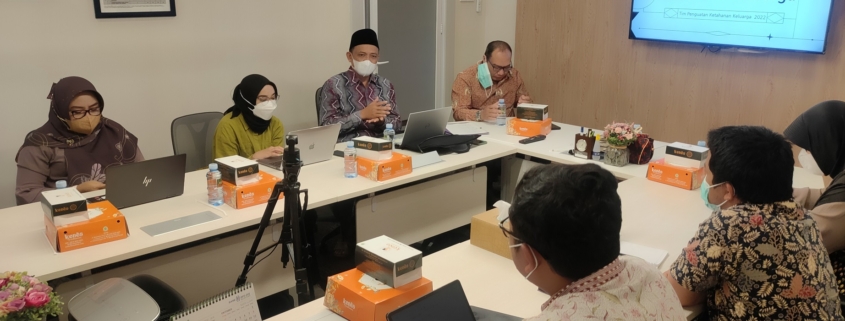
The table below itemises 37 active civil society and NGO partnerships sustained by Universitas Islam Indonesia, highlighting their operational scope, core empowerment initiatives, implementing faculty, and targeted SDGs.
| No. | NGO / Civil Society Partner | Scope | Focus Area & Community Empowerment Initiatives | Implementing Unit (UII) | Active Period | Targeted SDGs |
|---|---|---|---|---|---|---|
| 1 | The International Committee of the Red Cross (ICRC) Regional Delegation for Indonesia and Timor Leste ↗ | International | MoA: International Humanitarian Law (IHL) Dissemination, Protection of Civilians in Armed Conflict, Humanitarian Assistance, and Human Rights Moot Court Competitions | Faculty of Law (FH UII) | 10/06/2025 – 30/11/2025 | SDG 16 SDG 17 |
| 2 | Council for Digital Safety and Wellbeing (Singapore / Regional NGO) ↗ | International | MoU: Digital Mental Health, Online Child Protection, Cyber Ethics, and Regional Youth Digital Wellbeing Research | Faculty of Psychology and Socio-Cultural Sciences | 29/06/2026 – 29/06/2031 | SDG 3 SDG 16 SDG 17 |
| 3 | Eurasia Net (Marseille, France) ↗ | International | MoU: Youth Civic Engagement, Social Ecology, Intercultural Youth Exchanges, and Educational Resource Development | Directorate of Partnerships / International Affairs | 17/12/2024 – 17/12/2029 | SDG 4 SDG 13 SDG 17 |
| 4 | International Biocentric Research Academy (IBRA, Germany) ↗ | International | MoU: Biocentric Education, Ecological Human Development, Sustainable Psychosocial Wellbeing, and Joint Research | Faculty of Psychology and Socio-Cultural Sciences | 27/05/2025 – 27/05/2030 | SDG 3 SDG 4 SDG 17 |
| 5 | Japan Da'wah Centre (Osaka, Japan) ↗ | International | MoU: Cross-Cultural Community Service, Interfaith Social Cohesion, Halal Education, and Minority Community Empowerment | Faculty of Islamic Studies | 19/06/2026 – 19/06/2031 | SDG 10 SDG 16 SDG 17 |
| 6 | Nahdlatul Ulama Special Branch Taiwan (PCINU Taiwan) ↗ | International | MoA: Migrant Worker Advocacy, Legal Literacy, Psychosocial Guidance, and Cross-Border Islamic Community Empowerment | Faculty of Islamic Studies | 21/06/2026 – 21/06/2026 | SDG 8 SDG 10 SDG 17 |
| 7 | National Academy of Psychology (NAOP, India) ↗ | International | MoU: Community Mental Health Resilience, Cross-Cultural Psychosocial Support, and Indigenous Psychology Research | Faculty of Psychology and Socio-Cultural Sciences | 09/09/2025 – 09/09/2030 | SDG 3 SDG 4 SDG 17 |
| 8 | Overseas Indonesian Students' Association Alliance (OISAA / PPI Dunia) ↗ | International | MoU: Global Student Civic Leadership, Diasporic Community Empowerment, and Youth-Led SDG Action Initiatives | Directorate of Student Affairs | 14/04/2022 – 14/04/2027 | SDG 4 SDG 17 |
| 9 | Psychological Society of South Africa (PsySSA) ↗ | International | MoU: Trauma-Informed Community Interventions, Social Justice Advocacy, and Post-Colonial Mental Health Research | Faculty of Psychology and Socio-Cultural Sciences | 09/09/2025 – 09/09/2030 | SDG 3 SDG 10 SDG 17 |
| 10 | Rabitah Alamiyah Li Ta'lim wa Da'wah Foundation ↗ | International | MoU: Global Islamic Education Outreach, Humanitarian Aid Dissemination, and Youth Community Service | Faculty of Islamic Studies | 15/11/2021 – 15/11/2026 | SDG 4 SDG 10 SDG 17 |
| 11 | Brazilian Society of Psychology (Sociedade Brasileira de Psicologia) ↗ | International | MoU: Community Mental Health Policy, Child Development Interventions, and Cross-Continental Scientific Knowledge Transfer | Faculty of Psychology and Socio-Cultural Sciences | 09/09/2025 – 09/09/2030 | SDG 3 SDG 4 SDG 17 |
| 12 | Indonesia Corruption Watch (ICW) ↗ | National / Local | MoU: Public Integrity Monitoring, Open Governance Advocacy, Anti-Corruption Youth Clinics, and Transparency Research | Faculty of Law / PUKAT | 16/02/2024 – 16/02/2029 | SDG 16 SDG 17 |
| 13 | Institute for Policy Research and Advocacy (ELSAM) ↗ | National / Local | MoA: Human Rights Defense, Digital Rights & Privacy Governance, Policy Brief Co-Production, and Legal Aid Advocacy | Faculty of Law | 06/03/2026 – 06/03/2031 | SDG 16 SDG 10 SDG 17 |
| 14 | Migrant CARE (Perkumpulan Indonesia untuk Buruh Migran Berdaulat) ↗ | National / Local | MoA: Sovereign Migrant Worker Protection, Anti-Trafficking Legal Clinics, Gender-Based Violence Redress, and Policy Advocacy | Faculty of Law / Department of International Relations | 22/08/2024 – 22/08/2029 | SDG 8 SDG 10 SDG 5 SDG 17 |
| 15 | YAKKUM Emergency Unit (YEU) / Yayasan Kristen untuk Kesehatan Umum (YAKKUM) ↗ | National / Local | IA: Disability-Inclusive Disaster Risk Reduction (DiDRR), Assistive Device Access, Community Healthcare, and Grassroots Vulnerability Mitigation | Department of International Relations (FPSB UII) | 2024 – 2027 | SDG 10 SDG 3 SDG 11 SDG 17 |
| 16 | Srikandi Lintas Iman (SRILI) ↗ | National / Local | IA: Interfaith Women's Solidarity, Peacebuilding, Countering Gender-Based Violence, Tolerance Education, and Marginalized Group Protection | Department of International Relations (FPSB UII) | 2024 – 2027 | SDG 5 SDG 16 SDG 10 SDG 17 |
| 17 | Dompet Dhuafa Republika (Dompet Dhuafa Foundation) ↗ | National / Local | MoA: Productive Zakat & Waqf Social Finance, Poverty Eradication, Free Mobile Clinics for the Indigent, and Disaster Emergency Response | Faculty of Islamic Studies / Directorate of Islamic Development & Community Engagement | 2023 – 2028 | SDG 1 SDG 2 SDG 3 SDG 10 SDG 17 |
| 18 | Habitat for Humanity Indonesia ↗ | National / Local | MoU: Resilient Low-Income Housing, Clean Water & Sanitation Systems, Community Disaster Mitigation, and Student Volunteer Builds | Faculty of Civil Engineering and Planning | 17/04/2025 – 17/04/2028 | SDG 11 SDG 6 SDG 1 SDG 17 |
| 19 | Indonesian Red Cross (PMI) Special Region of Yogyakarta ↗ | National / Local | MoU: Emergency Disaster Relief, Blood Donation Logistics, Community First Aid Training, and Epidemic Preparedness | Faculty of Medicine / Student Volunteer Corps (KSR UII) | 09/07/2024 – 09/07/2029 | SDG 3 SDG 11 SDG 17 |
| 20 | Green Building Council Indonesia (GBC Indonesia) ↗ | National / Local | MoU: Green Campus Certification, Net-Zero Building Standards, Energy Audit Training, and Sustainable Urban Infrastructure | Faculty of Civil Engineering and Planning | 29/10/2024 – 29/10/2027 | SDG 11 SDG 12 SDG 13 SDG 17 |
| 21 | Center for Education and Policy Studies (PSPK) ↗ | National / Local | MoU: Equitable National Education Policy, Literacy Improvement Interventions, Teacher Pedagogical Development, and Educational Inclusion | Faculty of Psychology and Socio-Cultural Sciences | 27/11/2025 – 27/11/2030 | SDG 4 SDG 10 SDG 17 |
| 22 | Koalisi Nasional Pembangunan Keluarga Indonesia (KNPK Indonesia) ↗ | National / Local | MoU: Child Stunting Eradication, Grassroots Maternal Health Literacy, Domestic Violence Prevention, and Family Resilience Advocacy | Faculty of Psychology and Socio-Cultural Sciences | 14/10/2021 – 14/10/2026 | SDG 3 SDG 5 SDG 10 SDG 17 |
| 23 | Majelis Hukum dan Hak Asasi Manusia Pimpinan Wilayah Muhammadiyah DIY ↗ | National / Local | IA: Pro Bono Legal Aid for Marginalized Communities, Human Rights Dissemination, and Agrarian Dispute Mediation | Faculty of Law / Legal Aid Consultation Bureau (LKBH UII) | 22/02/2025 – 22/02/2026 | SDG 16 SDG 10 SDG 17 |
| 24 | Daarut Taqwa Orphanage, Ihsaniyyah Foundation ↗ | National / Local | MoU: Child Welfare Protection, Orphan Education Sponsorship, Nutrition Support, and Student Psychosocial Mentorship | Directorate of Student Affairs / KKN UII | 27/12/2021 – 27/12/2026 | SDG 1 SDG 4 SDG 10 SDG 17 |
| 25 | Forum Panti Asuhan Muhammadiyah – 'Aisyiyah DIY ↗ | National / Local | MoA: Standardized Institutional Childcare, Nutrition Monitoring, Digital Literacy for Foster Children, and Carer Capacity-Building | Directorate of Student Affairs / KKN UII | 03/02/2025 – 03/02/2030 | SDG 1 SDG 2 SDG 10 SDG 17 |
| 26 | Hilal Bogor Humanitarian Foundation ↗ | National / Local | MoU: Food Relief Distribution, Clean Water Delivery in Drought Zones, and Emergency Humanitarian Logistics | Directorate of Community Service / KKN UII | 11/11/2021 – 11/11/2026 | SDG 1 SDG 2 SDG 6 SDG 17 |
| 27 | Indonesian Waqf Education Foundation (YEWI) ↗ | National / Local | MoU: Productive Waqf Education, Community Economic Empowerment, Poverty Alleviation Models, and Micro-Waqf Capacity Building | Faculty of Islamic Studies / Department of Economics | 06/12/2023 – 06/12/2026 | SDG 1 SDG 4 SDG 8 SDG 17 |
| 28 | Indonesian Psychological Association (HIMPSI) ↗ | National / Local | MoU: Community Mental Health Literacy, Disaster Trauma Counseling Protocols, Child Safeguarding Standards, and Professional Ethics | Faculty of Psychology and Socio-Cultural Sciences | 07/11/2023 – 07/11/2028 | SDG 3 SDG 4 SDG 17 |
| 29 | Indonesian Institute of Architects (IAI) ↗ | National / Local | MoU: Climate-Adaptive Architecture, Low-Carbon Community Vernacular Housing, and Sustainable Urban Space Development | Department of Architecture, FTSP UII | 15/12/2023 – 15/12/2028 | SDG 11 SDG 13 SDG 17 |
| 30 | Indonesian Association of Urban Designers (IARKI) ↗ | National / Local | MoU: Inclusive Public Space Design, Transit-Oriented Sustainable Planning, and Urban Micro-Climate Mitigation Research | Department of Architecture, FTSP UII | 04/03/2024 – 04/03/2029 | SDG 11 SDG 13 SDG 17 |
| 31 | Persatuan Insinyur Indonesia (PII) Wilayah DIY ↗ | National / Local | MoU: Sustainable Infrastructure Engineering Standards, Renewable Energy Microgrid Deployment, and Industrial Decarbonization | Faculty of Civil Engineering & Planning | 17/04/2023 – 17/04/2028 | SDG 9 SDG 11 SDG 17 |
| 32 | Indonesian Institute of Certified Public Accountants (IAPI) ↗ | National / Local | MoU: Environmental, Social, and Governance (ESG) Auditing Standards, Anti-Fraud Financial Literacy, and Corporate Transparency | Department of Accounting, FEB UII | 13/06/2025 – 13/06/2030 | SDG 12 SDG 16 SDG 17 |
| 33 | Indonesian Diaspora Network Global (IDN Global) ↗ | National / Local | MoU: Transnational Knowledge Transfer, Circular Economy Advocacy, and Global Professional Mentorship for Students | Directorate of Partnerships & International Affairs | 02/03/2026 – 02/03/2028 | SDG 8 SDG 17 |
| 34 | Central Board of Indonesian Association of Hajj Physicians (PERDOHI) ↗ | National / Local | MoU: Mass Gathering Health Risk Management, Heatstroke Prevention Protocols, and Pilgrim Healthcare Literacy | Faculty of Medicine | 21/09/2024 – 21/09/2029 | SDG 3 SDG 17 |
| 35 | Building Information Modelling (BIM) Institute of Indonesia ↗ | National / Local | MoU: Digital Twin Technology for Green Buildings, Embodied Carbon Tracking, and Open-Source BIM Training for Students | Department of Civil Engineering, FTSP UII | 07/03/2025 – 07/03/2030 | SDG 9 SDG 11 SDG 12 SDG 17 |
| 36 | Build Up Consulting NGO Network ↗ | National / Local | MoU: Grassroots Psychosocial Capacity Building, Community Mental Health Facilitation, and Youth Empowerment Training | Faculty of Psychology and Socio-Cultural Sciences | 20/02/2024 – 20/02/2029 | SDG 3 SDG 4 SDG 17 |
| 37 | Intelektualita Community Consulting & Research Network ↗ | National / Local | MoU: Community-Based Action Research, Participatory Rural Appraisal, and Local Sustainable Economic Development Facilitation | Faculty of Psychology and Socio-Cultural Sciences | 12/02/2024 – 12/02/2029 | SDG 8 SDG 10 SDG 17 |
The empirical profile of UII’s civil society alliance network demonstrates a focused community engagement model:
- Broad Multi-Level Reach: The network comprises 11 International NGOs fostering cross-cultural research and international community development, paired with 31 National and Regional Civil Society Organisations executing targeted interventions across Indonesia’s provinces.
- Holistic SDG Impact: While every partnership reinforces SDG 17, activities actively drive progress across SDG 4 (Quality Education — 14 initiatives), SDG 3 (Good Health and Well-being — 11 initiatives), SDG 8 (Decent Work and Economic Growth — 10 initiatives), SDG 1 (No Poverty — 8 initiatives), and SDG 16 (Peace, Justice, and Strong Institutions — 8 initiatives).
- Integration with Experiential Student Learning: These NGO partnerships form the institutional bedrock for UII’s flagship community service-learning programmes (KKN Tematik). Students and faculty work side-by-side with professional NGO staff in rural villages, deploying clean water filtration, vocational business training, and digital literacy workshops.
Da’wa Islamiyah and Community Services
Dompet Dhuafa, as one of many NGOs that partners with Universitas Islam Indonesia
SDG Progress Reporting
Institutional transparency, public accountability, and metric-driven tracking are central to Universitas Islam Indonesia’s sustainability governance. Since formalising its university-wide sustainability administration in October 2020, UII has published comprehensive, annual public Sustainability Reports disclosing the institution’s progress across all 17 Sustainable Development Goals.
The newly released Sustainability Report 2026 (illustrated below) marks the university’s sixth consecutive annual disclosure. Prepared in accordance with international sustainability reporting frameworks—including Global Reporting Initiative (GRI) Standards, Times Higher Education Impact Rankings criteria, and UI GreenMetric parameters—the report provides audited evidence of UII’s environmental stewardship, academic curricula, research discoveries, and community investments.
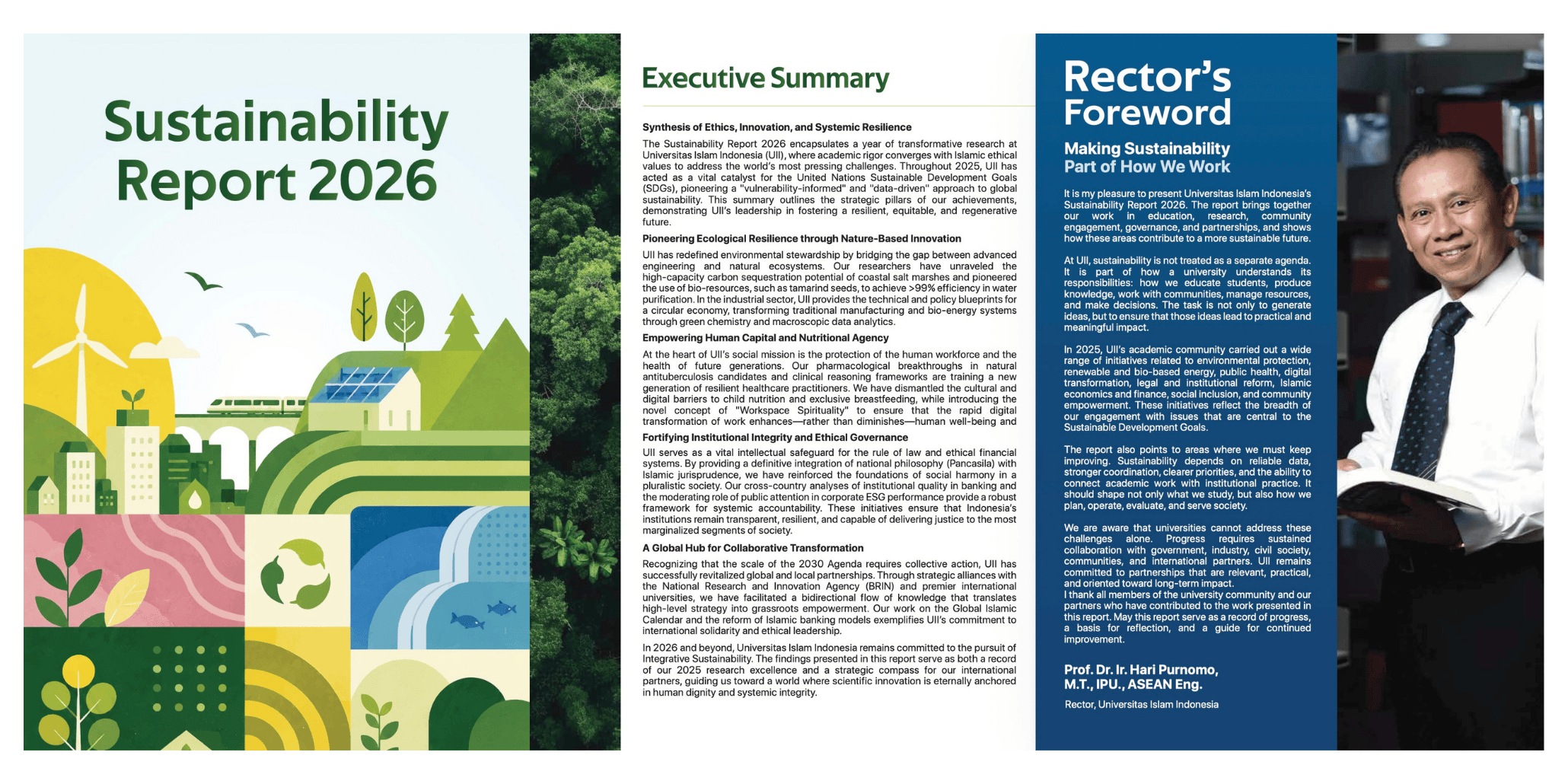
Key verified metrics disclosed within the annual Sustainability Report series include:
- Equity, Inclusion & Social Access: Institutional distributions of need-based and affirmative scholarships for underrepresented populations, gender parity ratios across faculty and administrative leadership, and accessible campus infrastructure metrics.
- Targeted Research & Community Financing: Annual budget allocations dedicated specifically to multi-stakeholder SDG research grants, verified community outreach programs, and field-based service learning (KKN Tematik).
Public Open-Access Archive: All annual sustainability reports are published as open-access documents, permanently archived, and freely accessible to students, researchers, regulatory agencies, and global ranking evaluators through the official institutional repository at https://bpp.uii.ac.id/sustainability-report/.
Universitas Islam Indonesia’s Sustainability Report Archives
UII’s Contributions to Education for the SDGs
Commitment to Meaningful Education on the SDGs
Universitas Islam Indonesia (UII) demonstrates a strong commitment to promoting meaningful education related to the Sustainable Development Goals (SDGs) across all academic levels. As the first university in Indonesia to initiate an international program in 1996, UII has long embraced global perspectives within its educational framework. Building upon this foundation, UII established a dedicated learning center that supports students in developing global competencies—pioneering such initiatives in Indonesia’s higher education landscape.
UII ensures that its educational services foster quality learning and inclusivity through a variety of academic support programs. These include proofreading services, tutoring sessions, capacity-building workshops, and bridging programs designed to help students succeed in diverse academic environments. In addition, UII provides scholarships for global leadership to empower students to actively engage in international collaborations and cross-cultural learning.
Through these initiatives, UII not only enhances academic excellence but also reinforces its commitment to advancing the SDGs. By integrating global engagement and sustainable values into its educational ecosystem, UII continues to prepare graduates who are capable, ethical, and ready to contribute to solving global challenges.
Dedicated Academic Programs for Sustainability and the SDGs
Universitas Islam Indonesia believes that education is the most durable instrument for advancing global sustainable development. To ensure that every graduate possesses the technical competence and ethical framework needed to tackle complex socio-environmental challenges, UII embeds sustainability directly into its formal accredited degree structures across undergraduate and postgraduate programmes.
The curriculum architecture incorporates both specialized engineering disciplines (such as Environmental Engineering, Architecture, and Civil Engineering) and interdisciplinary degree programs across Law, International Relations, and Economics. Rather than treating sustainability as an optional extracurricular theme, UII designates core sustainability courses as mandatory graduation requirements across study programmes. Furthermore, the university mandates participation in UNI608: Community Service and Empowerment (KKN Tematik), a compulsory credit-bearing experiential program deploying multidisciplinary student cohorts to address village-level clean water, sanitation, and renewable energy adoption.
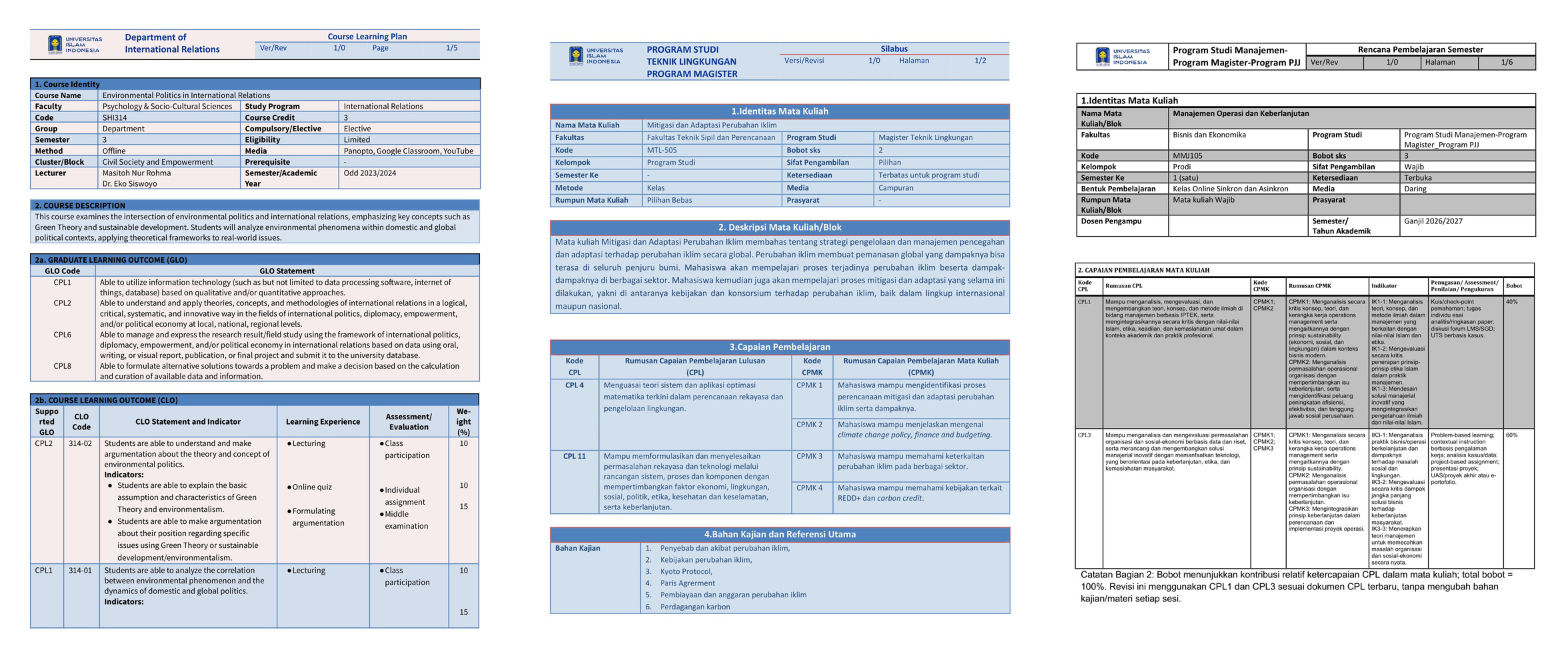
The curriculum inventory below details 44 dedicated sustainability and SDG courses currently offered across UII’s academic programs, outlining course codes, degree levels, credit weighting (SKS), core pedagogical focus, and targeted SDGs.
| No. | Course Code & Title | Degree Level & Study Program | Credits & Type | Core Sustainability & SDG Learning Focus | Targeted SDGs |
|---|---|---|---|---|---|
| 1 |
MTL 501: Environmental Conflict Mediation and Negotiation Mediasi dan Negosiasi Konflik Lingkungan |
Master's Degree (S2) Environmental Engineering |
2 SKS Elective |
Multi-stakeholder dispute resolution in natural resource management, environmental mediation frameworks, indigenous community rights negotiation, and participatory consensus building. | SDG 16 SDG 17 SDG 10 |
| 2 |
MTL 502: Environmental Impact Assessment (EIA / AMDAL) Penilaian Dampak Lingkungan |
Master's Degree (S2) Environmental Engineering |
2 SKS Elective |
Comprehensive Environmental Impact Assessment methodologies, Environmental Management & Monitoring Plans (RKL-RPL), regulatory compliance, and public participation in environmental licensing. | SDG 12 SDG 15 SDG 17 |
| 3 |
MTL 503: Environmental Technopreneurship Technopreneurship Lingkungan |
Master's Degree (S2) Environmental Engineering |
2 SKS Elective |
Green tech business models, circular economy venture creation, intellectual property in clean-tech innovation, and sustainable environmental product commercialization. | SDG 8 SDG 9 SDG 12 |
| 4 |
MTL 505: Climate Change Mitigation and Adaptation Mitigasi dan Adaptasi Perubahan Iklim |
Master's Degree (S2) Environmental Engineering |
2 SKS Elective |
Greenhouse gas (GHG) accounting and inventories, carbon sequestration strategies, climate vulnerability assessments, community-based adaptation, and national NDC alignment. | SDG 13 SDG 11 SDG 17 |
| 5 |
MTL 506: Advanced Air Pollution Control Pengendalian Pencemaran Udara Lanjut |
Master's Degree (S2) Environmental Engineering |
2 SKS Elective |
Industrial emissions abatement technologies (baghouse filters, scrubbers, catalytic converters), continuous emission monitoring systems (CEMS), and ambient air quality management. | SDG 3 SDG 11 SDG 13 |
| 6 |
MTL 507: Industrial Environmental Hygiene Higiene Lingkungan Industri |
Master's Degree (S2) Environmental Engineering |
2 SKS Elective |
Workplace hazardous agent identification, industrial toxicology, occupational exposure limits, ergonomics, and workplace environmental disease prevention. | SDG 3 SDG 8 |
| 7 |
MTL 508: Industrial Waste Management Manajemen Limbah Industri |
Master's Degree (S2) Environmental Engineering |
3 SKS Elective |
Industrial hazardous waste cradle-to-grave manifest tracking, waste minimization audits, cleaner production assessments, and hazardous waste treatment and disposal standards. | SDG 12 SDG 9 SDG 3 |
| 8 |
MTL 509: Advanced Wastewater Treatment Engineering Pengolahan Air Limbah Lanjut |
Master's Degree (S2) Environmental Engineering (Environmental Engineering Track) |
3 SKS Track Compulsory |
Advanced biological nutrient removal, membrane bioreactors (MBR), advanced oxidation processes (AOPs), wastewater reuse protocols, and industrial effluent polishing. | SDG 6 SDG 12 |
| 9 |
MTL 510: Advanced Potable Water Supply Engineering Penyediaan Air Minum Lanjut |
Master's Degree (S2) Environmental Engineering (Environmental Engineering Track) |
3 SKS Track Compulsory |
Modern drinking water purification, desalination, disinfection byproduct mitigation, micro-pollutant removal, and climate-resilient municipal distribution networks. | SDG 6 SDG 3 |
| 10 |
MTL 511: Waste Recycling and Resource Recovery Daur Ulang Limbah |
Master's Degree (S2) Environmental Engineering (Environmental Engineering Track) |
3 SKS Track Compulsory |
Materials recovery facilities (MRF), industrial waste valorization, mechanical and chemical recycling processes, upcycling pathways, and circular resource recovery. | SDG 12 SDG 9 |
| 11 |
MTL 512: Remediation Engineering and Application Rekayasa dan Aplikasi Remediasi |
Master's Degree (S2) Environmental Engineering (Environmental Engineering Track) |
3 SKS Track Compulsory |
In-situ and ex-situ remediation of contaminated soil and groundwater, bioremediation, soil vapor extraction, stabilization/solidification of hazardous contamination sites. | SDG 15 SDG 6 SDG 3 |
| 12 |
MTL 513A: Waste-to-Energy Conversion Technologies Konversi Limbah Menjadi Energi |
Master's Degree (S2) Environmental Engineering (Environmental Engineering Track) |
2 SKS Track Compulsory |
Anaerobic digestion and biogas capture, thermal waste-to-energy (incineration, gasification, pyrolysis), refuse-derived fuel (RDF), and renewable energy recovery from municipal/industrial waste. | SDG 7 SDG 11 SDG 12 |
| 13 |
MTL 513B: Solid Waste Management Engineering Rekayasa Pengelolaan Limbah Padat |
Master's Degree (S2) Environmental Engineering (Environmental Engineering Track) |
2 SKS Track Compulsory |
Sanitary landfill design, leachate treatment systems, landfill gas monitoring, transfer station logistics, and integrated mechanical-biological treatment systems. | SDG 11 SDG 12 |
| 14 |
MTL 515: Stormwater and Rainwater Management Pengelolaan Air Hujan |
Master's Degree (S2) Environmental Engineering (Environmental Engineering Track) |
3 SKS Track Compulsory |
Low Impact Development (LID), Sustainable Urban Drainage Systems (SuDS), rainwater harvesting technologies, urban flood risk attenuation, and aquifer artificial recharge. | SDG 6 SDG 11 SDG 13 |
| 15 |
MTL 516: Emergency Sanitation Systems Sistem Sanitasi Darurat |
Master's Degree (S2) Environmental Engineering (Environmental Engineering Track) |
3 SKS Track Compulsory |
Water, Sanitation and Hygiene (WASH) in humanitarian crises, rapid deployment sanitation units, disease vector prevention, and disaster risk reduction sanitation planning. | SDG 6 SDG 3 SDG 11 |
| 16 |
MTL 518: Water Resources Management and Conservation Manajemen dan Konservasi Sumber Daya Air |
Master's Degree (S2) Environmental Engineering (Environmental Management Track) |
3 SKS Track Compulsory |
Integrated Water Resources Management (IWRM), watershed hydrology, groundwater protection, aquatic ecosystem conservation, and water security policy under climate change. | SDG 6 SDG 13 SDG 15 |
| 17 |
MTL 519: Restoration of Degraded Land Restorasi Lahan Terdegradasi |
Master's Degree (S2) Environmental Engineering (Environmental Management Track) |
3 SKS Track Compulsory |
Ecological restoration techniques for post-mining land, degraded watershed rehabilitation, soil phytoremediation, biodiversity conservation, and land degradation neutrality frameworks. | SDG 15 SDG 13 |
| 18 |
MTL 520: Sustainable Regional Planning Perencanaan Wilayah Berkelanjutan |
Master's Degree (S2) Environmental Engineering (Environmental Management Track) |
3 SKS Track Compulsory |
Spatial environmental carrying capacity, sustainable land-use zoning, regional eco-planning, climate resilience integration, and environmental strategic assessment (KLHS). | SDG 11 SDG 15 |
| 19 |
MTL 521: Economic Valuation and Environmental Damage Assessment Valuasi Ekonomi dan Penilaian Kerusakan Lingkungan |
Master's Degree (S2) Environmental Engineering (Environmental Management Track) |
2 SKS Track Compulsory |
Total economic value of ecosystem services, non-market valuation methodologies, environmental damage liability assessment, carbon pricing, and green accounting. | SDG 13 SDG 15 SDG 8 |
| 20 |
MTL 522: Environmental Management and Information Systems Sistem Informasi dan Manajemen Lingkungan |
Master's Degree (S2) Environmental Engineering (Environmental Management Track) |
3 SKS Track Compulsory |
Geographic Information Systems (GIS) and remote sensing applications in environmental surveillance, environmental database management, and corporate ISO 14001 EMS. | SDG 12 SDG 17 |
| 21 |
MTL 523: Sustainable Municipal Solid Waste Management Policy Kebijakan Pengelolaan Sampah Berkelanjutan |
Master's Degree (S2) Environmental Engineering (Environmental Management Track) |
3 SKS Track Compulsory |
National and regional solid waste statutory policies, extended producer responsibility (EPR), circular waste governance, landfill management, and community waste-bank initiatives. | SDG 11 SDG 12 SDG 17 |
| 22 |
STI 506: Industrial Ecology Ekologi Industri |
Bachelor's Degree (S1) Industrial Engineering |
2 SKS Compulsory |
Industrial metabolism, material and energy flow analysis, industrial symbiosis, lifecycle assessment (LCA), eco-efficiency, and pollution prevention in industrial clusters. | SDG 12 SDG 9 SDG 11 |
| 23 |
STI 922: Lean and Green Manufacturing Lean and Green Manufacturing |
Bachelor's Degree (S1) Industrial Engineering |
3 SKS Elective |
Integration of lean waste-elimination techniques with green manufacturing principles, carbon footprint reduction, energy-efficient production systems, and ISO 14001 compliance. | SDG 12 SDG 9 SDG 7 |
| 24 |
SHI314: Environmental Politics in International Relations Environmental Politics in International Relations |
Bachelor's Degree (S1) International Relations |
3 SKS Elective |
Global environmental governance, international climate treaties (UNFCCC, Paris Agreement), North-South ecological diplomacy, transboundary resource conflicts, and multilateral environmental negotiations. | SDG 17 SDG 13 SDG 16 |
| 25 |
SRT-602: Circular Economy Ekonomi Sirkular |
Bachelor's Degree (S1) Textile Engineering |
2 SKS Compulsory |
Principles of circular economy, closed-loop material flows, sustainable textile lifecycle, waste valorization, and eco-design for industrial sustainability. | SDG 12 SDG 9 SDG 13 |
| 26 |
STL106: Introduction to Environmental Engineering Pengantar Teknik Lingkungan |
Bachelor's Degree (S1) Environmental Engineering |
2 SKS Compulsory |
Foundational principles of environmental systems, global environmental challenges, ecosystem services, sustainable development goals, and the role of environmental engineers. | SDG 6 SDG 11 SDG 12 SDG 13 |
| 27 |
STL202: Environmental Chemistry I Kimia Lingkungan I |
Bachelor's Degree (S1) Environmental Engineering |
4 SKS Compulsory |
Chemical principles in water, atmospheric, and soil systems; chemical kinetics of environmental pollutants; biogeochemical cycles; and environmental toxicity mechanisms. | SDG 6 SDG 12 SDG 14 |
| 28 |
STL303: Environmental Health and Epidemiology Kesehatan Lingkungan dan Epidemiologi |
Bachelor's Degree (S1) Environmental Engineering |
2 SKS Compulsory |
Epidemiology of water-borne and air-borne diseases, environmental toxicology, public health hazard assessment, hygiene standards, and disease outbreak mitigation. | SDG 3 SDG 6 |
| 29 |
STL304: Environmental Chemistry II Kimia Lingkungan II |
Bachelor's Degree (S1) Environmental Engineering |
2 SKS Compulsory |
Advanced chemical transformations of persistent organic pollutants (POPs), heavy metals speciation, photochemistry, and environmental degradation pathways. | SDG 12 SDG 14 SDG 15 |
| 30 |
STL306: Environmental Microbiology Mikrobiologi Lingkungan |
Bachelor's Degree (S1) Environmental Engineering |
2 SKS Compulsory |
Microbial ecology in engineered systems, pathogen detection in water/wastewater, microbial degradation of toxic compounds, and bioaugmentation for waste remediation. | SDG 6 SDG 3 SDG 15 |
| 31 |
STL401: Fundamentals of Solid Waste Engineering Dasar Rekayasa Limbah Padat |
Bachelor's Degree (S1) Environmental Engineering |
2 SKS Compulsory |
Municipal solid waste generation rates, physical/chemical characterization, collection logistics, source separation, composting, and recycling mechanisms. | SDG 11 SDG 12 |
| 32 |
STL403: Environmental Hydrology Hidrologi Lingkungan |
Bachelor's Degree (S1) Environmental Engineering |
2 SKS Compulsory |
Hydrologic cycle modeling, surface water-groundwater interactions, sustainable watershed management, drought analysis, and flood mitigation. | SDG 6 SDG 13 SDG 15 |
| 33 |
STL404: Environmental Law and Policy Hukum dan Kebijakan Lingkungan |
Bachelor's Degree (S1) Environmental Engineering |
2 SKS Compulsory |
Indonesian environmental statutory frameworks (UU PPLH), constitutional rights to a healthy environment, environmental administrative licensing, and global treaties. | SDG 16 SDG 17 |
| 34 |
STL405: Occupational Safety and Health (K3) Keselamatan dan Kesehatan Kerja (K3) |
Bachelor's Degree (S1) Environmental Engineering |
3 SKS Compulsory |
Industrial accident prevention, occupational hazard identification and risk assessment (HIRADC), safety engineering controls, and emergency preparedness. | SDG 8 SDG 3 |
| 35 |
STL501: Air Pollution Engineering Pencemaran Udara |
Bachelor's Degree (S1) Environmental Engineering |
3 SKS Compulsory |
Atmospheric dispersion modeling, particulate and gaseous pollutant control engineering, indoor air quality management, and emission inventory frameworks. | SDG 3 SDG 11 SDG 13 |
| 36 |
STL502: Water Resources Management Pengelolaan Sumber Daya Air |
Bachelor's Degree (S1) Environmental Engineering |
2 SKS Compulsory |
Integrated river basin management, water conservation policies, sustainable allocation of scarce water resources, and climate adaptation in aquatic catchments. | SDG 6 SDG 13 SDG 15 |
| 37 |
STL503: Hazardous and Toxic Waste Management (B3) Pengelolaan Limbah Bahan Berbahaya dan Beracun (B3) |
Bachelor's Degree (S1) Environmental Engineering |
2 SKS Compulsory |
Hazardous waste classification, cradle-to-grave transport protocols, stabilization/solidification, hazardous waste thermal destruction, and secure landfill containment. | SDG 12 SDG 3 SDG 6 |
| 38 |
STL504: Municipal Solid Waste Management Pengelolaan Sampah |
Bachelor's Degree (S1) Environmental Engineering |
4 SKS Compulsory |
Comprehensive design of integrated solid waste processing facilities (TPST 3R), sanitary landfills, waste minimization strategies, and community-based circular waste banks. | SDG 11 SDG 12 |
| 39 |
STL506: Unit Operations and Unit Processes Satuan Operasi dan Satuan Proses |
Bachelor's Degree (S1) Environmental Engineering |
4 SKS Compulsory |
Physical, chemical, and biological unit operations for environmental remediation, coagulation-flocculation, sedimentation, aeration, and filtration design. | SDG 6 SDG 9 |
| 40 |
STL601: Drinking Water Supply Systems Sistem Penyediaan Air Minum |
Bachelor's Degree (S1) Environmental Engineering |
4 SKS Compulsory |
Engineering design of municipal water intake structures, water transmission mains, distribution networks, pipe network hydraulic modeling (EPANET), and clean water safety. | SDG 6 SDG 11 |
| 41 |
STL602: Domestic Wastewater Management Systems Sistem Pengelolaan Air Limbah Domestik |
Bachelor's Degree (S1) Environmental Engineering |
4 SKS Compulsory |
Municipal sewer collection network design, centralized and decentralized wastewater treatment plants (IPAL), fecal sludge management, and effluent discharge compliance. | SDG 6 SDG 11 SDG 14 |
| 42 |
STL603: Environmental Impact Analysis (AMDAL / EIA) Analisis Mengenai Dampak Lingkungan (AMDAL) |
Bachelor's Degree (S1) Environmental Engineering |
3 SKS Compulsory |
Practical preparation of statutory Environmental Impact Documents (AMDAL), scoping, impact prediction matrices, environmental management and monitoring plans (RKL-RPL). | SDG 12 SDG 15 SDG 17 |
| 43 |
STL701: Capstone Environmental Engineering Design Project Proyek Perancangan Akhir Teknik Lingkungan |
Bachelor's Degree (S1) Environmental Engineering |
4 SKS Compulsory |
Comprehensive capstone engineering design of sustainable environmental infrastructure (water treatment, wastewater recycling, solid waste facility, or air pollution control). | SDG 6 SDG 11 SDG 12 SDG 13 |
| 44 |
UNI608: Community Service and Empowerment (KKN Tematik) Kuliah Kerja Nyata (KKN Tematik) |
Bachelor's Degree (S1) University-Wide Program |
2 SKS Compulsory |
Experiential community-based service learning addressing rural poverty, clean water access, village sanitation, waste recycling education, and renewable energy adoption. | SDG 1 SDG 6 SDG 11 SDG 17 |
The structured curricular distribution detailed in the inventory above demonstrates UII’s comprehensive educational integration:
- Degree-Level Balance: The curriculum features 23 Undergraduate (Bachelor / S1) courses establishing foundational competencies, alongside 21 Postgraduate (Master / S2) courses cultivating advanced technical mastery in environmental engineering, environmental law, and sustainable spatial management.
- Mandatory Institutional Commitment: Out of the 44 courses, 35 courses are fully Compulsory within their respective degree programs, guaranteeing that students cannot graduate without demonstrating verified learning outcomes in sustainable development principles. 9 specialized elective courses provide advanced pathways in hazardous waste remediation, atmospheric pollution control, and climate mediation.
- Comprehensive SDG Coverage: Curricular content directly targets the world’s most urgent sustainability imperatives, led by SDG 12 (Responsible Consumption and Production — 20 courses), SDG 6 (Clean Water and Sanitation — 18 courses), SDG 11 (Sustainable Cities and Communities — 17 courses), SDG 13 (Climate Action — 13 courses), and SDG 15 (Life on Land — 11 courses).
Through this multi-tiered curricular model, UII ensures that sustainability literacy is transformed from passive knowledge into professional capability.
Outreach Education and Community Empowerment Initiatives
Universitas Islam Indonesia (UII) recognises that the transformative power of higher education must extend far beyond formally enrolled university students. UII institutionalises an expansive portfolio of free and subsidised non-degree educational outreach programmes, vocational capacity-building workshops, and community sustainability literacy initiatives. These initiatives specifically empower external stakeholders, including local rural villagers, micro-entrepreneurs, high school educators, disadvantaged youth, informal workers, and incarcerated populations.
Coordinated across academic faculties and supported by the university holding foundation, Yayasan Badan Wakaf UII (YBW UII), these educational outreach programmes are formalized through binding Memoranda of Agreement (MoAs), Partnership Agreements (PKS), and Implementation Agreements (IAs) with sovereign ministries, regional government agencies, public research centers, and grassroots communities. Rather than offering sporadic philanthropy, UII delivers structured, practical training modules that transfer scientific technologies, legal rights, and environmental skills directly to communities confronting acute socio-economic and climate vulnerabilities.
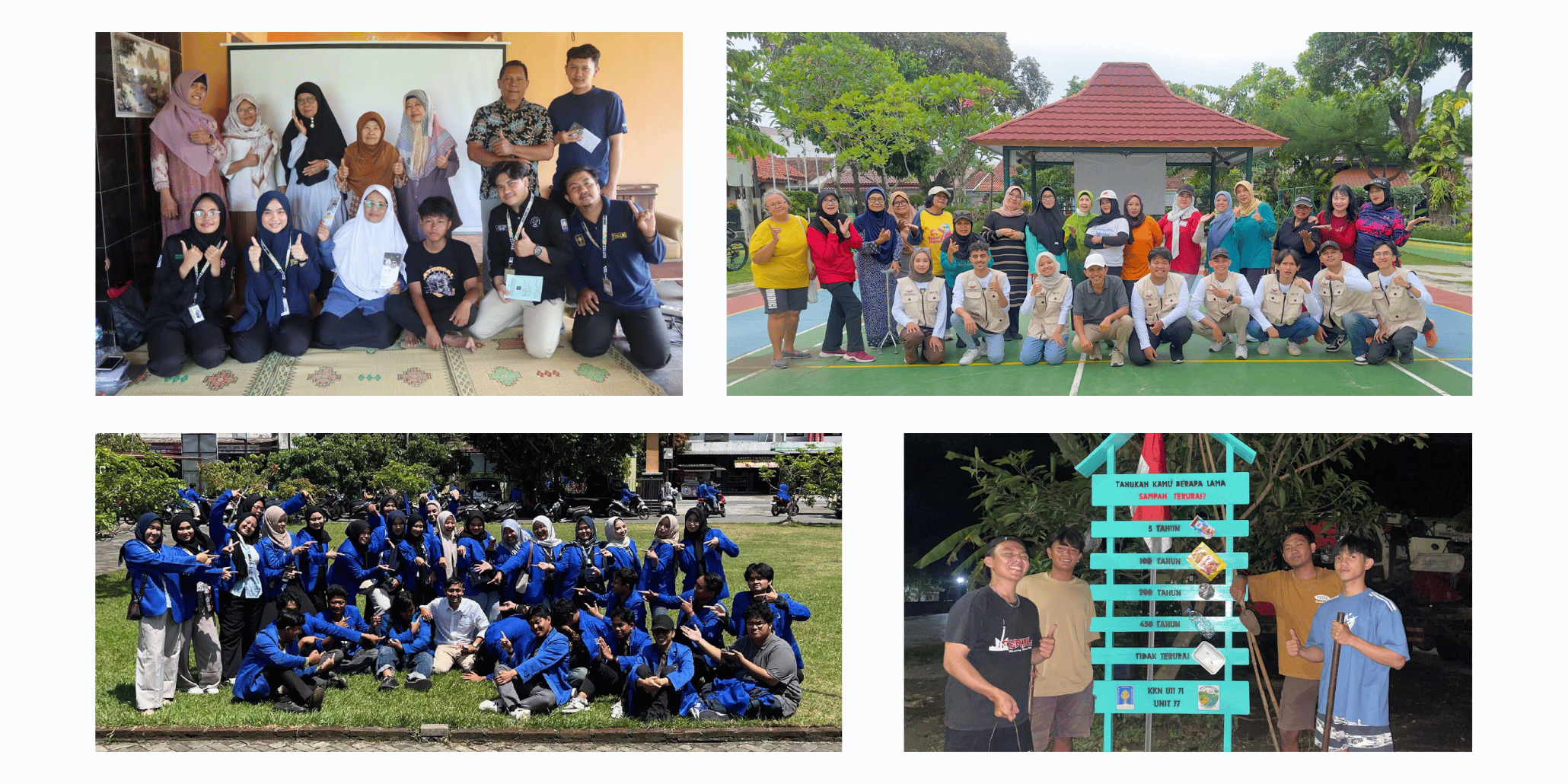
The comprehensive inventory below details eleven verified non-degree community training and sustainability literacy outreach initiatives currently active across Universitas Islam Indonesia, highlighting partner entities, target communities, core learning curricula, active legal periods, and targeted SDGs.
| No. | Partner Entity & UII Unit | Program Scope | Thematic Focus & Target Group | Non-Degree Training & Community Outreach Initiatives | Targeted SDGs | Verified Status |
|---|---|---|---|---|---|---|
| 1 |
Ministry of Manpower of the Republic of Indonesia
Kementerian Ketenagakerjaan RI
MoA
Simpul Tumbuh / IBISMA UII
|
Community Training | Vocational Self-Employment Mentorship Target: Informal workers, job seekers, and micro-entrepreneurs. |
• Independent Workforce Program (TKM Lanjutan): Intensive vocational training and structured business mentorship for non-degree community learners. • Livelihood Capacity Building: Equipping local participants with micro-enterprise business planning, financial management, and market sustainability skills.
|
SDG 1 SDG 8 SDG 17 |
✓ Active PKS 2024 – Ongoing |
| 2 |
Muhammadiyah – ‘Aisyiyah Orphanage Forum (FORMAPA MPKS DIY)
Pimpinan Wilayah Muhammadiyah DIY
MoA & IA
Faculty of Medicine UII
|
Community Training | Eco-Enzyme & Organic Waste Upcycling Target: Orphanage staff, foster youth, and community caretakers. |
• Hands-on Eco-Enzyme Workshops: Practical training converting domestic organic fruit/vegetable waste into multi-purpose bio-cleaners and eco-sanitizers. • Community Hygiene Education: Training sessions on domestic waste reduction, environmental hygiene, and sustainable household sanitation.
|
SDG 3 SDG 12 SDG 17 |
✓ Active MoA 2025 – 2030 |
| 3 |
Chemistry Subject Teachers Association (MGMP Kimia Purworejo)
Secondary School Chemistry Teachers
MoA
Faculty of Mathematics & Nat. Sciences
|
Sustainability Literacy | Green Chemistry & Sustainable Science Target: High school science educators and secondary school students. |
• Green Chemistry Literacy Training: Training high school teachers to embed circular chemistry, micro-scale experiments, and waste-minimization in secondary curricula. • Eco-Lab Safety Protocols: Outreach workshops on hazardous lab waste handling and eco-friendly experimental alternatives.
|
SDG 4 SDG 12 SDG 17 |
✓ Active MoA 2025 – 2028 |
| 4 |
Financial Services Industry Communication Forum DIY (FKIJK-DIY)
Regional Financial Institutions Consortium
MoA
Faculty of Business & Economics
|
Sustainability Literacy | Financial Literacy & MSME Incubation Target: Micro-enterprises, rural entrepreneurs, and community youth. |
• Financial Literacy Center: Providing open financial clinics and training modules on budgeting, credit management, digital payments, and sustainable finance. • MSME Incubation Outreach: Non-degree mentorship sessions helping micro-businesses access responsible capital and achieve economic resilience.
|
SDG 1 SDG 8 SDG 17 |
✓ Active MoA 2025 – 2027 |
| 5 |
Class IIA State Detention Center of Yogyakarta (Rutan Yogyakarta)
Ministry of Immigration & Corrections
MoA
Faculty of Law UII
|
Community Training | Paralegal Literacy & Human Rights Outreach Target: Correctional inmates and vulnerable legal aid seekers. |
• Paralegal Literacy Clinic: Providing legal counseling, restorative justice education, and civic rights literacy for correctional inmates. • Reintegration Skills Coaching: Pre-release vocational and legal readiness workshops ensuring smooth social reintegration.
|
SDG 10 SDG 16 SDG 17 |
✓ Active MoA 2024 – 2029 |
| 6 |
Public Health & Nutrition Research Center (PPKM UII)
Interdisciplinary University Research Center
Internal Lead
DPPM UII
|
Community Training | Rural Women Farmers Climate Resilience Target: Female farmers (Kelompok Wanita Tani / KWT) in Sleman & Bantul. |
• Climate-Resilient Kitchen Gardens (P2L): Non-degree community coaching on household sustainable permaculture and climate-resilient horticulture. • Nutritional Stunting Literacy: Training village mothers and posyandu cadres on nutrient-dense crop cultivation.
|
SDG 2 SDG 3 SDG 5 |
✓ Active Program 2024 – Ongoing |
| 7 |
Central Bureau of Statistics of D.I. Yogyakarta (BPS DIY)
Badan Pusat Statistik Provinsi D.I. Yogyakarta
MoA & Pojok Statistik
Dept. of Statistics UII
|
Sustainability Literacy | Community Statistical & Data Literacy Target: Local researchers, village apparatus, and public data users. |
• Pojok Statistik Public Education: Open consultation and workshops teaching citizens and village officials how to interpret official poverty and development data. • Desa Cantik Data Mentorship: Training rural administrators in ethical village-level data collection for SDG monitoring.
|
SDG 4 SDG 16 SDG 17 |
✓ Active MoA 2024 – 2029 |
| 8 |
LPP TVRI Yogyakarta & Radio UNISI 104.5 FM
Public Broadcasting Media Alliances
MoA
Dept. of Communications & Medicine
|
Sustainability Literacy | Public Health & Preventive Hygiene Literacy Target: General public audience across Yogyakarta and Central Java. |
• Media Talkshows & Health Literacy Broadcasts: Regular health literacy broadcasts covering dengue prevention, clean sanitation, and climate-induced respiratory health. • Public Environmental PSA Campaigns: Multi-channel broadcast of public service announcements on household water conservation.
|
SDG 3 SDG 13 SDG 17 |
✓ Active MoA 2025 – 2028 |
| 9 |
Universitas Syiah Kuala (USK Disaster Center)
Tsunami and Disaster Mitigation Research Center
MoA
Center for Disaster Resilience / PSB UII
|
Sustainability Literacy | Disaster Risk Literacy & Crisis Communication Target: Relocation settlement residents of Pagerjurang, Merapi slopes. |
• Community Disaster Literacy Fieldwork: Educational field training assessing and strengthening risk perception, early warning communication, and evacuation awareness. • Community Resilience Toolkits: Developing communication protocols for post-disaster permanent housing residents.
|
SDG 11 SDG 13 SDG 17 |
✓ Active MoA 2026 – 2031 |
| 10 |
Kelurahan Purbayan (Kemantren Kotagede, Kota Yogyakarta)
Pemerintah Kelurahan Purbayan
KKN Tematik & IA
DPPM UII, Environmental Eng. & Medicine
|
Community Training | Eco-Drainage, Elderly Welfare (LLT) & RTJ Waste Action Target: Heritage kampung residents, elderly citizens, and RT/RW administrators. |
• Heritage Eco-Drainage & Biopores: Training residents on installing biopore infiltration wells and communal drainage maintenance in historic Kotagede. • Integrated Elderly Welfare (LLT 70): Geriatric health screening, mobility monitoring, and compilation of the Profil LLT Purbayan. • Racana Tepat Jogja (RTJ 71): Formulation of kelurahan-level household waste sorting masterplans and organic composting.
|
SDG 3 SDG 6 SDG 11 SDG 12 SDG 17 |
✓ Ratified KKN & IA 2024 – 2025 |
| 11 |
Kelurahan Baciro (Kemantren Gondokusuman, Kota Yogyakarta)
Pemerintah Kelurahan Baciro
KKN Tematik
DPPM UII, Faculty of Medicine & FTSP
|
Community Training | Elderly Care Profiling (LLT) & Danukusuman Waste Module Target: Elderly citizens, caregivers, posyandu cadres, and Danukusuman residents. |
• Elderly Care Profiling (LLT 70): Geriatric assessments published in the diagnostic volume 'Catatan Dimensi Lansia: Sehat, Bermakna, Berharga'. • Danukusuman Waste Sorting Module (RTJ 71): Formulation and distribution of Luaran Modul Sampah Kampung Danukusuman to support household waste separation.
|
SDG 3 SDG 11 SDG 12 SDG 17 |
✓ Ratified KKN 70 & 71 Jan – Sept 2025 |
| 12 |
Kelurahan Semaki (Kemantren Umbulharjo, Kota Yogyakarta)
Pemerintah Kelurahan Semaki
KKN Tematik
DPPM UII, Architecture (FTSP) & Psychology
|
Community Training | Taman Guyub Rukun (TGR) Therapeutic Green Space & Waste Audit Target: Senior citizens, RW 06 community, and Semaki Kulon residents. |
• Taman Guyub Rukun RW 06 (LLT 70): Architectural redesign and execution of an accessible therapeutic urban green space managed by senior citizen groups for urban farming and medicinal herbs (TOGA). • Semaki Kulon Waste Generation Audit (RTJ 71): Door-to-door household waste volume survey (Unit 37) and publishing Magazine RTJ Semaki.
|
SDG 3 SDG 11 SDG 12 SDG 17 |
✓ Ratified KKN 70 & 71 Jan – Sept 2025 |
| 13 |
Kelurahan Gedongkiwo (Kemantren Mantrijeron, Kota Yogyakarta)
Pemerintah Kelurahan Gedongkiwo
KKN Tematik
DPPM UII, Faculty of Medicine & Architecture
|
Community Training | Geriatric Welfare Profiling (LLT) & RTJ Creative Waste Blueprint Target: Elderly residents, local artisans, and waste bank operators. |
• Geriatric Welfare Profiling (LLT 70): Comprehensive physical and psychosocial screening published in Profil Lansia Gedongkiwo. • RTJ Creative Economy Waste Plan (RTJ 71): Ratification of Dokumen RTJ Gedongkiwo establishing community waste-to-craft economic initiatives.
|
SDG 3 SDG 8 SDG 11 SDG 12 SDG 17 |
✓ Ratified KKN 70 & 71 Jan – Sept 2025 |
| 14 |
Kelurahan Kotabaru (Kemantren Gondokusuman, Kota Yogyakarta)
Pemerintah Kelurahan Kotabaru
KKN Tematik
DPPM UII & FTSP (Teknik Lingkungan)
|
Sustainability Literacy | Heritage Sanitation Innovation & RTJ Action Blueprint Target: Historic district residents, business owners, and kelurahan officials. |
• Kotabaru RTJ Action Blueprint (RTJ 71): Formal ratification of Dokumen Rencana Tepat Jogja (RTJ) Kotabaru 2025 focusing on zero-stunting environmental health, commercial alley clean-up, and decentralized organic waste handling.
|
SDG 3 SDG 11 SDG 12 SDG 17 |
✓ Ratified KKN 71 Aug – Sept 2025 |
| 15 |
Kelurahan Prenggan (Kemantren Kotagede, Kota Yogyakarta)
Pemerintah Kelurahan Prenggan
KKN Tematik
DPPM UII & FTSP
|
Sustainability Literacy | Heritage Village Persampahan & RTJ Action Blueprint Target: Silversmith craftsmen, neighborhood heads (RT/RW), and households. |
• Prenggan Waste Diagnostics (RTJ 71): Diagnostic fieldwork published in Profil Persampahan Prenggan and formulation of RTJ action blueprints for community-based organic segregation.
|
SDG 11 SDG 12 SDG 13 SDG 17 |
✓ Ratified KKN 71 Aug – Sept 2025 |
| 16 |
Padukuhan Ngepring (Purwobinangun, Pakem, Sleman)
Pemerintah Kalurahan Purwobinangun
IA
Dept. of Civil Engineering UII
|
Community Training | Rural Springwater Infrastructure & Watershed Protection Target: Rural water management committee (PAMSIMAS) and village farmers. |
• Springwater Intake Infrastructure: Training local technicians on intake weir maintenance, sedimentation flushing, and gravity distribution piping. • Catchment Protection Literacy: Educational workshops on slope stabilization and groundwater recharge conservation on Mt. Merapi slopes.
|
SDG 6 SDG 11 SDG 17 |
✓ Active IA 2024 – 2026 |
| 17 |
Kalurahan Sinduadi (Kapanewon Mlati, Kabupaten Sleman)
Pemerintah Kalurahan Sinduadi
KKN Tematik
DPPM UII & Faculty of Civil Eng. & Planning
|
Community Training | Controlled Residu Incineration & Community Waste Profiling Target: Sub-village heads (Dukuh), waste committee members, and households. |
• High-Temperature Residu Incinerator Operator Training: Fabrication and technical operator training for the Panduan Alat Pembakaran Sampah Pola Oksidasi (Unit 48 Sinduadi) for smokeless residue disposal. • Sinduadi Waste Diagnostic Guide: Publishing 'Sinduadi: Potret Sampah Tata Masa Depan' evaluating waste volume generation and TPS3R recycling workflows.
|
SDG 3 SDG 11 SDG 12 SDG 17 |
✓ Ratified KKN 71 Aug – Sept 2025 |
| 18 |
Kalurahan Margodadi (Kapanewon Seyegan, Kabupaten Sleman)
Pemerintah Kalurahan Margodadi
KKN Tematik
DPPM UII & Faculty of Civil Eng. & Planning
|
Community Training | Rural Waste Flow Baseline & TPS3R Waste Bank Capacity Target: Village administrators, waste bank operators, and rural households. |
• Margodadi Waste Diagnostic Book: Publishing 'Buku Profil Masalah dan Pengelolaan Sampah Margodadi (Unit 38–43)' conducting village-wide waste generation audits and setup of organic composters.
|
SDG 11 SDG 12 SDG 17 |
✓ Ratified KKN 71 Aug – Sept 2025 |
| 19 |
Kalurahan Baturetno (Kapanewon Banguntapan, Kabupaten Bantul)
Pemerintah Kalurahan Baturetno
KKN Tematik
DPPM UII & Architecture (FTSP)
|
Community Training | Ecological Retention Basin Masterplanning ('BIOLOKA') Target: Village Consultative Council (Bamuskal), Pokdarwis, and residents. |
• 'BIOLOKA' Embung Baturetno Community Park Masterplan: Developing architectural blueprints and 3D site plans for revitalizing Embung Baturetno into an ecological retention basin combining flood defense, wetland ecology, and recreation (*Spirit Village One Baturetno*).
|
SDG 6 SDG 11 SDG 13 SDG 17 |
✓ Ratified KKN 71 Aug – Sept 2025 |
| 20 |
Kalurahan Potorono (Kapanewon Banguntapan, Kabupaten Bantul)
Pemerintah Kalurahan Potorono
KKN Tematik
DPPM UII & Faculty of Medicine (FK UII)
|
Community Training | Community Health Sanitation & Waste Management Diagnostic Target: Village officials, posyandu health cadres, and rural households. |
• Village Waste Sanitation Assessment: Field investigation and diagnostic report 'Pemetaan Penilaian Masyarakat, Pemerintah, dan Program Eksisting Terkait Pengelolaan Sampah Desa Potorono' addressing environmental health risks and educational eco-tourism potential.
|
SDG 3 SDG 11 SDG 12 SDG 17 |
✓ Ratified KKN 71 Aug – Sept 2025 |
| 21 |
Kalurahan Murtigading (Kapanewon Sanden, Kabupaten Bantul)
Pemerintah Kalurahan Murtigading
KKN Tematik
DPPM UII & Faculty of Civil Eng. & Planning
|
Community Training | Participatory Rural Waste Management & Coastal Agro-Sanitation Target: Sub-village dukuh, waste bank administrators, and farming families. |
• Murtigading Waste Management Guide: Publishing the community guidebook 'Murtigading: Menata Sampah, Merajut Masa Depan', establishing sub-village waste bank operating procedures, and conducting bio-composting workshops.
|
SDG 11 SDG 12 SDG 15 SDG 17 |
✓ Ratified KKN 71 Aug – Sept 2025 |
| 22 |
Kalurahan Gadingharjo (Kapanewon Sanden, Kabupaten Bantul)
Pemerintah Kalurahan Gadingharjo
KKN Tematik
DPPM UII & Faculty of Law
|
Community Training | Coastal Waste Audits & Environmental Regulation Literacy Target: Coastal village residents, fishermen groups, and kelurahan officials. |
• Coastal Waste Profiling: Publishing 'KKN Tematik Sampah UII 71 - Profil Gadingharjo' and conducting interactive training on marine plastic prevention and village environmental sanitation regulations.
|
SDG 11 SDG 12 SDG 14 SDG 17 |
✓ Ratified KKN 71 Aug – Sept 2025 |
| 23 |
Kalurahan Wirokerten (Kapanewon Banguntapan, Kabupaten Bantul)
Pemerintah Kalurahan Wirokerten
KKN Tematik
DPPM UII & Faculty of Civil Eng. & Planning
|
Community Training | Village Environmental Profiling & Sustainable Drainage Upgrading Target: Youth organizations (Karang Taruna), village elders, and households. |
• Village Sustainable Profiling: Formulating 'Buku Profil Kalurahan Wirokerten' and mentoring local youth on village drainage sanitation and environmental health.
|
SDG 6 SDG 11 SDG 17 |
✓ Ratified KKN 71 Aug – Sept 2025 |
| 24 |
Desa Sanggang (Kecamatan Bulu, Kabupaten Sukoharjo)
Pemerintah Desa Sanggang & BUMDes Argaloka
KKN Tematik
DPPM UII, Architecture (FTSP) & Informatics
|
Community Training | Climate-Smart Greenhouse Farming, BUMDes & Digital E-Commerce Target: BUMDes Argaloka executives, farmer groups, and local wood craftsmen. |
• Argaloka Farm Greenhouse Design: Formulating Detailed Engineering Design (DED), structural plans, and budget forecasts for a 4-structure modern agricultural Greenhouse facility (Buku Rancangan Greenhouse & BUMDes Sanggang). • BUMDes Operational Manual & Digital Portal: Publishing the Guideline Book BUMDes, launching the digital commerce portal (
bumdesargaloka.drr.ac), and compiling the Katalog UMKM Santosa Meubel. |
SDG 1 SDG 2 SDG 8 SDG 9 SDG 12 SDG 17 |
✓ Ratified KKN 71 Aug – Sept 2025 |
| 25 |
Desa Kunden (Kecamatan Bulu, Kabupaten Sukoharjo)
Pemerintah Desa Kunden
KKN Tematik
DPPM UII & Faculty of Business & Economics
|
Community Training | Rural Economic Potential Profiling & Agricultural MSME Skilling Target: Smallholder farmer groups and village food micro-enterprises. |
• Village Economic Capacity Assessment: Publishing 'Buku Profil Potensi Wilayah Desa Kunden (Unit 388–393)' and mentoring agricultural producers in product standardization and market expansion.
|
SDG 1 SDG 8 SDG 12 SDG 17 |
✓ Ratified KKN 71 Aug – Sept 2025 |
| 26 |
Desa Kamal (Kecamatan Bulu, Kabupaten Sukoharjo)
Pemerintah Desa Kamal
KKN Tematik
DPPM UII & Faculty of Psychology & Socio-Cultural
|
Community Training | Youth Empowerment, Cultural Tourism & Creative Economy Target: Village youth organizations (Karang Taruna) and village apparatus. |
• Youth Creative Storytelling & Eco-Tourism: Publishing 'Kamal dalam Cerita: Pesona Desa, Semangat Muda' and training youth groups in digital tourism promotion.
|
SDG 8 SDG 11 SDG 17 |
✓ Ratified KKN 71 Aug – Sept 2025 |
| 27 |
Desa Gentan (Kecamatan Bulu, Kabupaten Sukoharjo)
Pemerintah Desa Gentan
KKN Tematik
DPPM UII & Faculty of Business & Economics
|
Community Training | Village Craft Mapping & Sustainable MSME Incubation Target: Traditional rural craft artisans, furniture makers, and village traders. |
• Rural MSME Profiling & Digital Branding: Publishing 'Buku Profil Desa Gentan' and conducting business development workshops on digital financial tracking and branding.
|
SDG 1 SDG 8 SDG 12 SDG 17 |
✓ Ratified KKN 71 Aug – Sept 2025 |
| 28 |
Desa Kemasan (Kecamatan Polokarto, Kabupaten Sukoharjo)
Pemerintah Desa Kemasan
KKN Tematik
DPPM UII & Faculty of Law
|
Community Training | Village Governance Digitization & Spatial Environmental Mapping Target: Village civil service staff, community leaders, and local residents. |
• Village Portal Digitization & Governance: Launching the official spatial information and public administration portal (
kemasan-sukoharjo.desa.id) and compiling the Buku Profil Potensi Wilayah Desa Kemasan. |
SDG 9 SDG 11 SDG 16 SDG 17 |
✓ Ratified KKN 71 Aug – Sept 2025 |
| 29 |
Desa Kedungsono (Kecamatan Bulu, Kabupaten Sukoharjo)
Pemerintah Desa Kedungsono
KKN Tematik
DPPM UII & Dept. of Communications
|
Community Training | Digital Media Literacy & Agro-Tourism Village Promotion Target: Village youth, tourism awareness groups, and agro-forestry farmers. |
• Audio-Visual Village Promotion Training: Production of the official promotional documentary on sustainable agro-forestry and training local youth in digital media storytelling.
|
SDG 8 SDG 11 SDG 17 |
✓ Ratified KKN 71 Aug – Sept 2025 |
| 30 |
Padukuhan Sewugalur (Karangsewu, Galur, Kulon Progo)
Pemerintah Padukuhan Sewugalur
KKN Tematik
DPPM UII & Faculty of Civil Eng. & Planning
|
Community Training | Rural Waste Generation Auditing & Agro-Ecological Profiling Target: Sub-village dukuh, farmer associations, and rural domestic households. |
• Sub-Village Waste Audits & Profiling: Publishing 'Buku Profile Padukuhan Sewugalur' and conducting field surveys on farm residue recycling and plastic recovery in rural coastal Kulon Progo.
|
SDG 11 SDG 12 SDG 15 SDG 17 |
✓ Ratified KKN 71 Aug – Sept 2025 |
The empirical evidence recorded in the inventory above demonstrates UII’s structured educational outreach across four dedicated community clusters:
- Empowerment of Vulnerable & Incarcerated Populations: Conducting legal literacy counseling (Penyuluhan Hukum) and free legal aid consultations at the Class IIA State Detention Center of Yogyakarta to educate detainees on restorative justice, paired with practical eco-enzyme bio-cleaner workshops for foster youth and caretakers across regional orphanages (SDG 3, SDG 10, SDG 12, SDG 16).
- Rural Resilience & Ecological Infrastructure Training: Delivering hands-on community guidance for Mount Merapi volcano slope villagers (Padukuhan Ngepring) on gravity water piping and rainwater harvesting, municipal greywater eco-drainage workshops in urban heritage settlements (Purbayan Kotagede), and psychological-nutritional resilience training for rural women farmers confronting seasonal climate anxiety with the National Research and Innovation Agency (BRIN) (SDG 3, SDG 5, SDG 6, SDG 11, SDG 13).
- Vocational Livelihood & Inclusive Financial Literacy: Partnering with the Ministry of Manpower through the Independent Workforce Programme (TKM Lanjutan) to provide intensive non-degree business incubation for informal jobseekers, alongside open financial management and responsible credit clinics conducted with the Financial Services Industry Communication Forum (FKIJK DIY) (SDG 1, SDG 8, SDG 17).
- Public Science, Data & Preventive Health Literacy: Training secondary school science educators in green chemistry waste-minimization (MGMP Kimia), operating continuous community data literacy clinics through the Pojok Statistik center with BPS DIY, disseminating mass public health broadcasts on stunting prevention via public television (TVRI) and community radio, and conducting disaster risk communication fieldwork in permanent relocation settlements (SDG 3, SDG 4, SDG 11, SDG 17).
Through this multi-sectoral outreach model, UII democratizes higher education expertise into community self-reliance, ensuring that sustainable development knowledge directly enhances the wellbeing of wider society.
Building and Assessing Sustainability Literacy
Fostering an enduring culture of environmental stewardship requires ongoing efforts to evaluate and reinforce sustainability awareness across the entire campus community. Universitas Islam Indonesia cultivates sustainability literacy through a dual approach combining structured classroom instruction with experiential campus life.
Academic departments assess sustainability competencies through course learning outcomes (CPMK), capstone environmental design projects, and field performance evaluations during the mandatory KKN Tematik community service program. Beyond the lecture hall, campus-wide sustainability campaigns—such as bicycle-to-campus days, zero-single-use-plastic mandates, and campus energy conservation competitions—reinforce practical eco-friendly habits among students and staff.