Gender Equality

Universitas Islam Indonesia (UII) is steadfastly dedicated to advancing gender equality and female empowerment across higher education, guided by prophetic Islamic values (rahmatan lil ‘alamin) and modern human rights principles. UII ensures equitable access, institutional inclusion, and comprehensive support systems designed to dismantle systemic barriers, particularly in disciplines, leadership positions, and governance structures where women have historically experienced underrepresentation.
In alignment with global sustainability standards and institutional equity benchmarks, UII systematically monitors female student participation, admissions equity, retention, and graduation velocity through integrated enterprise data systems (SIM Akademik / UII Gateway). The university cultivates an empowering academic ecosystem that enables women to excel in engineering, science, law, medicine, economics, and socio-cultural disciplines, achieving notable parity in degree completion and scholarly attainment.
Additionally, UII enforces an uncompromising zero-tolerance policy against all forms of gender-based violence, harassment, and discrimination. Governed under Permendikbudristek No. 30 Tahun 2021, Permendikbudristek No. 55 Tahun 2024, University Regulation (Peraturan Universitas) No. 1/2020 on the Prevention and Handling of Sexual Violence (PPKS), and Rectoral Regulation No. 33/2026 on Student Disciplinary Handling, UII guarantees independent reporting avenues, robust multi-tiered survivor support, procedural confidentiality, and rigorous non-retaliation protections across the campus community.
Beyond regulatory compliance, gender equity is woven into UII’s institutional operations—manifested through fully paid maternity leave, campus-wide certified lactation stations across all faculty complexes, family counseling centers, high-level deanship leadership across engineering and medicine, and a rising trajectory of senior female academics. UII actively contributes to a just, equitable, and enlightened society by nurturing female leaders, scholars, and innovators who drive sustainable development across Indonesia and the global community.
Student Access and Gender Equality Measures at Universitas Islam Indonesia (UII)
Tracking Women’s Application, Acceptance, and Study Completion Rates
Universitas Islam Indonesia enforces systematic longitudinal gender monitoring through its central Academic Information System (SIM Akademik / UII Gateway), managed by the Directorate of Academic Services (Direktorat Layanan Akademik) in coordination with the Directorate of Admissions and Promotion (Direktorat Admisi dan Promosi) and the Directorate of Career and Alumni (Direktorat Karier dan Alumni / DPKA). While UII’s Center for Gender Studies (Pusat Studi Gender – PSG, originally established as Pusat Studi Wanita in 1997) provides strategic policy analysis and gender advocacy, institutional student lifecycle tracking is executed through automated enterprise data architectures.
Admissions data tracked across the academic reporting periods confirms sustained gender balance. In the latest 2024 academic period, female students represented 51.13% of all new degree entrants (2,916 out of 5,703 students) and 51.14% of the total university student body (13,322 out of 26,051 students). Furthermore, UII places dedicated focus on tracking first-generation female students—young women whose parents did not attend higher education. In 2024, female students constituted 58.91% of all first-generation entrants (1,081 out of 1,835), affirming UII’s vital role as an engine of socioeconomic mobility and female empowerment.
| Academic Year | Total New Students | Female Students | Female Share (%) | Total First-Gen Students | Female First-Gen Students | First-Gen Female Share (%) |
|---|---|---|---|---|---|---|
| Year 2022 | 5,971 | 3,084 | 51.65% | 1,988 | 1,234 | 62.07% |
| Year 2023 | 5,819 | 2,975 | 51.13% | 1,937 | 1,203 | 62.11% |
| Year 2024 | 5,703 | 2,916 | 51.13% | 1,835 | 1,081 | 58.91% |
| Year 2025 (Latest) | 6,625 | 3,445 | 52.00% | 2,132 | 1,277 | 59.89% |

Article 4, paragraphs (5) and (7), of Rector Regulation Number 9 of 2025 About New Student Admissions
Policies Promoting Women’s Access and Participation
Statutory Access Framework: Universitas Islam Indonesia’s dedication to female educational access is codified within the UII Long-Term Strategic Plan (Renstra UII 2022–2026), the University Statute (Statuta UII), and Rectoral Regulations governing admissions equity. UII strictly maintains a non-discriminatory, open-access admissions framework that evaluates candidates purely on merit and academic potential, with zero tolerance for gender-based discrimination or admission quotas restricting female enrollment.
Role of Center for Gender Studies (PSG): Complementing executive governance, the Center for Gender Studies (Pusat Studi Gender – PSG) operates as a dedicated academic research and advocacy center directly coordinating with the Rectorate. PSG conducts periodic gender audits, advises faculty leadership on gender-responsive budgeting, and advocates for female representation in strategic campus decision-making committees. Furthermore, UII establishes affirmative inclusion principles across academic faculties to ensure female students from marginalized socioeconomic backgrounds have direct, unobstructed pathways to higher education.
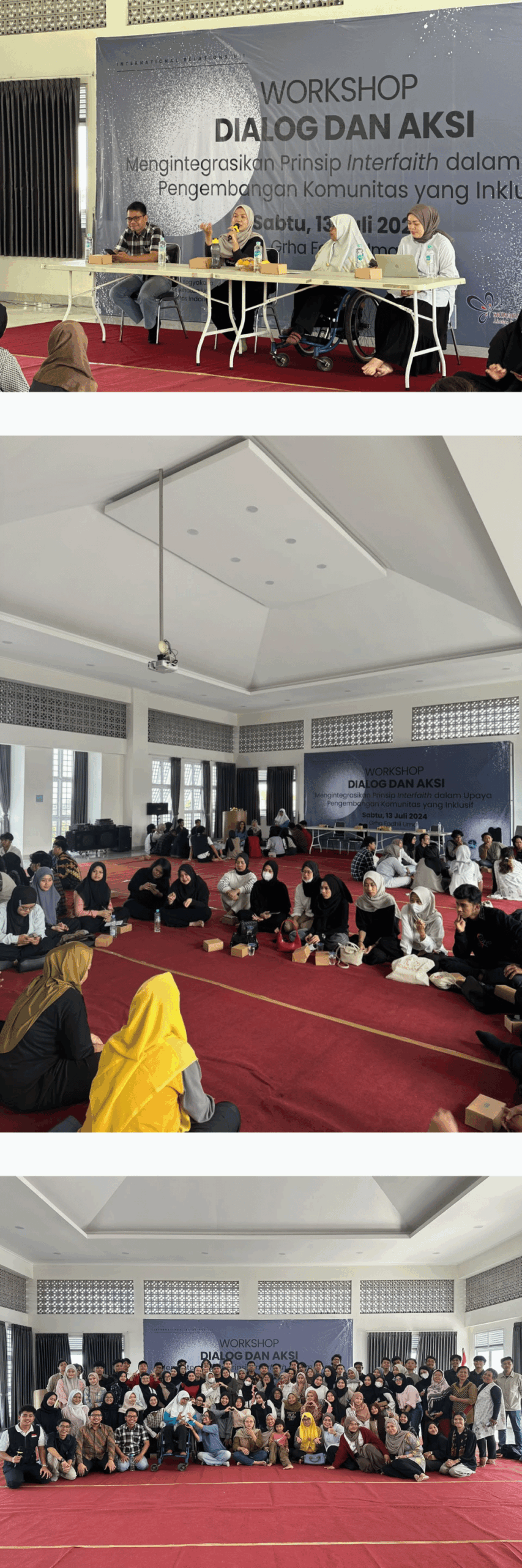
Interfaith in Inclusive Community Development Workshop, 2024
Women’s Access Schemes
To operationalize inclusive access, UII administers dedicated affirmative financial aid programs, institutional scholarships, and welfare safety nets targeted at supporting female students, particularly those facing financial vulnerability or originating from underprivileged regions:
- Beasiswa Santri Unggulan UII: A flagship university-funded scholarship providing full tuition coverage, dorm boarding, and living allowances for female Islamic scholars (santriwati). The scheme empowers young women from traditional pesantren backgrounds to pursue professional higher degrees in science, medicine, law, and engineering, with women consistently accounting for over 55% of selected recipients.
- Beasiswa Hafizah UII: Dedicated institutional scholarships granting complete tuition waivers for female students who have memorized the Qur’an (30 juz), fostering leadership among female religious scholars.
- KIP-Kuliah & First-Generation Access Grants: National and university affirmative grants specifically targeted at first-generation and economically disadvantaged students, under which female recipients constitute 58.91% of beneficiaries.
- Emergency Welfare Safety Nets: Emergency financial assistance and semester tuition deferral schemes administered by the Directorate of Student Affairs (Direktorat Kemahasiswaan) to ensure female students confronting unexpected family financial crises can complete their degrees without discontinuation.
Encouraging Female Applications in Underrepresented Subjects
Historically, technical engineering, computing, and physical sciences have experienced pronounced female underrepresentation across global and Indonesian higher education. Universitas Islam Indonesia has actively confronted this challenge through long-term, proactive affirmative recruitment, school outreach, coding bootcamps, and female-led academic mentoring across the Faculty of Industrial Technology (FTI – Informatics, Industrial, Chemical, and Electrical Engineering) and the Faculty of Engineering Design Innovation (FTDI – Architecture, Civil, and Environmental Engineering).
Rather than remaining at deficit levels, UII’s sustained affirmative encouragement has delivered remarkable empirical success. In the latest official institutional graduate census (2024), female graduates in Science, Technology, Engineering, and Mathematics (STEM) reached an extraordinary 62.55% (1,241 female STEM graduates out of 1,984 total), with 743 male graduates. This exceptional milestone demonstrates that UII’s targeted encouragement has successfully propelled women from underrepresentation to clear academic attainment and persistence across STEM disciplines.
Crucially, this empirical achievement is reinforced by visible institutional role modeling at the highest executive deanship echelon. UII’s two engineering and technology faculties are both led by distinguished female deans: Prof. Dr. Sri Kusumadewi, S.Si., M.T. (Dean of the Faculty of Industrial Technology / FTI, a prominent female professor in artificial intelligence and health informatics) and Miftahul Fauziah, S.T., M.T., Ph.D. (Dean of the Faculty of Engineering Design Innovation / FTDI, an internationally recognized civil engineering scholar). Alongside dr. Umatul Khoiriyah, M.Med.Ed., Ph.D. (Dean of the Faculty of Medicine / FK), this powerful executive leadership disproves traditional gender stereotypes and exemplifies true executive parity, actively inspiring prospective female students to pursue technical careers.
Faculty of Medicine Board of Leadership
| Disciplinary Subject Area | Total Graduates | Female Graduates | Male Graduates | Female Share (%) | Institutional Context & Impact |
|---|---|---|---|---|---|
| STEM (Science, Technology, Engineering & Math) | 1,998 | 1,099 | 899 | 55.01% | Exceptional female graduation outcomes across Informatics, Industrial, Chemical, Civil & Architecture programs achieving 55.01% parity. |
| Medicine & Clinical Health Sciences | 340 | 177 | 163 | 52.06% | Clinical Medical Doctor & Health Sciences graduates achieving 52.06% gender parity; faculty led by female Dean. |
| Arts, Humanities & Social Sciences | 3,083 | 1,543 | 1,540 | 50.05% | Law, Business, Psychology, Social-Cultural Sciences, and Islamic Studies programs. |
| Institution-Wide Total (All Disciplines) | 5,421 | 2,819 | 2,602 | 52.00% | Total degree completion with verified institutional totals. |
Women’s Progress Measures at Universitas Islam Indonesia (UII)
Non-Discrimination Against Women
Universitas Islam Indonesia maintains comprehensive foundational mechanisms ensuring non-discrimination, physical security, and emotional wellbeing for all members of its academic community. While these legal regulations apply universally to all male and female students, faculty, and administrative staff, they serve as a critical means to strengthen women protection by directly dismantling systemic vulnerabilities, enforcing zero tolerance for gender-based harassment, and guaranteeing equitable access to higher education. This framework is formally anchored in national higher education anti-violence decrees–specifically Permendikbudristek No. 30 issued in 2021 and Permendikbudristek No. 55 issued in 2024 on the Prevention and Handling of Violence in Higher Education Institutions–and is legally operationalized through University Regulation (Peraturan Universitas – PU) Number 1 of 2020 on the Prevention and Handling of Sexual Violence and Immoral Acts (Pencegahan dan Penanganan Kekerasan Seksual dan Perbuatan Asusila – PPKS). Reinforcing these statutory foundations, our Rector issued a Circular Letter in 2026 (Surat Edaran Rektor) to further raise institutional awareness, promote proactive violence prevention, and cultivate a safe and civilized campus culture across all faculties and administrative units.
The university’s policies are operationalized through the Satgas PPKS (Task Force for the Prevention and Handling of Sexual Violence), an autonomous university body comprising democratically elected faculty, administrative staff, and student representatives, maintaining a mandatory majority female composition. The Task Force operates under rigorous procedural guidelines ensuring survivor-centered handling, immediate protective orders, and absolute confidentiality.
Survivor support is delivered through a coordinated 4-pillar network: (1) Encrypted Incident Intake via the UIILapor portal (lapor.uii.ac.id); (2) Free Psychological Trauma Counseling via PUSKAGA (Center for Child and Family Studies, Faculty of Psychology); (3) Clinical Healthcare & Forensic Support via Rumah Sakit JIH (Jogja International Hospital); and (4) Pro-bono Legal Advocacy via LKBH FH UII (Legal Consultation and Aid Institute, Faculty of Law).
Task Force for Prevention and Handling of Sexual Violence Inauguration
| Broadcast Date | Radio Partner | Lead Faculty / Legal Experts | Legal Focus & Community Protection Scope |
|---|---|---|---|
| 27 Oct 2025 | Radio UNISI 104.5 FM | Prof. Dra. Sri Wartini, S.H., M.H., Ph.D. & Tim Advokasi LKBH | Combating Human Trafficking (TPPO): Legal Protections for Women and Vulnerable Migrant Workers. |
| 20 Nov 2025 | Radio Persatuan Bantul | Guntar Mahendro, S.H., M.Kn. & Nabila Az-Zahra, S.H. | Legal Standing of Notarial Pre-Nuptial Agreements in Protecting Women's Financial & Property Rights in Marriage. |
| 15 Jan 2026 | Radio Persatuan Bantul | Dr. Aroma Elmina Martha, S.H., M.H. & Hifdzil Alim, S.H., M.H. | Child Protection and Statutory Safeguards against Domestic Violence (UU PKDRT) for Women and Children. |
| 09 Feb 2026 | Radio UNISI 104.5 FM | Fuadi Isnawan, S.H., M.H. & Evaria Nurela, S.H. | Modern Legal Protection for Women: Cyber Harassment, Revenge Porn, and Victim Advocacy under the PDP Act & ITE Law. |
| 12 Feb 2026 | Radio Persatuan Bantul | Ahmad Khairun Hamrany, S.H., M.Hum., M.Kn. | Dispute Resolution in Divorce: Protecting Maternal Custody and Child Maintenance Rights under Islamic and Indonesian Law. |

Article 29, paragraph (1), letters c and f of University Regulation Number 1 of 2020 concerning the Prevention and Handling of Immoral Acts and Sexual Violence, stipulate that the complainant and/or the alleged victim are entitled to guarantees of safety from violence and threats resulting from the reports or testimony they have provided, as well as guarantees regarding the continuity of their studies and employment, both during and after the process of handling disciplinary violations
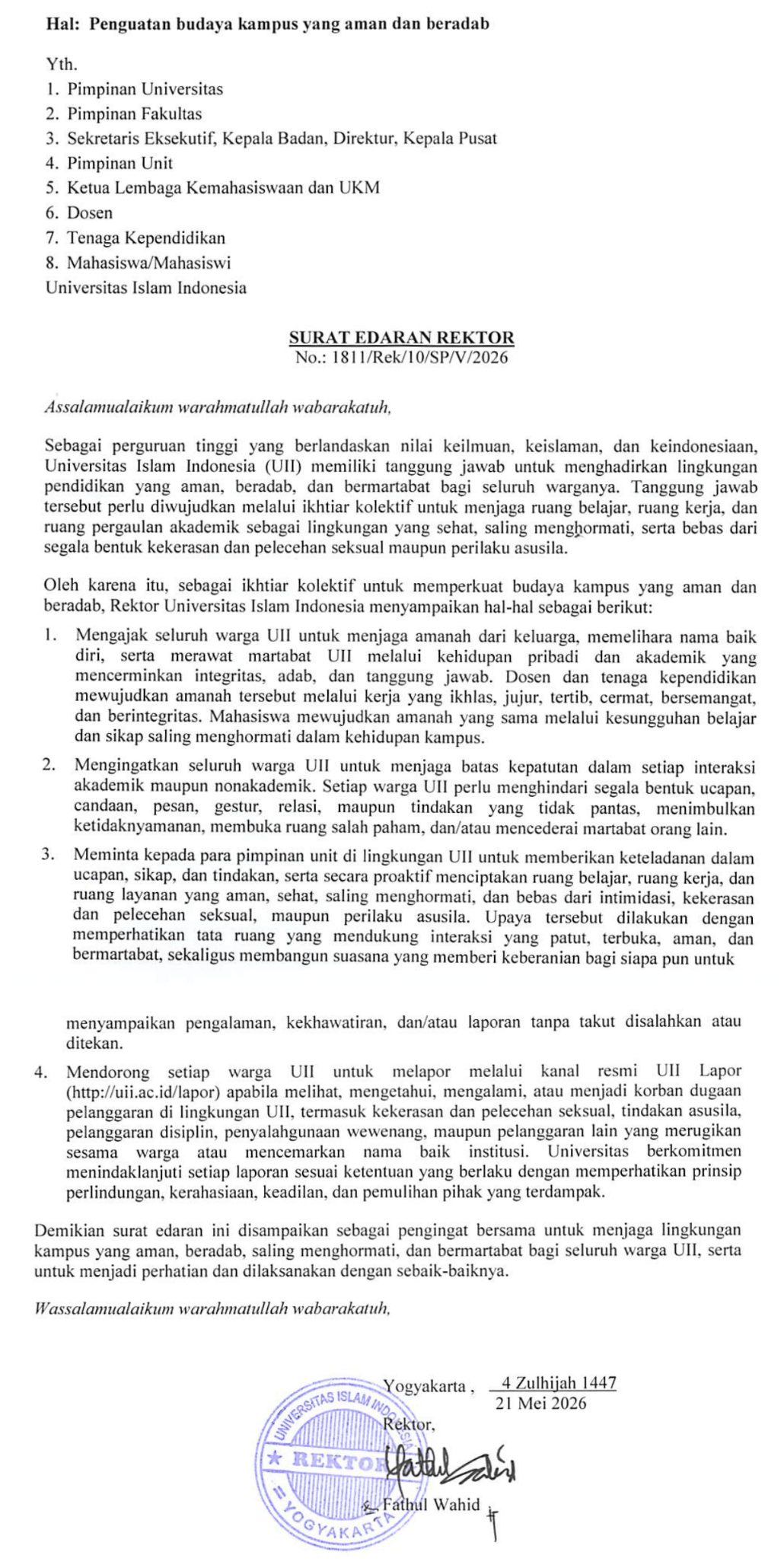
Rector’s Circular Letter Number 1811/Rek/10/SP/V/2026 concerning the Strengthening of a Safe and Civilized Campus Culture
Maternity and Paternity Policies
Under Yayasan Badan Wakaf (YBW) Employment Regulations (Peraturan Pengurus YBW UII No. 6 Tahun 1998 tentang Cuti Pegawai, Pasal 12, 13, 14, dan 15) and University Human Resources Guidelines, female permanent faculty and staff are entitled to 3 full months of fully paid maternity leave (covering pre- and post-natal care). Female personnel retain 100% of their base salary, structural allowances, healthcare insurance coverage, and career seniority entitlements throughout the leave period, with guaranteed full job reinstatement upon return.
Under YBW Employment Regulations (Pasal 15), male employees are entitled to paid compassionate paternity leave upon the birth of their child, enabling paternal care, family bonding, and maternal postpartum recovery.
Female students who give birth during their academic candidature are fully accommodated under UII’s official Academic Leave (Cuti Akademik) framework administered by the Directorate of Academic Services (Direktorat Layanan Akademik). Female students are officially permitted to take academic leave for maternity, childbirth, and early infant nursing. During this approved leave, students are completely exempt from regular semester tuition (bebas biaya SPP berjalan), and the duration of the leave is formally excluded from the calculation of their maximum normative study completion tenure. This ensures zero academic penalty, zero tenure loss, and full preservation of academic standing.

Articles 12, 13, and 14 of the UII Waqf Foundation Board Regulation Number 6 of 1998 concerning Employee Leave indicate that UII has a maternity leave policy for female employees, granting them 3 months of leave

Article 15 of the UII Waqf Foundation Board Regulation Number 6 of 1998 concerning Employee Leave indicates that UII provides scope for taking paternity leave for child-rearing purposes
Accessible Childcare Facilities for Students
Universitas Islam Indonesia recognizes the unique challenges faced by student-parents, particularly young mothers pursuing undergraduate or postgraduate qualifications. While UII does not operate a dormitory creche, student-parents have direct access to university-affiliated early childhood daycare services through Kelompok Bermain & Daycare Yayasan Badan Wakaf (YBW) UII, situated in close proximity to the main campus.
In addition, student-parents receive comprehensive family counseling, early childhood developmental screening, and parental guidance through PUSKAGA (Pusat Konseling dan Konsultasi Keluarga, Faculty of Psychology). Student-mothers nursing infants also have unrestricted access to all certified lactation suites across every faculty building during scheduled classes and examination periods.
Childcare Facilities for Staff and Faculty
To enable faculty and administrative personnel to balance demanding professional careers with family responsibilities, UII provides subsidized early childhood care and pre-school education through Kelompok Bermain & Daycare Yayasan Badan Wakaf (YBW) UII. The facility provides secure, pedagogically supervised childcare during standard university operating hours.
To provide optimal support for nursing mothers returning from maternity leave, UII guarantees that every single faculty building across the university, as well as the central executive headquarters, is equipped with a dedicated, certified campus lactation station (Ruang Laktasi). Across UII’s 9 faculty complexes and the Central Rectorate, a total of 10 certified lactation stations are fully operational.
| Campus Location / Building | Facility Type | Beneficiary Community | Operational Status |
|---|---|---|---|
| GBPH Prabuningrat (Central Rectorate) | Executive Lactation Suite | Staff, Lecturers, Visitors | ACTIVE |
| Faculty of Medicine (FK) | Clinical Lactation Room | Faculty, Students, Medical Interns | ACTIVE |
| Faculty of Industrial Technology (FTI) | STEM Lactation Station | Lecturers, Staff, Students | ACTIVE |
| Faculty of Engineering Design Innovation (FTDI) | Design & Engineering Lactation Suite | Staff, Students, Lecturers | ACTIVE |
| Faculty of Business & Economics (FBE) | Condongcatur Lactation Suite | Faculty, Staff, Students | ACTIVE |
| Faculty of Law (FH) | Law Complex Nursing Pod | Faculty, Staff, Students | ACTIVE |
| Faculty of Psychology | PUSKAGA Family & Nursing Hub | Students, Faculty, Public | ACTIVE |
| Faculty of Social & Cultural Sciences (FISB) | Socio-Cultural Nursing Room | Students, Faculty, Staff | ACTIVE |
| Faculty of Islamic Studies (FIAI) | Islamic Studies Nursing Pod | Lecturers, Staff, Students | ACTIVE |
| Faculty of Mathematics & Natural Sciences (FMIPA) | Science Complex Nursing Pod | Lecturers, Staff, Students | ACTIVE |
| Waqf Board Foundation (YBW UII) | Daycare & Early Playgroup (KB YBW) | Children of Faculty, Staff & Students | ACTIVE COMMUNITY |
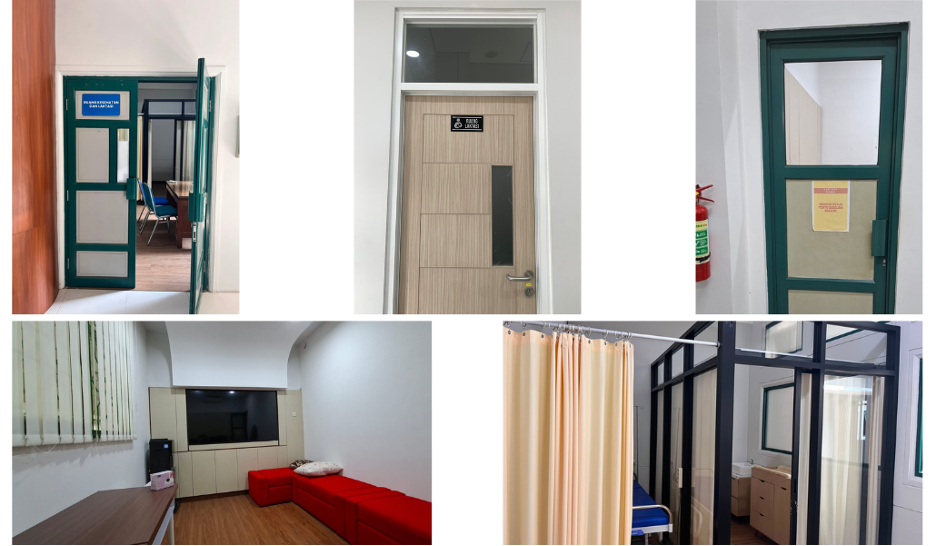
UII Lactation Rooms
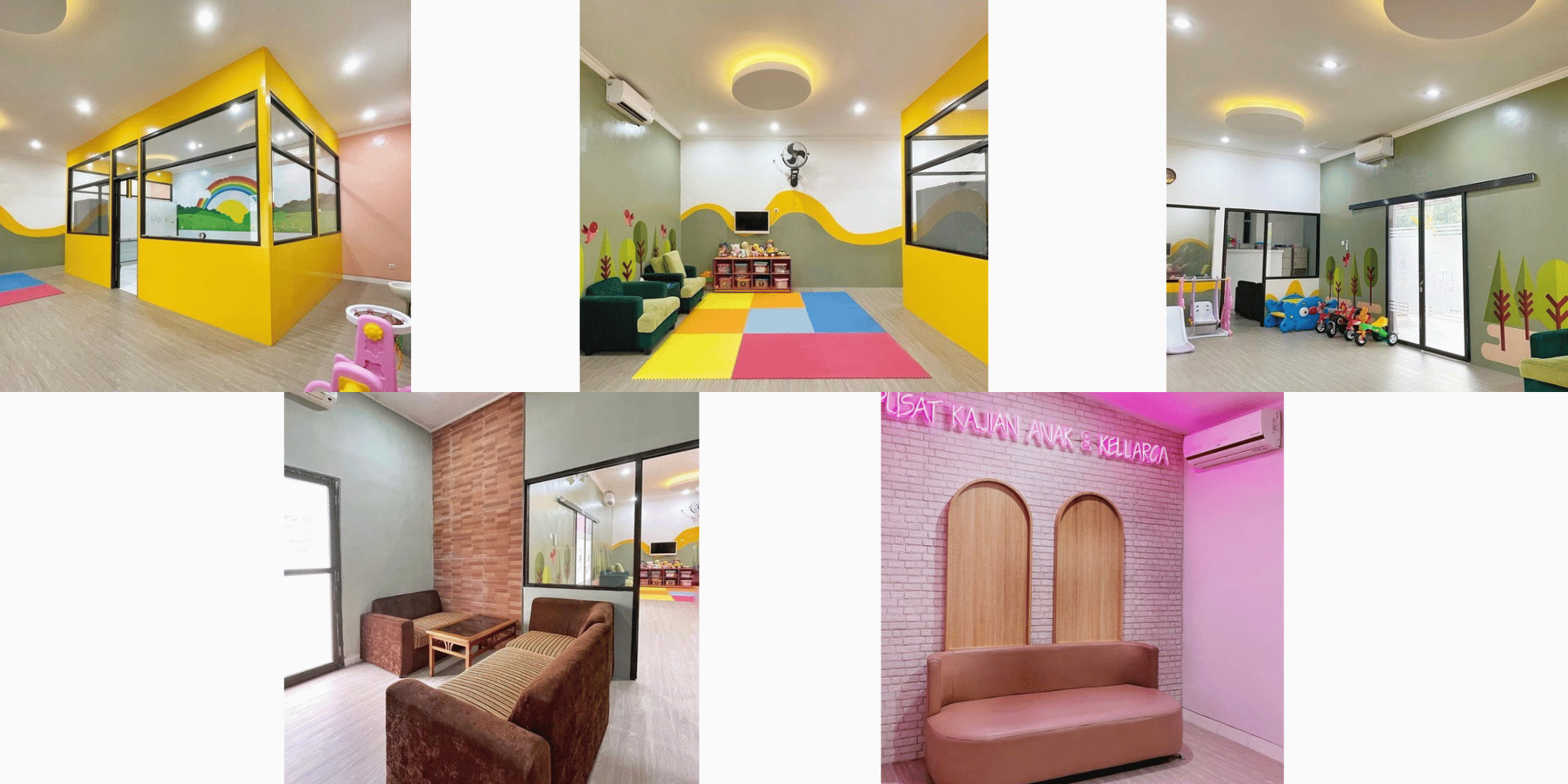
PUSKAGA, UII Childcare Facility
Women’s Mentoring Schemes
Female students at UII are supported through structured, multi-tiered mentoring programs designed to cultivate academic resilience, ethical leadership, and holistic personal development. The foundation of this mentoring architecture is the structured Ta’lim and Islamic Character Mentoring Scheme (Program Pembinaan Nilai Dasar Islam – PNDI), coordinated by the Directorate of Religious Affairs and Islamic Development (Direktorat Keagamaan dan Keislaman).
All first- and second-year female undergraduates participate in mandatory small-group mentoring halaqah circles. These cohorts are exclusively led by senior female student mentors (musyrifah) and female faculty advisors who undergo rigorous pedagogical and counseling training. Mentoring circles meet bi-weekly to discuss academic navigation, mental wellbeing, personal ethics, and leadership challenges in an empathetic, peer-supported environment. Annual monitoring confirms over 90% regular participation among female students.
Complementing religious mentoring, academic faculties run professional female mentorship programs pairing senior female undergraduates with female alumni leaders, professional engineers, medical doctors, and corporate executives to facilitate thesis research completion, professional licensure, and graduate career transition.
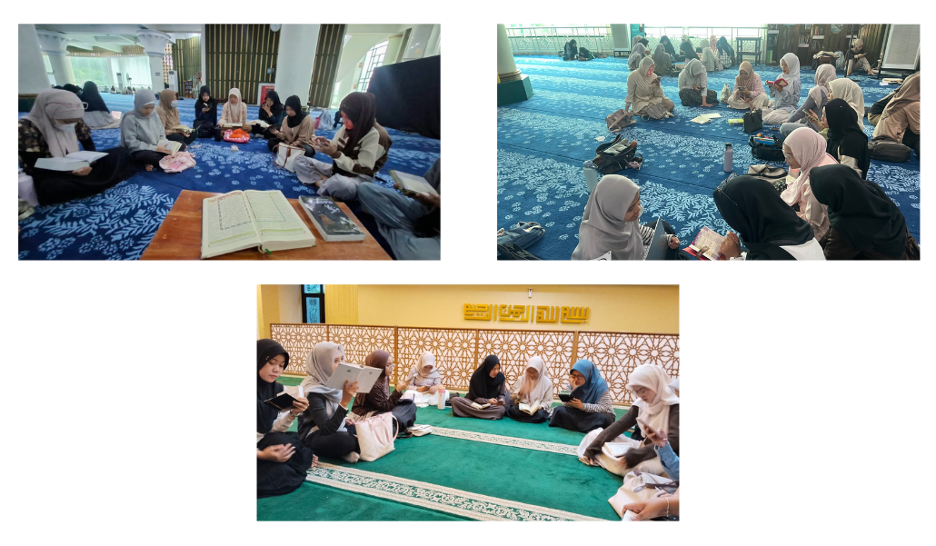
Female Ta’lim
Tracking Women’s Likelihood of Graduating
UII executes comprehensive annual Tracer Studies through the Directorate of Career and Alumni (Direktorat Karier dan Alumni / DPKA) to measure graduate outcomes, employment waiting times, starting salaries, and gender differentials in degree completion. The academic tracking data demonstrates that female students consistently record superior academic persistence and faster degree completion velocity than male peers across all degree levels.
In the latest institutional tracer study cohort, female undergraduate students recorded an average time-to-degree of 4.05 years (48.6 months) compared to 4.28 years (51.4 months) for male peers. Furthermore, female students maintain lower drop-out attrition and consistently achieve higher representation in dean’s honors lists and Latin honors (cum laude) commendations.
Beyond student graduation, UII systematically monitors female academic staff career advancement into senior ranks (Associate Professor / Lektor Kepala and Full Professor / Guru Besar). Over the longitudinal tracking period (2022–2024), the proportion of senior female academics exhibited remarkable progress, rising from 38.07% to 45.19%. This confirms that UII’s supportive environment actively nurtures female scholars from undergraduate entry through to the pinnacle of academic hierarchy.
Tracer Studies by Directorate of Career Development and Alumni
Longitudinal Representation of Senior Female Academics (Associate & Full Professors)
Official annual academic staff census by Directorate of Human Resources (DSDM UII)
| Academic Year | Total Employees | Academic Staff | Senior Academics | Female Senior Academics | Female Share (%) | Progression Trajectory |
|---|---|---|---|---|---|---|
| Year 2022 | 1,675 | 788 | 218 | 83 | 38.07% | Baseline Senior Cohort |
| Year 2023 | 1,623 | 774 | 180 | 76 | 42.22% | Accelerated Advancement (+4.15%) |
| Year 2024 (Latest) | 1,684 | 803 | 208 | 94 | 45.19% | Sustained Executive Parity (+2.97%) |
Protection for Those Reporting Discrimination
Universitas Islam Indonesia enforces uncompromising statutory whistleblower safeguards ensuring that individuals who report discrimination, sexual harassment, or ethical misconduct are shielded from any retaliation, victimisation, academic penalty, or professional disadvantage. This institutional protection is codified under Permendikbudristek No. 30 Tahun 2021, the Waqf Board Disciplinary Regulation (Peraturan Disiplin Pegawai Yayasan Badan Wakaf UII), University Regulation (PU) No. 1/2020 on PPKS, and Rectoral Regulation (Peraturan Rektor) No. 33/2026 on Student Disciplinary Handling.
Under university disciplinary law (Peraturan Rektor No. 33/2026 Pasal 31 ayat 1 huruf a), any act of retaliation—including malicious grade alterations, withholding thesis supervision, verbal intimidation, or adverse changes to employment contracts—constitutes an immediate severe disciplinary offense, resulting in summary termination of employment or permanent expulsion.
Whistleblowers and survivors are protected through rigorous operational protocols: (1) Anonymized and encrypted incident intake through the UIILapor portal (lapor.uii.ac.id); (2) Immediate administrative separation during investigations, including the mandatory reassignment of academic supervisors, course lecturers, or direct managers to eliminate power imbalances; (3) Complete confidentiality of identity and case proceedings; and (4) Direct legal protection and counsel provided through LKBH FH UII.
University Regulation Number 9 of 2006 about Diciplinary Rules

Article 31, paragraph (1), letter a of Rector Regulation Number 33 of 2026 concerning the Handling of Student Disciplinary Violations stipulates that witnesses and victims are entitled to protection from intimidation, threats, or pressure in relation to the reports they have submitted