Life Below Water

Universitas Islam Indonesia (UII) actively upholds environmental stewardship for aquatic ecosystems through an integrated watershed management strategy. Situated on the southern flanks of Mount Merapi within the Boyong-Opak catchment basin, UII recognizes that freshwater conservation, campus stormwater retention, and land-based effluent treatment are critical upstream safeguards preventing downstream pollution across Yogyakarta’s river corridors and the Indian Ocean.
Guided by sustainability principles and institutional policies, UII manages two engineered retention basins (Embung Kampus Terpadu UII) with an aggregate storage volume exceeding 15,000 cubic meters, developed in strategic coordination with the Serayu-Opak River Basin Development Agency (BBWS Serayu-Opak). The university combines rigorous wastewater effluent monitoring, strict plastic elimination protocols, applied aquatic research, and active community-based river stewardship to preserve water resources and protect aquatic biodiversity.
Aquatic Ecosystems, Watershed Management & Clean Water Highlights
Key hydrological indicators, effluent protection, and land-based runoff control at Universitas Islam Indonesia
UII’s Efforts in Supporting Aquatic Ecosystems through Education
Educational Programs on Freshwater Ecosystems
UII provides substantial educational and research support for freshwater ecosystem management, leveraging the expertise of its Civil and Environmental Engineering departments. The Civil Engineering department plays a vital role in researching innovative methods for flood and drought prevention, addressing critical challenges in water management. Meanwhile, the Environmental Engineering department operates a dedicated water quality laboratory, focusing on preserving and improving the health of freshwater ecosystems.
These collaborative programs not only advance academic understanding but also equip students and local communities with practical knowledge on water conservation, management, and sustainable irrigation practices. By fostering these skills, UII contributes to the sustainable use and protection of freshwater resources, promoting ecological balance and long-term resource availability.
Through these initiatives, UII strengthens its alignment with SDG 14, emphasizing the importance of sustainable water resource usage. The integration of research and community engagement ensures that the knowledge generated within the university extends beyond its campus, benefiting society and the environment at large.
UII’s comprehensive approach to freshwater management highlights its commitment to addressing global water challenges. By combining academic excellence with real-world applications, the university serves as a leader in sustainable water practices and a key player in advancing global water conservation goals.
UII provides substantial educational and research support for freshwater ecosystem management, leveraging the expertise of its Civil and Environmental Engineering departments. The Civil Engineering department plays a vital role in researching innovative methods for flood and drought prevention, addressing critical challenges in water management. Meanwhile, the Environmental Engineering department operates a dedicated water quality laboratory, focusing on preserving and improving the health of freshwater ecosystems.
These collaborative programs not only advance academic understanding but also equip students and local communities with practical knowledge on water conservation, management, and sustainable irrigation practices. By fostering these skills, UII contributes to the sustainable use and protection of freshwater resources, promoting ecological balance and long-term resource availability.
Through these initiatives, UII strengthens its alignment with SDG 14, emphasizing the importance of sustainable water resource usage. The integration of research and community engagement ensures that the knowledge generated within the university extends beyond its campus, benefiting society and the environment at large.
UII’s comprehensive approach to freshwater management highlights its commitment to addressing global water challenges. By combining academic excellence with real-world applications, the university serves as a leader in sustainable water practices and a key player in advancing global water conservation goals.
Community Outreach on Sustainable Fisheries and Aquaculture
UII leverages its expertise in environmental engineering to promote sustainable water practices that benefit agricultural productivity and, indirectly, aquaculture sectors. Through its collaborative efforts with local communities, the university provides valuable insights and education on efficient water use, ensuring the health of ecosystems and supporting sustainable resource management.
These initiatives include training programs and workshops that teach best practices in water conservation, irrigation, and resource management. The sustainable water use strategies shared by UII aim to enhance agricultural yields while maintaining the ecological balance essential for supporting aquatic ecosystems.
The university’s focus on sustainable water practices indirectly benefits aquaculture by fostering healthier freshwater systems. This approach aligns with global goals for sustainable fisheries and aquaculture, ensuring that water resources remain viable for diverse uses, including food production and biodiversity preservation.
By bridging academic research with practical community applications, UII demonstrates its commitment to advancing sustainable water management. This dedication reflects the university’s broader mission to contribute to environmental sustainability and aligns with global sustainability goals such as SDG 6 (Clean Water and Sanitation) and SDG 14 (Life Below Water).
Awareness Programs on Overfishing and Sustainable Fishing Practices
While UII’s primary efforts under SDG 14 focus on freshwater ecosystem management, there is significant potential to expand its contributions to broader aquatic conservation topics. Educational outreach on overfishing and responsible fishing practices could complement the university’s existing research into ecosystem resilience and water quality, paving the way for a more holistic approach to sustainable aquatic resource management.
UII’s expertise in environmental engineering and water quality management provides a strong foundation for developing programs aimed at promoting sustainable fisheries. Such initiatives could include community-based workshops, curriculum modules on marine conservation, and collaborations with organizations addressing harmful fishing practices and their impact on aquatic biodiversity.
Expanding UII’s focus to include marine ecosystems and responsible fishing practices would align with global priorities under SDG 14, addressing critical issues such as overfishing, habitat destruction, and pollution. These programs could empower local communities with the knowledge and tools needed to adopt sustainable fishing practices, ensuring the long-term health of aquatic ecosystems.
By integrating its research capabilities with educational outreach, UII has the opportunity to play a leadership role in addressing both freshwater and marine conservation challenges. This expansion would further solidify the university’s commitment to sustainable development and environmental stewardship on a local, regional, and global scale.
UII’s Actions in Supporting Aquatic Ecosystems Conservation
Events Promoting Aquatic Conservation
UII regularly hosts and organizes public-facing events that promote aquatic conservation and foster ecological responsibility across civil society. Marking annual observances such as World Water Day and National River Day, the university convenes multi-stakeholder symposiums, community river cleanups, and public awareness exhibitions.
These events bring together academic researchers, municipal environmental agencies, watershed forums, and student activists to discuss pressing water governance challenges, sediment control, and urban watershed rehabilitation. Practical fieldwork during these events includes removing solid waste from riverbeds, releasing native juvenile fingerlings into controlled campus reservoirs, and providing free river water quality testing services to local households.
Sustainable Sourcing of Aquatic Foods
UII embeds sustainability criteria into its campus food procurement guidelines, operationalized through the Islamic concept of Halalan Thayyiban (lawful, wholesome, and ecologically benign). Institutional catering guidelines enforced by the Logistics Directorate prohibit the purchase, preparation, or serving of threatened marine species, including shark fin, turtle products, and reef fish listed on the IUCN Red List or CITES appendices.
Furthermore, on-campus food concessions and conference catering services are required to prioritize sustainably farmed freshwater fish—such as tilapia, carp, and catfish—sourced from certified local aquaculture farmers adhering to Good Aquaculture Practices (Cara Budidaya Ikan yang Baik / CBIB). This procurement policy promotes sustainable aquaculture supply chains while minimizing institutional contribution to marine fishery depletion.
Ecosystem Conservation and Biodiversity Protection
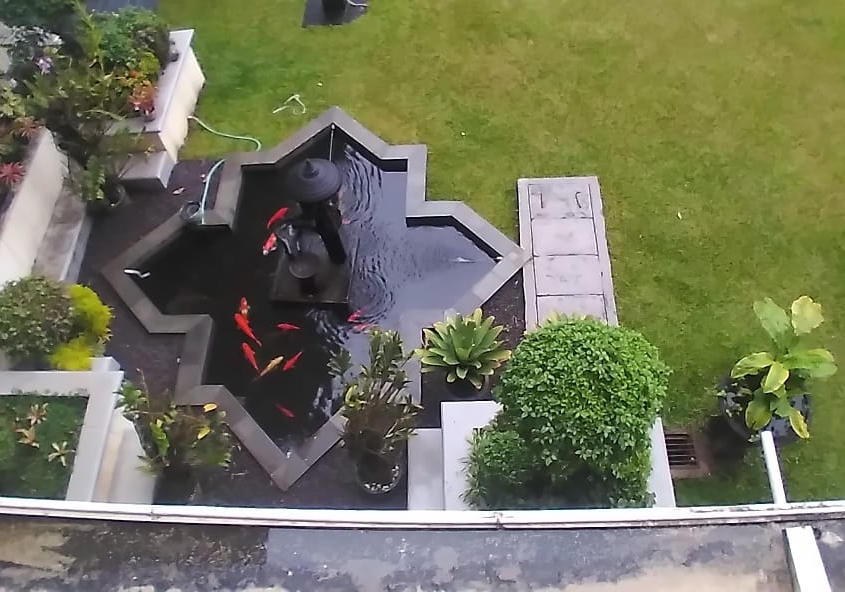
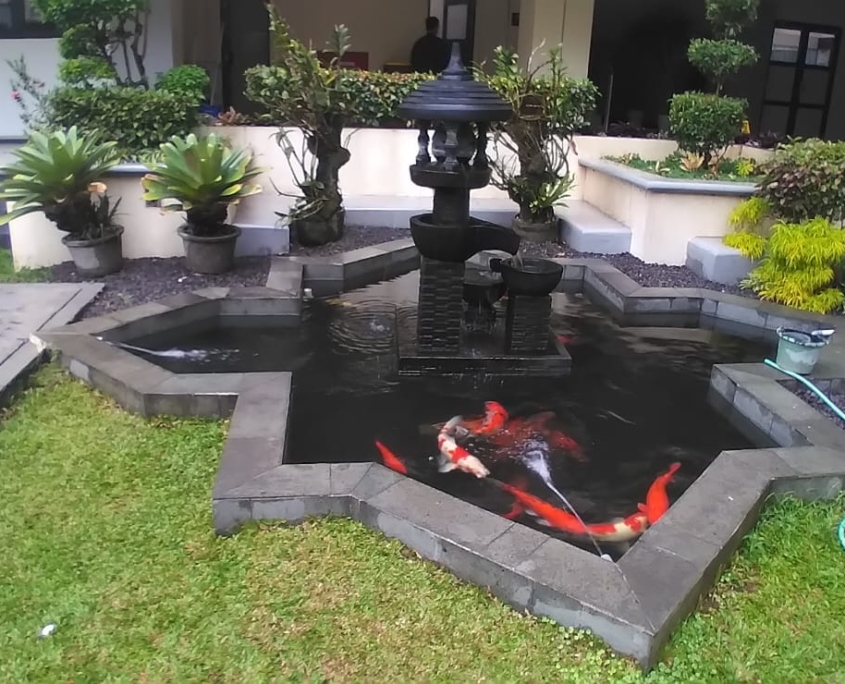
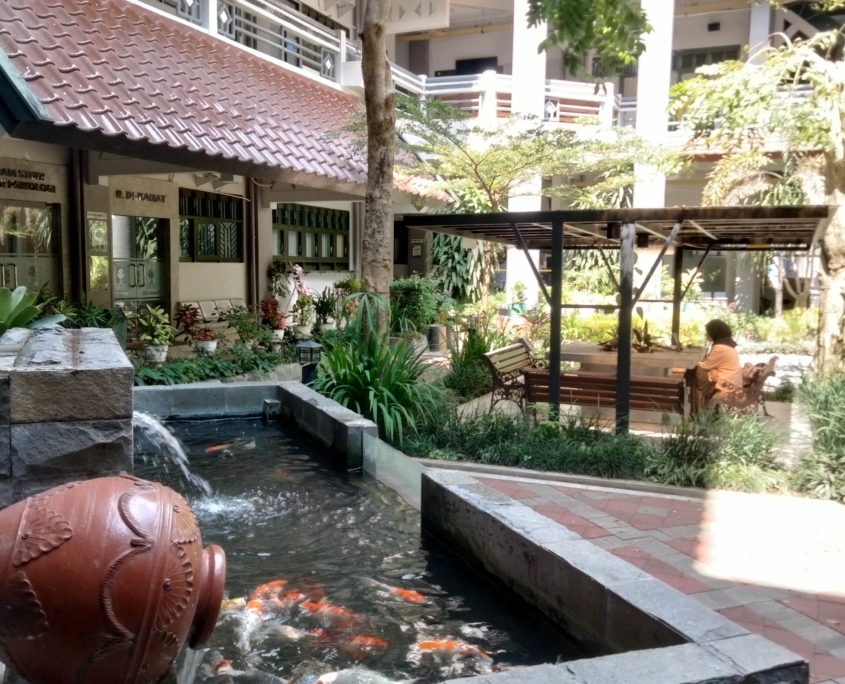
UII’s main integrated campus incorporates dedicated aquatic conservation zones centered around its two retention reservoirs. Spanning significant surface areas, these water bodies are managed not only for stormwater flood mitigation, but as functional sanctuaries for regional freshwater biodiversity.
The university maintains naturalized riparian buffer strips along reservoir shorelines, vegetated with aquatic macrophytes (including vetiver, reeds, and water lilies) that stabilize bank soil, filter surface runoff, and provide breeding habitats for indigenous freshwater fauna. The reservoirs host healthy populations of local freshwater fish, amphibians, odonata (dragonflies and damselflies, which serve as bioindicators of clean water), and wading birds, protected under university regulations prohibiting commercial harvesting or chemical biocides.
Research and Technology for Sustainable Aquatic Industries
Academic researchers across UII’s Faculty of Civil Engineering and Planning and Faculty of Mathematics and Natural Sciences develop cutting-edge technologies and applied solutions supporting sustainable water-reliant industries. A major research cluster focuses on advanced oxidation processes (AOPs) and photocatalytic nanomaterials designed to remediate toxic synthetic dye effluents produced by regional batik and textile manufacturing prior to river discharge.
Additional technology transfer initiatives include solar-powered micro-bubble aerators designed by UII engineering laboratories to optimize dissolved oxygen levels in commercial fish hatcheries, significantly lowering operational energy costs and eliminating chemical oxygenation treatments. These research outputs are published in peer-reviewed international environmental journals and deployed directly in pilot community industries across Yogyakarta.
UII’s Initiatives in Water-Sensitive Waste Disposal
Water Quality Standards and Protection
UII enforces strict water quality protection standards governing all institutional wastewater discharges. All campus greywater and blackwater are treated through decentralized septic systems and grease traps installed across university food centers, before passing through biological clarification units prior to environmental release.
Effluent compliance is rigorously verified through scheduled testing conducted by the FTSP Environmental Quality Laboratory. The testing protocol benchmarks discharge parameters against the national standard stipulated in the Regulation of the Minister of Environment and Forestry No. P.68/2016 concerning Domestic Wastewater Quality Standards. As evidenced by official test certificates, key parameters consistently meet statutory thresholds: pH ranges comfortably between 6.8 and 7.4 (limit 6–9), Biochemical Oxygen Demand (BOD) averages ~18 mg/L (limit 30 mg/L), Chemical Oxygen Demand (COD) averages ~42 mg/L (limit 100 mg/L), and Total Suspended Solids (TSS) averages ~24 mg/L (limit 30 mg/L).
Plastic Waste Reduction Plan
UII enforces an aggressive Plastic Waste Reduction Plan specifically engineered to eliminate marine debris at its terrestrial source. Recognizing that unmanaged land-based municipal plastics represent the primary conduit of ocean plastic pollution, UII implemented a blanket ban on single-use polyethylene bottled water across all formal university gatherings, meetings, and academic conventions.
To sustain this transition, the university deployed an interconnected network of 24 modern, touchless drinking water refill stations throughout academic faculties, administrative buildings, and public libraries, providing free, filtered, and UV-sterilized potable water. Additionally, the university facilities team installed physical mesh trash screens and sediment baffles across all eight primary campus stormwater outlet channels, ensuring that accidental windblown plastic wrappers or discarded items are intercepted and recycled before entering public watercourses.
Policies Against Marine Pollution
UII operationalizes a comprehensive Policy Against Land-Based Aquatic Pollution, enacted under rectoral decree to regulate activities capable of releasing contaminants into regional hydrological basins. The policy mandates zero untreated industrial or hazardous discharge from all university science and health laboratories, routing 100% of chemical reagents, solvents, and heavy metal residues through licensed hazardous waste facilities (TPS B3) for certified off-site destruction via government-approved contractors.
Furthermore, campus grounds maintenance is governed by organic landscaping protocols that prohibit the spraying of synthetic chemical herbicides or organophosphate insecticides within 50 meters of any water body or drainage swale. Organic compost generated on campus replaces synthetic fertilizers, preventing chemical nutrient runoff that causes downstream algal blooms, oxygen depletion, and aquatic dead zones in river mouths and coastal estuaries.
UII’s Initiatives for Maintaining Local Aquatic Ecosystems
Minimizing Environmental Impact on Aquatic Ecosystems
UII integrates sustainable urban drainage systems (SuDS) and low-impact development principles into campus infrastructure planning to minimize ecological stress on surrounding aquatic ecosystems. To counter the adverse hydrological effects of soil compaction and impermeable roof surfaces, the university mandates that all new campus construction projects incorporate water-sensitive design.
Key physical interventions include vegetative bioswales, deep percolation swales, gravel filtration trenches, and extensive permeable paving systems across parking lots and pedestrian concourses. These features slow stormwater velocity, promote groundwater recharge, and filter out suspended particulates and hydrocarbons before stormwater reaches retention ponds, preventing erosion and flash sedimentation in surrounding waterways.
Collaborative Monitoring and Research
UII actively conducts collaborative monitoring and scientific research programs with regional water basin authorities and governmental environmental agencies. Under institutional agreements with the Serayu-Opak River Basin Development Agency (BBWS Serayu-Opak) and the Sleman Environmental Agency (DLH Sleman), university researchers participate in joint river health assessments along the Opak watershed basin.
Collaborative monitoring campaigns evaluate chemical parameters (dissolved oxygen, turbidity, nitrates, phosphates) alongside biological bio-indicators at designated sampling stations. Data generated through these university-government partnerships are fed directly into regional environmental policy databases, providing local authorities with accurate empirical baselines to identify industrial contamination sources and guide watershed rehabilitation priorities.
Community Aquatic Stewardship and Incentives
UII incentivizes community-led aquatic stewardship through technical assistance, material sponsorship, and community development grants administered by the Directorate of Research and Community Service (DPPM). Recognizing that long-term river health depends on empowered local custodians, UII supports village-level River Care Groups (Kelompok Peduli Sungai) operating in neighborhoods bordering the campus.
The university provides these grassroots stewardship teams with essential river-cleaning equipment, personal protective gear, water testing kits, and native tree saplings for riparian reforestation. Outstanding community leaders and youth groups who demonstrate measurable success in eliminating illegal riverside waste dumping and maintaining riparian cleanliness are formally recognized through annual university community stewardship commendations.
Community Partnerships for Ecosystem Maintenance
UII maintains institutionalized partnerships with regional non-governmental river conservation networks, most prominently the Yogyakarta River Community Forum (Forum Komunitas Sungai Yogyakarta / FKSY) and the Kali Code Movement. These collaborative alliances institutionalize ongoing, ground-level interventions to maintain and restore degraded river corridors.
Through thematic student community internships (KKN Tematik), UII students and faculty members work side-by-side with local residents along riverbanks to clear drainage obstructions, dredge accumulated silt deposits, and install living fences of bamboo and vetiver grass to arrest slope slippage. These joint efforts ensure sustained grassroots vigilance against industrial contamination and domestic trash accumulation in the region’s shared aquatic ecosystems.
Watershed Management Strategy
UII anchors its overarching hydrological stewardship in a formalized Campus Watershed Management Strategy centered upon two master-planned retention reservoirs (Embung Kampus Terpadu UII – Embung Utara & Embung Selatan). Jointly developed and maintained in technical partnership with the Balai Besar Wilayah Sungai Serayu-Opak (Ministry of Public Works and Public Housing), these engineered water bodies boast an aggregate retention capacity of approximately 15,000 cubic meters.
The reservoirs fulfill three vital ecological functions: acting as a hydrological surge buffer that captures peak monsoon stormwater to prevent localized flash flooding downstream; functioning as massive sedimentation traps that intercept suspended solids and agricultural silts before waters flow toward the Opak River; and serving as living ecological research stations for aquatic flora and fauna. Routine maintenance protocols—including seasonal sediment dredging, trash trap clearing, and shoreline vegetation management—ensure the long-term integrity and ecological vitality of this critical watershed infrastructure.
Watershed Stewardship, Effluent Standards & Aquatic Protection Matrix
| Initiative / Policy Area | Strategic Focus & Scope | Operational Evidence & Key Outcomes | Status |
|---|---|---|---|
|
Domestic Wastewater Quality & Effluent Testing
|
Aquatic Ecosystem Discharge Standards
|
Routine environmental laboratory testing verifying that all treated greywater and blackwater strictly meet national quality thresholds before release.
|
Verified Standard |
|
Dual Retention Reservoirs & Watershed Protection
|
Hydrological Flood Surge & Silt Interception
|
Two engineered campus retention reservoirs (15,000 m³ capacity) acting as hydrological buffers and sediment filtration basins protecting downstream rivers.
|
Water Infrastructure |
|
Upstream Drainage Plastic Interception Traps
|
Land-to-Water Marine Debris Prevention
|
Mechanical trash screens installed across primary campus stormwater outlets, arresting plastic wrappers and litter before waters exit campus.
|
Pollution Control |
|
Sustainable Aquatic Food Procurement Policy
|
Marine Protection & Sustainable Aquaculture
|
Institutional catering guidelines banning threatened marine species and prioritizing certified locally farmed freshwater fish.
|
Procurement Standard |
|
Community River Stewardship & Riverbank Cleanups
|
Riparian Corridor Maintenance & Restoration
|
Regular community river clearing expeditions along local river basins, removing accumulated debris and planting soil-stabilizing bamboo.
|
Community Program |
|
Applied Water Treatment & Decontamination Research
|
Eco-Friendly Water Purification Technologies
|
Engineering research teams developing solar-powered aeration systems and photocatalytic treatment methods for industrial and textile effluents.
|
Applied Research |